

Self-Drive in Georgia: The Complete Road Trip Guide (Routes, Costs & Tips)
Georgia is one of the best countries in Europe for a road trip. The scenery changes every hour — from subtropical Black Sea coastlines to alpine passes at 2,400 meters, from ancient cave cities to vineyards that predate Rome. The roads are mostly paved, distances are manageable, and renting a car is straightforward.
But there are catches. Mountain roads demand respect. Driving culture is ... assertive. And some of the best places in Georgia are unreachable without a 4x4.
Here's everything you need to know before you get behind the wheel.
Do You Need a 4x4?
This is the first question, and the answer depends entirely on where you're going and when.
When a regular car works fine
- Tbilisi → Kazbegi (Georgian Military Highway) — fully paved, 150 km, 3–3.5 hours
- Tbilisi → Kakheti / Sighnaghi — good highway, 110 km, 2 hours
- Tbilisi → Borjomi — paved, 160 km, 2.5–3 hours
- Tbilisi → Batumi — modern highway (via Khashuri), 360 km, 4.5–5 hours
- Tbilisi → Mtskheta — 20 km, 30 minutes
A standard sedan or hatchback handles all of these comfortably in May through October.
When you need a 4x4
- Kazbegi → Gergeti Trinity Church — the "road" is a dirt track. 4WD only.
- Truso Valley (near Kazbegi) — rough gravel road, river crossings in places
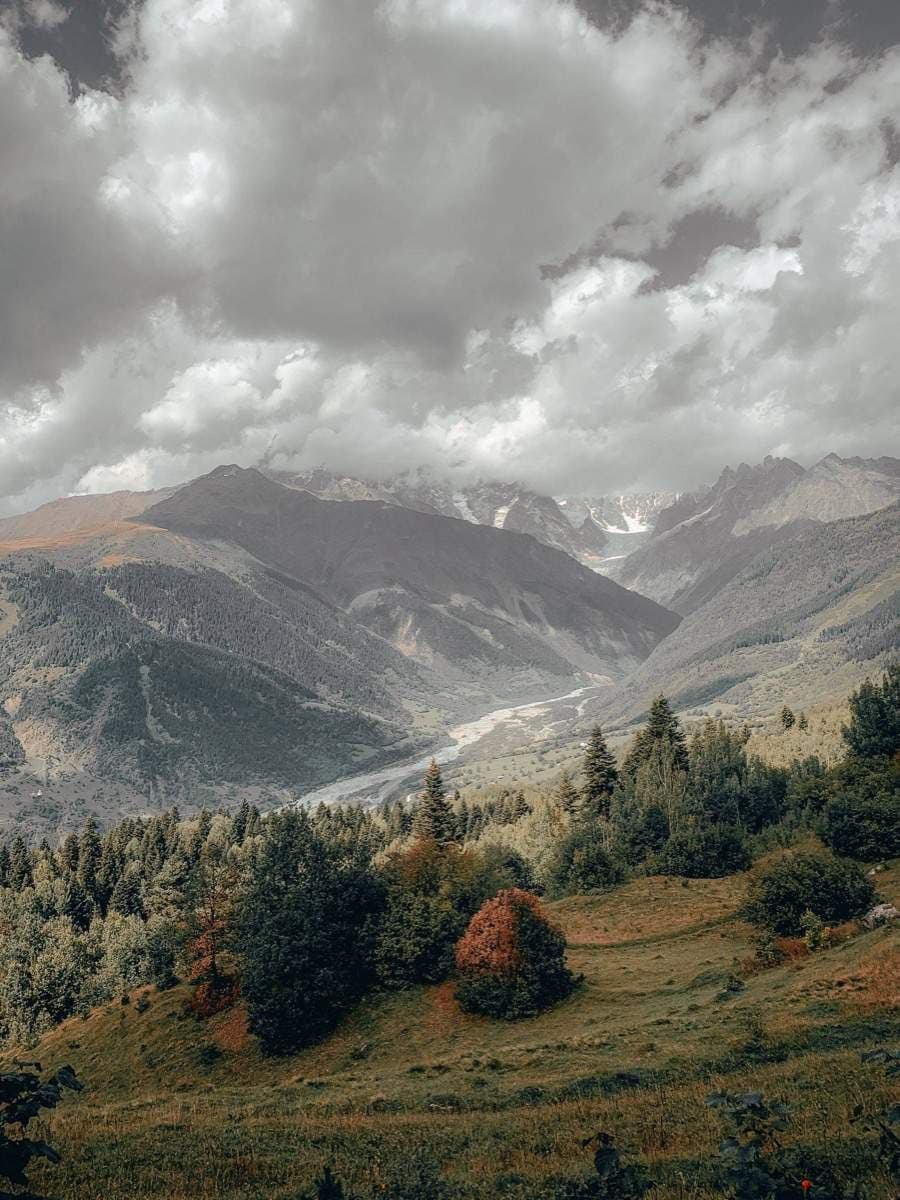
- Svaneti: Mestia → Ushguli — one of Europe's highest permanent settlements. 45 km of mountain road, 2–3 hours, absolutely requires 4WD
- Tusheti — the Omalo pass road is legendary and terrifying. 4WD mandatory, and only open June–September
- Any mountain route in winter (November–April) — snow, ice, and occasional closures
Do NOT attempt the road to Ushguli or the Tusheti pass in a regular car. People try this every year. People get stuck every year. Local 4x4 drivers will charge you $100+ to pull you out. Rent the right vehicle from the start.
Recommended vehicles by route
| Route | Minimum Vehicle | Ideal Vehicle |
|---|---|---|
| Tbilisi → Kazbegi (summer) | Sedan | Crossover / compact SUV |
| Tbilisi → Kakheti | Any car | Any car |
| Tbilisi → Batumi | Any car | Any car |
| Kazbegi → Truso Valley | Compact SUV | 4x4 SUV |
| Mestia → Ushguli | 4x4 SUV | Toyota Land Cruiser / Lexus GX |
| Tusheti (Omalo pass) | 4x4 SUV | Toyota Land Cruiser |
| Winter mountain driving | 4x4 + snow chains | 4x4 SUV with winter tires |
Where to Rent a Car in Georgia
Tbilisi (Best Selection)
Tbilisi is where you'll find the widest range of vehicles and the most competitive prices. Most companies offer airport pickup at Tbilisi International Airport (TBS), which is 17 km from the city center.
What to expect:
- Economy cars (Nissan Micra, Hyundai Accent): $20–35/day
- Mid-size sedans (Toyota Corolla, Hyundai Elantra): $30–50/day
- SUVs / crossovers (Toyota RAV4, Hyundai Tucson): $45–75/day
- 4x4 (Toyota Land Cruiser Prado, Lexus GX 460): $70–120/day
Most rentals include unlimited mileage, basic insurance (CDW), and one additional driver. Always confirm what's included.
Book in advance for June–September and December–February (ski season). The good 4x4s sell out fast, and walk-in prices can be 30–50% higher.
Kutaisi Airport (Budget Gateway)
Kutaisi International Airport (KUT) is the hub for Wizz Air and other budget carriers. Several rental desks operate here, but the selection is smaller and 4x4 availability is limited. If you need a Land Cruiser for Svaneti, pick up in Tbilisi.
Batumi (Coastal Pick-Up)
Batumi has rental agencies, mostly economy and mid-range cars. Good if you're doing a one-way trip along the coast. Less ideal for mountain vehicles.
What to check before you rent
- Insurance: Does the price include CDW (collision damage waiver)? What's the excess/deductible? Can you reduce it?
- Deposit: Most companies require a credit card hold of $300–1,000. Some offer no-deposit options at a premium.
- Mileage: Unlimited is standard, but confirm. Some budget companies cap at 200–300 km/day.
- Border crossing: Most rental contracts forbid crossing into Russia, Azerbaijan, or sometimes even Armenia. If you plan a cross-border trip, declare it upfront.
- Vehicle inspection: Photograph the car thoroughly before driving off. Note every scratch, dent, and scuff on the rental agreement.
- Spare tire and jack: Verify they're in the trunk. On mountain roads, you'll want them.
The Best Self-Drive Routes in Georgia
Route 1: Georgian Military Highway — Tbilisi to Kazbegi
Distance: 150 km | Drive time: 3–3.5 hours | Road: Paved highway
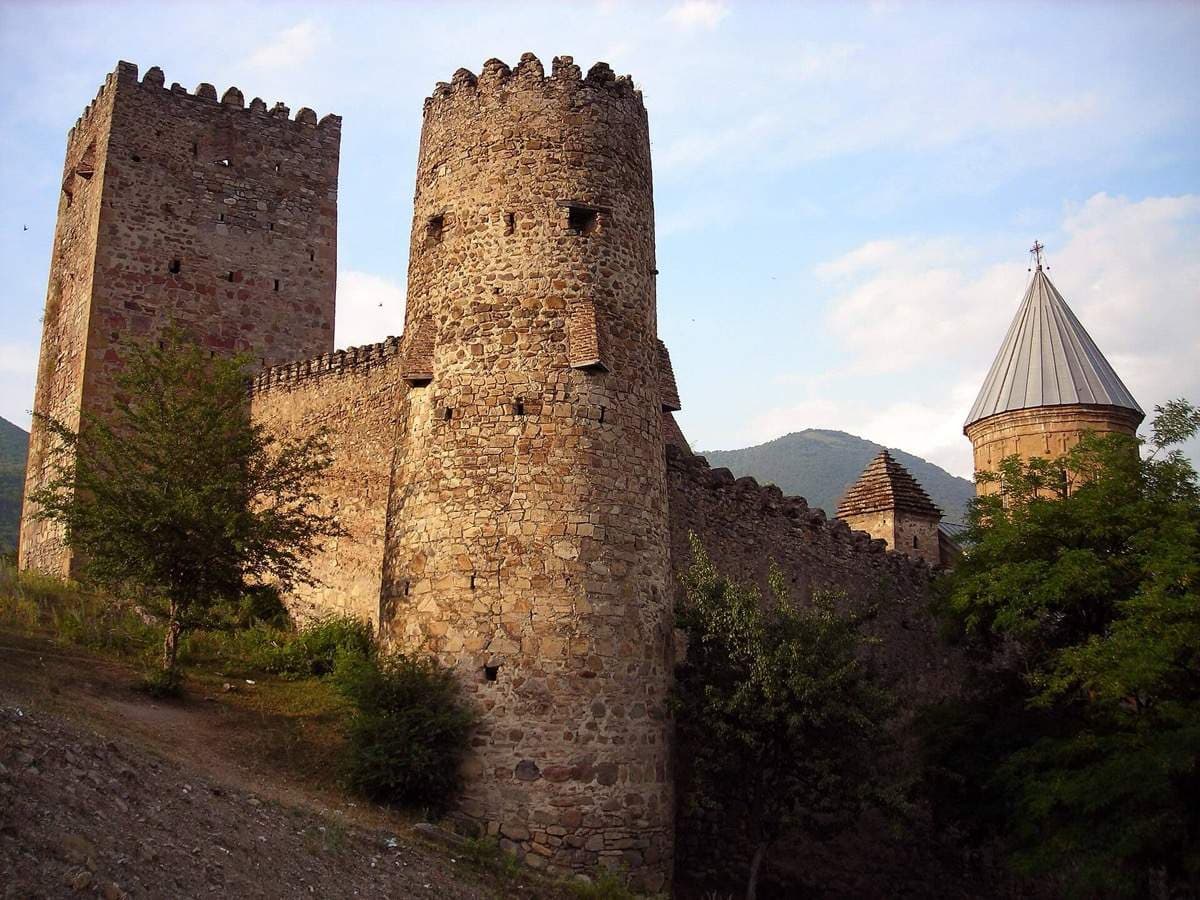
This is Georgia's greatest road trip and the one every visitor should do. The road climbs from Tbilisi (380m) through the Zhinvali Reservoir, past Ananuri Fortress, up to Gudauri ski resort (2,200m), over the Cross Pass (2,395m), and down into the dramatic Terek River valley with Mount Kazbek (5,054m) dominating the horizon.
Stops worth making:
- Zhinvali Reservoir and Ananuri Fortress (70 km) — 30–45 minutes. A medieval fortress complex on turquoise water.
- Gudauri and the Friendship Monument (120 km) — 15 minutes. Soviet-era mosaic overlooking the Devil's Valley.
- Cross Pass (2,395m) — 10 minutes. The highest point. Step out, feel the altitude, take the photo.
- Gergeti Trinity Church — the payoff. Hike up (1.5–2 hours) or arrange a 4WD from Stepantsminda.
Overnight: Stay in Stepantsminda (Kazbegi). Rooms Hotel for the famous terrace, or a family guesthouse for warmth and value.
The highway is well-maintained but mountain driving is different from highway driving. Curves are tight, overtaking is common, and trucks move slowly. Keep right, use your horn on blind curves (Georgians do), and don't rush.
Route 2: Kakheti Wine Region — Tbilisi to Sighnaghi
Distance: 110 km | Drive time: 2 hours | Road: Good highway
Georgia is the birthplace of wine (8,000 years of it), and Kakheti is where it all happens. This is the easiest and most rewarding day trip from Tbilisi.
Stops worth making:
- Telavi — the regional capital, with a fortress and a great Sunday market
- Tsinandali — Prince Chavchavadze's estate, gardens, and a wine bar
- Kvareli — visit the Kinzmarauli wine cellars (carved into a mountain)
- Sighnaghi — the "city of love," perched on a hill with views over the Alazani Valley to the Caucasus. Cobblestone streets, a fortified wall you can walk, and excellent restaurants.
Insider tip: Don't drink and drive. Georgian wine is stronger than you expect, and the police do checkpoints. Book a driver for the day, or stay overnight in Sighnaghi.
Route 3: Tbilisi → Borjomi → Vardzia
Distance: 300 km to Vardzia | Drive time: 4.5–5 hours | Road: Paved, some mountain sections
This is the longest route but the most rewarding for history and landscape. Borjomi is a spa town famous for its mineral water. From there, continue south to Vardzia — a 12th-century cave city carved into a cliff face, with 6,000+ rooms across 19 levels.
Stops worth making:
- Borjomi Central Park — walk to the mineral water spring, fill your bottle for free
- Vardzia — plan 2–3 hours. Bring a flashlight for the darker cave sections
- Rabati Castle (in Akhaltsikhe, near Vardzia) — a restored medieval fortress complex
Route 4: Tbilisi → Batumi (Black Sea Coast)
Distance: 360 km | Drive time: 4.5–5 hours | Road: Modern highway
The new highway via Khashuri makes this an easy drive. Batumi is Georgia's second city — a subtropical coastal town with a botanical garden, a modern skyline, and a casino scene.
Stops worth making:
- Surami Fortress (halfway point) — a small detour, worth 30 minutes
- Batumi Boulevard — an 8 km promenade along the Black Sea
- Gonio Fortress — Roman-era ruins south of Batumi
Driving in Georgia: What to Expect
Road Conditions
- Main highways: Generally good. The Tbilisi–Batumi highway is modern and fast. The Georgian Military Highway is well-maintained but winding.
- Secondary roads: Variable. Some are freshly paved, others have potholes. In rural areas, expect narrow roads with no shoulders.
- Mountain roads: Narrow, winding, and often without guardrails. Drive slowly. Honk on blind curves.
- Winter: Snow and ice close higher passes. The Georgian Military Highway usually stays open but can close temporarily during heavy snow. Carry chains.
Driving Culture
Georgian driving is ... spirited. Here's what to expect:
- Overtaking is aggressive. Locals will pass you on mountain roads, sometimes on blind curves. Stay right, stay calm, don't speed up.
- Horn use is communication, not aggression. A short beep means "I'm here" on a blind curve. It's normal.
- Speed limits: 60 km/h in cities, 90 km/h on open roads, 110 km/h on highways. Police checkpoints are common. Fines are enforced.
- Seatbelts: Mandatory for all passengers.
- Phone use: Hands-free only.
- Alcohol: Zero tolerance for drivers. Don't risk it.
Avoid driving at night in the mountains. Many roads have no lighting, livestock can wander onto the road, and potholes are harder to see. Plan your arrivals before dark.
Fuel
- Gas stations: Frequent on main highways (Wissol, Socar, Lukoil). Less common in remote areas.
- Fuel types: Regular (92 octane), Premium (95), Diesel. Most rental cars take 95.
- Price:
2.70–3.00 GEL/liter ($1.00–1.10 USD). - Tip: Fill up before heading into mountain areas. The last reliable station before Kazbegi is in Gudauri.
Parking
- Tbilisi: Paid parking in the city center (via the Tbilisi Parking app or SMS). Free on Sundays.
- Tourist towns: Usually free but limited. Arrive early at popular spots.
- Trailheads: Small unpaved lots. Can fill up on weekends.
Costs: Self-Drive Budget Breakdown
Here's what a self-drive trip actually costs, per day:
| Item | Budget (sedan) | Mid-Range (SUV) | Premium (4x4) |
|---|---|---|---|
| Car rental | $25–40 | $50–75 | $80–120 |
| Fuel (150 km/day) | $12–15 | $18–22 | $25–30 |
| Insurance top-up | $5–10 | $5–10 | $10–15 |
| Parking / tolls | $2–5 | $2–5 | $2–5 |
| Total per day | $44–70 | $75–112 | $117–170 |
For a week-long trip (7 days):
- Budget sedan: $310–490 total
- Mid-range SUV: $525–785 total
- Premium 4x4: $820–1,190 total
Split between two people, the budget option is very affordable. Solo, it gets closer to guided-tour pricing.
Compare this to our 8-day guided tour at $1,150 per person: the tour includes accommodation, all meals, transport, a guide, wine tastings, a cooking class, and all entrance fees. Self-drive gives you freedom; a guided tour gives you depth and zero logistics. Both are great — it depends on what you value.
Self-Drive vs. Guided Tour: Honest Comparison
| Self-Drive | Guided Tour | |
|---|---|---|
| Freedom | Complete — stop when you want, change plans | Fixed itinerary, but optimized |
| Logistics | You handle everything: booking, navigation, parking | Zero — all arranged |
| Local access | Limited to what you can find online | Guide connections: private wineries, family supras, hidden viewpoints |
| Context | Guidebook + Google | A local who knows 3,000 years of history |
| Cost (solo) | $300–800/week + hotels + meals | $1,150 for 8 days (all-inclusive) |
| Cost (2 people) | $400–900/week split + hotels + meals | $2,300 for 8 days (all-inclusive) |
| Stress level | Moderate — navigation, driving, parking | None |
| Best for | Experienced drivers, explorers, repeat visitors | First-timers, time-limited trips, culture/wine depth |
When Self-Drive Is the Right Choice
- You have 10+ days — enough time to explore at your own pace without feeling rushed
- You're an experienced driver comfortable with mountain roads and assertive traffic
- You value independence — waking up and deciding today's route based on the weather
- You've been to Georgia before — you know the basics and want to go deeper
- You're traveling with another driver — sharing the wheel makes long drives manageable
When a Guided Tour Makes More Sense
- You have 8 days or less — every hour counts, and a guide maximizes your time
- It's your first time in the Caucasus — the context a local guide provides is irreplaceable
- You want wine experiences — Georgian wine culture is social. A guide opens doors to cellars and family tastings you can't book online
- You don't want to navigate — Georgian road signs are in Georgian script, GPS can be unreliable in mountains, and finding the right turnoff for a cave city at 5 PM is stressful
- You want to drink wine — on a guided tour, everyone tastes. No one drives.
Practical Tips for Self-Driving in Georgia
- Download offline maps. Google Maps works well, but cell coverage drops in mountains. Download the areas you'll drive through.
- Carry cash. Some guesthouses, mountain cafes, and parking areas don't accept cards.
- Start early. Mountain roads are best in morning light, and you'll beat the tour buses.
- Don't rush. The scenery is the point. A 150 km drive that takes 3 hours on paper can easily take 5 with stops.
- Learn basic Georgian phrases. Outside Tbilisi, English is limited. "Gamarjoba" (hello) and "Madloba" (thank you) go a long way.
- Check weather before mountain trips. Rain can make dirt roads impassable. Snow closes passes. Plan accordingly.
- Carry water and snacks. Mountain stretches have few services.
- Get a local SIM. Magti or Geocell — cheap data keeps you connected for navigation and emergencies.
If you want the best of both worlds — the freedom of self-drive with local expertise — consider a hybrid approach: self-drive the easy routes (Kakheti, Batumi) and hire a local driver-guide for the mountain sections (Kazbegi, Svaneti). Many drivers offer day rates of $80–150 including their vehicle.
The Bottom Line
Georgia is a fantastic self-drive destination — if you go in prepared. The highways are good, the scenery is world-class, and the freedom to explore at your own pace is unbeatable. Just respect the mountains, drive defensively, and plan your routes around the seasons.
If you'd rather skip the logistics and dive straight into the experiences — the wine cellars, the family supras, the sunrise at Gergeti Trinity Church — that's what our 8-day tour is designed for.
See what our Grand Highlights tour includes →
Ready to Experience Georgia?
Join our 8-day small group tour through Georgia. From Tbilisi to Kazbegi to Kakheti wine country. Max 10 guests.
Yes, Georgia is generally safe for self-driving. The main highways are paved and well-maintained. Mountain roads can be narrow and winding, and driving culture is assertive — locals overtake on blind curves. Drive defensively, avoid night driving in the mountains, and you'll be fine. In winter (November–April), snow chains or 4WD are essential for mountain routes.
For Tbilisi–Kazbegi, Tbilisi–Kakheti, and Tbilisi–Batumi on main highways, a regular sedan works fine in summer. For Svaneti (Mestia, Ushguli), Tusheti, Truso Valley, or any unpaved mountain roads, you need a 4x4. In winter, 4WD is recommended for all mountain routes including Kazbegi.
Economy cars start at $20–30/day in low season and $35–50/day in summer. SUVs and 4x4s (Toyota Land Cruiser Prado, Lexus GX 460) run $60–120/day depending on season. Most rentals include unlimited mileage. Insurance (CDW) adds $5–15/day. Fuel is ~$1.20/liter for regular gasoline.
Most national driving licenses are accepted in Georgia, including US, UK, EU, and Israeli licenses. An International Driving Permit (IDP) is recommended but not strictly required for most nationalities. Your license must be in Latin script or accompanied by a notarized translation.
The Georgian Military Highway (Tbilisi → Ananuri → Gudauri → Kazbegi) is the most popular and accessible route. It's fully paved, takes 3–3.5 hours each way, and has incredible scenery. For a longer trip, combine it with Kakheti (wine region, 2 hours east of Tbilisi) for a 4–5 day loop.