
Georgia vs Armenia: Which Should You Visit? (Honest Comparison)
Two ancient countries. Two distinct cultures. One impossible choice.
Georgia and Armenia sit side by side in the South Caucasus, separated by a border you can cross in a few hours. Both claim to be among the oldest civilizations on earth. Both have stunning mountain landscapes, incredible food, and hospitality that puts the rest of the world to shame.
So which one should you visit?
We run tours in Georgia, so you might expect us to be biased. We'll try not to be. The truth is that both countries are extraordinary — and the "right" choice depends entirely on what kind of traveler you are.
Let's break it down honestly.
Landscapes: Mountains, Valleys & Everything Between
Georgia
Georgia packs a ridiculous amount of geographic diversity into a country the size of South Carolina. You've got the snow-capped Greater Caucasus mountains in the north (including peaks over 5,000 meters), the lush subtropical Black Sea coast, semi-desert badlands in the southeast, and the rolling green vineyards of Kakheti in between.
The variety is staggering. In a single week, you can hike to glaciers in Svaneti, swim in the Black Sea at Batumi, and wander through the cave monasteries of David Gareja on the Azerbaijani border. Few countries this small offer so much range.
Standout landscapes:
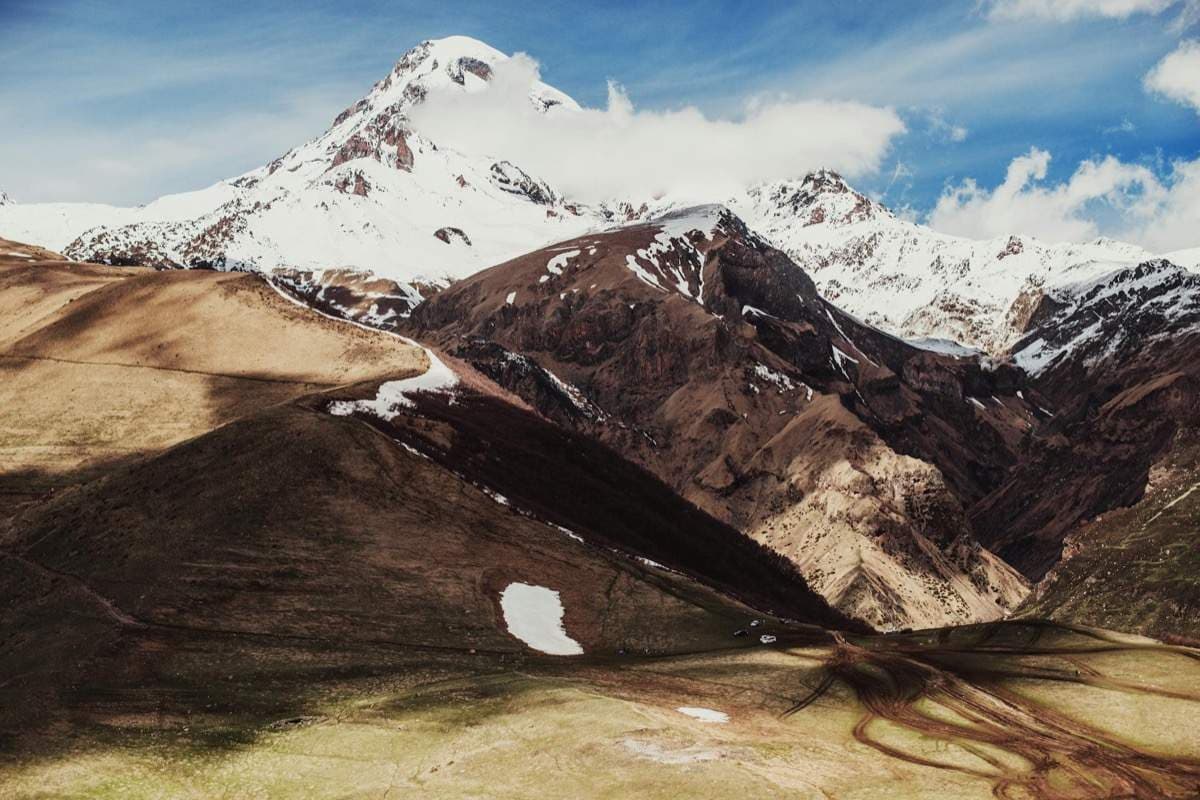
- Kazbegi — Gergeti Trinity Church with Mount Kazbek towering behind it is one of the most photographed spots in the Caucasus
- Svaneti — medieval stone towers rising from alpine meadows, with glaciers as a backdrop
- Tusheti — remote, wild, accessible only by one of the most terrifying mountain roads in the world
- Vardzia — a cave city carved into a sheer cliff face
Armenia
Armenia is more uniformly mountainous — it's sometimes called the "land of stones." The landscape is dramatic, stark, and hauntingly beautiful. Volcanic plateaus, deep gorges, and ancient monasteries perched on clifftops define the scenery.
Mount Ararat — the biblical mountain where Noah's Ark supposedly landed — dominates the skyline from Yerevan, even though it's technically across the border in Turkey. It's one of the most emotionally powerful views in the region.
Standout landscapes:
- Tatev Monastery — reached by the world's longest reversible aerial tramway (Wings of Tatev)
- Garni Gorge — basalt columns that look like a natural organ, nicknamed the "Symphony of Stones"
- Lake Sevan — one of the largest high-altitude lakes in the world, surrounded by ancient monasteries
- Noravank — a 13th-century monastery in a dramatic red-rock canyon
Verdict: Georgia wins on variety. Armenia wins on raw, austere drama. Both are jaw-dropping.
Food & Drink
Georgian Food
Georgian cuisine is one of the great undiscovered food traditions of the world — though it's becoming less "undiscovered" every year. It's rich, flavorful, and incredibly varied.
The highlights:
- Khinkali — giant soup dumplings filled with spiced meat or mushrooms
- Khachapuri — cheese-filled bread in multiple regional styles (Adjarian khachapuri, shaped like a boat with an egg on top, is iconic)
- Pkhali — walnut-paste vegetable spreads
- Mtsvadi — grilled meat, often pork, cooked over grapevine embers
- Churchkhela — walnut strings dipped in grape juice, dried into a candle-shaped candy
Georgian food tends to be hearty, cheese-heavy, and generous. A typical supra (feast) will have 15-20 dishes on the table, and your host will insist you eat everything.
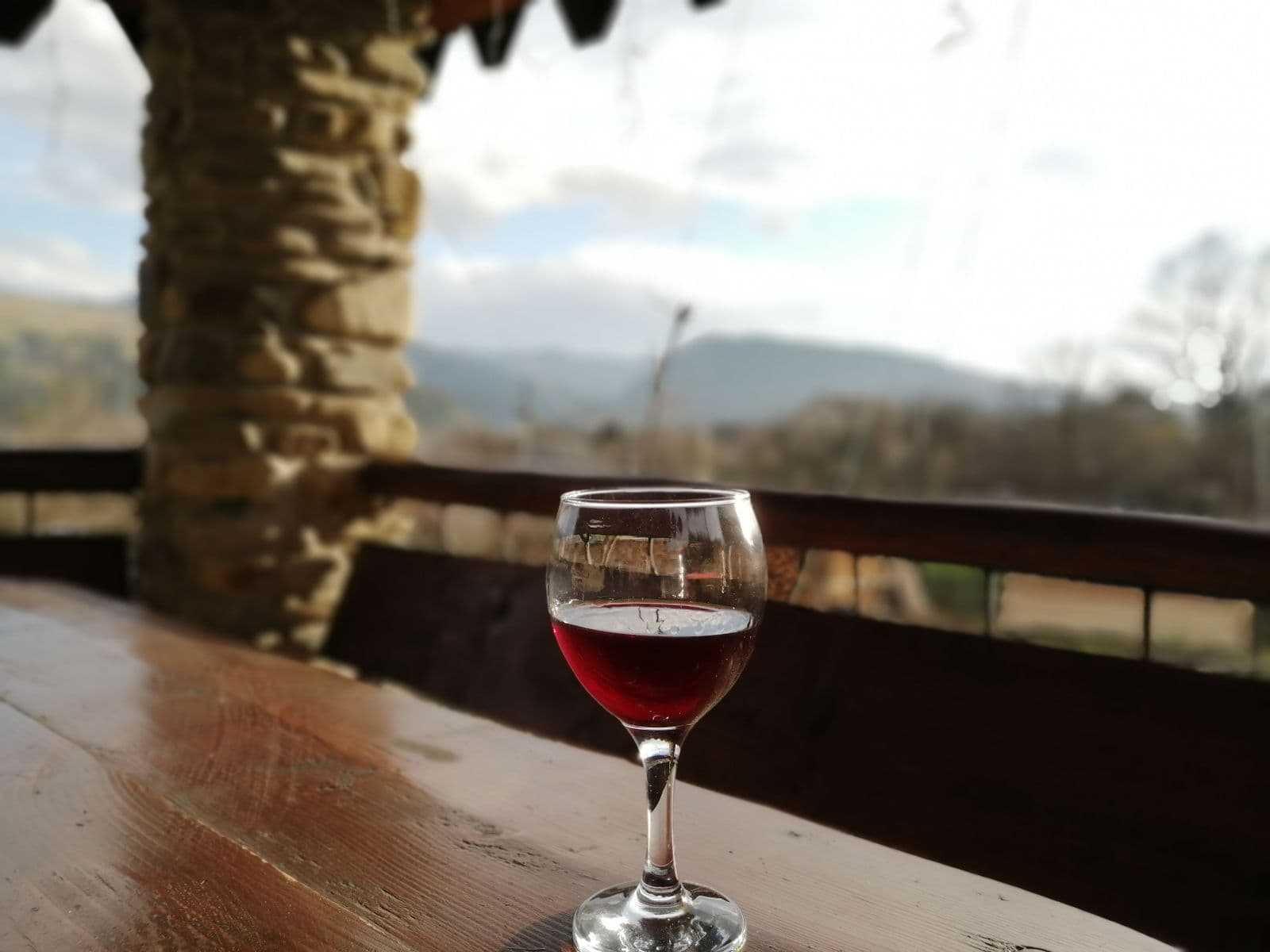
And then there's the wine. Georgia is the oldest wine-producing country on earth — 8,000 years of continuous winemaking. The traditional qvevri method (fermenting wine in clay vessels buried underground) is UNESCO-recognized. Georgian amber wine (skin-contact white wine) has become the darling of the natural wine world.
Armenian Food
Armenian food shares some DNA with Georgian cuisine but leans more toward Middle Eastern and Persian influences. It's subtler, more herb-driven, and often lighter.
The highlights:
- Khorovats — Armenian barbecue, arguably the best grilled meat in the Caucasus
- Lavash — paper-thin flatbread baked in a tonir (underground oven), UNESCO-listed
- Dolma — grape leaves stuffed with spiced meat and rice
- Ghapama — pumpkin stuffed with rice, dried fruits, and nuts (festive dish)
- Gata — sweet bread with a buttery filling
Armenia's drink of choice is brandy (or "cognac" — they've been making it since the 1880s). Ararat brandy is the national pride. Churchill reportedly said it was the only reason to visit the Soviet Union. Armenian wine is making a comeback too, but it's still behind Georgia's output and reputation.
Verdict: Georgia for food variety and wine. Armenia for grilled meat and brandy. Both will leave you needing bigger pants.
Costs
Both countries are genuinely affordable compared to Western Europe, but there are differences.
| Category | Georgia | Armenia |
|---|---|---|
| Budget hotel/guesthouse | $20-40/night | $15-35/night |
| Mid-range hotel | $50-100/night | $40-80/night |
| Meal at local restaurant | $5-10 | $4-8 |
| Fine dining | $20-35/person | $15-25/person |
| Bottle of good wine | $5-15 | $4-12 |
| Taxi (city ride) | $2-5 | $1-4 |
| Intercity marshrutka (minibus) | $3-8 | $2-6 |
| Museum entry | $2-5 | $1-3 |
Armenia is slightly cheaper across the board, particularly outside Yerevan. Georgia has gotten a bit more expensive in recent years as tourism has grown, but it's still excellent value. Tbilisi and Batumi are pricier than the rest of the country.
Verdict: Armenia is marginally cheaper. Both are outstanding value.
Safety
Both countries are remarkably safe for travelers. Violent crime against tourists is essentially unheard of in either country. Petty theft exists but is uncommon by global standards.
Georgia
Georgia has invested heavily in tourism infrastructure and safety. Tbilisi feels safe to walk around at any hour. The police are generally helpful and many speak basic English. Scams targeting tourists are rare (compared to, say, parts of Southeast Asia or Southern Europe).
The main safety concerns are:
- Aggressive driving — Georgian drivers treat traffic rules as suggestions. If you rent a car, be prepared.
- Mountain roads — some are genuinely dangerous, especially in Svaneti and Tusheti.
- Occupied territories — South Ossetia and Abkhazia are Russian-occupied. Don't go.
Armenia
Armenia is similarly safe. Yerevan at night feels more relaxed than most European capitals. Hospitality toward foreigners is deeply ingrained in the culture.
Concerns:
- The Nagorno-Karabakh situation — the conflict zone with Azerbaijan. The 2020 and 2023 wars changed the situation significantly. Border areas with Azerbaijan should be avoided.
- Driving — similar to Georgia, but with worse roads in some areas.
- Turkish and Azerbaijani borders — both are closed.
Verdict: Both are very safe. Slight edge to Georgia for fewer geopolitical complications near travel routes.
Ease of Travel
Getting There
Georgia is easier to reach. Tbilisi airport has direct flights from most major European hubs, plus Dubai, Istanbul, Tel Aviv, and many CIS cities. Budget airlines (Wizz Air, FlyDubai) serve Kutaisi airport.
Armenia's Yerevan airport has good connections too, but fewer budget options. The closed borders with Turkey and Azerbaijan mean you can only enter overland from Georgia or Iran.
Getting Around
Georgia has better tourist infrastructure. English signage is more common, Bolt (ride-hailing) works everywhere, and the country has invested in good roads on main routes. Guesthouses and hostels are plentiful.
Armenia is trickier outside Yerevan. Public transport between cities is less organized, and English signage outside the capital is sparse. That said, GG (Armenia's ride-hailing app) works well, and hiring a driver for a day is cheap ($40-60).
Pro tip: If visiting both countries, fly into one and out of the other. The Tbilisi-Yerevan bus takes about 5-6 hours and costs around $15-20. The border crossing is straightforward.
Visa Policy
Both countries are extremely welcoming. Citizens of most countries (EU, US, UK, Canada, Australia, etc.) can enter both Georgia and Armenia visa-free for one year. Yes, one year. It's remarkably generous.
Verdict: Georgia is easier for first-time visitors. Armenia rewards those willing to work a bit harder.
Culture & History
Georgia
Georgia's cultural identity revolves around a few key pillars: the Georgian Orthodox Church, wine, the supra tradition, polyphonic singing (UNESCO-listed), and a fierce sense of independence.
The country has been invaded and occupied by virtually every empire in history — Persians, Arabs, Mongols, Ottomans, Russians — and survived them all while keeping its unique alphabet (one of only 14 in the world), its language, and its traditions.
Must-see cultural sites:
- Jvari Monastery (6th century) — overlooking the confluence of the Mtkvari and Aragvi rivers
- Svetitskhoveli Cathedral — one of the oldest churches in the world, supposedly houses part of Christ's robe
- Uplistsikhe — a cave town dating back to the Iron Age
- Tbilisi's Old Town — a living museum of Persian, Art Nouveau, and Soviet architecture
Armenia
Armenia goes even deeper historically. It was the first country to adopt Christianity as a state religion (301 AD — a full decade before Rome). This is a point of enormous national pride, and it shows in the density and age of the monasteries.
Armenian history is also defined by tragedy — the 1915 Armenian Genocide by the Ottoman Empire is central to national identity. The Genocide Memorial in Yerevan is a sobering and essential visit.
Must-see cultural sites:
- Geghard Monastery — partially carved out of a cliff, UNESCO-listed
- Echmiadzin Cathedral — the oldest cathedral in the world (303 AD)
- Noravank — 13th-century masterpiece in a red canyon
- Tatev Monastery — 9th-century complex reached by the world's longest cable car
- The Genocide Memorial (Tsitsernakaberd) — powerful and important
Verdict: Armenia has the deeper, more ancient history. Georgia has more variety in its cultural expression. Both are profoundly rich.
Nightlife & Social Scene
This one isn't even close.
Georgia (Tbilisi specifically)
Tbilisi has become one of Europe's most exciting nightlife destinations. The city's techno scene, centered around clubs like Bassiani (located in a Soviet-era swimming pool beneath a football stadium) and Mtkvarze, has put it on the global clubbing map.
Beyond the clubs, Tbilisi has a thriving bar scene. The wine bars in the Old Town are excellent, and the craft beer movement is growing. Restaurants stay open late. The city has a genuine creative, bohemian energy — street art, gallery openings, independent cinema.
The vibe is young, international, and creative. Tbilisi attracts digital nomads, artists, and musicians from around the world.
Armenia (Yerevan)
Yerevan has a pleasant café culture and some decent bars, particularly around the Cascade complex and Northern Avenue. The city comes alive in summer when everyone sits outside drinking Armenian coffee and eating ice cream.
But the nightlife scene is much smaller and more conservative than Tbilisi's. There's no equivalent to Bassiani. The bar scene is fine but not a destination in itself.
Verdict: Georgia wins this category decisively. If nightlife matters to you, Tbilisi is the clear choice.
Best Time to Visit
| Season | Georgia | Armenia |
|---|---|---|
| Spring (Apr-May) | ✅ Excellent — green, wildflowers, mild | ✅ Excellent — wildflowers, pleasant |
| Summer (Jun-Aug) | ✅ Great for mountains; hot in Tbilisi (35°C+) | ⚠️ Very hot in Yerevan (40°C+); Lake Sevan is lovely |
| Autumn (Sep-Oct) | ✅ Best time — wine harvest, golden light, perfect temps | ✅ Great — mild, beautiful colors |
| Winter (Nov-Mar) | ⚠️ Cold; ski season in Gudauri; Svaneti snowed in | ⚠️ Very cold; some roads close |
Both countries are best visited from May through October, with September-October being the sweet spot for both.
Verdict: Tie. Same climate patterns, same ideal windows.
Quick Comparison Table
| Category | Georgia | Armenia |
|---|---|---|
| Landscape variety | ⭐⭐⭐⭐⭐ | ⭐⭐⭐⭐ |
| Food | ⭐⭐⭐⭐⭐ | ⭐⭐⭐⭐ |
| Wine | ⭐⭐⭐⭐⭐ | ⭐⭐⭐ |
| Brandy/Spirits | ⭐⭐⭐ | ⭐⭐⭐⭐⭐ |
| Ancient history | ⭐⭐⭐⭐ | ⭐⭐⭐⭐⭐ |
| Nightlife | ⭐⭐⭐⭐⭐ | ⭐⭐⭐ |
| Budget-friendliness | ⭐⭐⭐⭐ | ⭐⭐⭐⭐⭐ |
| Ease of travel | ⭐⭐⭐⭐⭐ | ⭐⭐⭐ |
| Tourist infrastructure | ⭐⭐⭐⭐ | ⭐⭐⭐ |
| Fewer tourists | ⭐⭐⭐ | ⭐⭐⭐⭐⭐ |
| Safety | ⭐⭐⭐⭐⭐ | ⭐⭐⭐⭐ |
| Mountains | ⭐⭐⭐⭐⭐ | ⭐⭐⭐⭐ |
So Which Should You Visit?
Choose Georgia if you want:
- World-class wine — 8,000 years of winemaking tradition, qvevri cellars, and Kakheti vineyards
- Incredible food variety — khinkali, khachapuri, and one of the world's most underrated cuisines
- Epic mountain scenery with diverse landscapes — coast, desert, alpine meadows, and everything between
- Nightlife and creative energy — Tbilisi's club and bar scene is genuinely world-class
- Easier logistics — more flights, better roads, more English spoken
Choose Armenia if you want:
- Ancient monasteries — the sheer density of medieval churches and monasteries is unmatched
- Deeper history — the first Christian nation, with a profound and sometimes tragic story
- Fewer tourists — Armenia still feels genuinely undiscovered
- Armenian cognac — a world-class spirit with a fascinating history
- A more raw, less polished experience — Armenia hasn't been smoothed out by tourism yet
The Real Answer: Do Both
Honestly? The best answer is to visit both. They're neighbors, and the bus between Tbilisi and Yerevan takes half a day. Two weeks gives you a solid taste of both countries. We're actually working on a combined Georgia-Armenia tour (stay tuned for that).
But if you have to choose just one trip to start with — and you're the kind of traveler who loves food, wine, mountains, and a good night out — Georgia is hard to beat. For a deeper dive, our Georgia vs Croatia comparison and Georgia vs Turkey comparison cover other popular alternative destinations.
Both countries are safe, affordable, and welcoming. You genuinely can't go wrong. The Caucasus region is one of the last great "undiscovered" travel destinations, and that window won't stay open forever. Go now, while it's still authentic.
Start With Georgia
Our 8-day Grand Highlights tour covers the best of Georgia — from Tbilisi's Old Town and sulfur baths to the mountains of Kazbegi, the wine cellars of Kakheti, and the cave city of Vardzia. It's the perfect introduction to the Caucasus, and the perfect base from which to extend into Armenia if you have the time. If you're also considering self-drive options or want to rent a car in Tbilisi, we can help with that too.
Ready to Experience Georgia?
Join our 8-day small group tour through Georgia. From Tbilisi to Kazbegi to Kakheti wine country. Max 10 guests.