
Georgia vs Turkey: Which Should You Visit First? (2026)
Georgia and Turkey share a border — but they feel like different planets.
Turkey is one of the most visited countries on Earth: 50+ million tourists a year, a cuisine that needs no introduction, and a history that spans the Roman, Byzantine, and Ottoman empires. Georgia (the country in the Caucasus, not the US state) gets a fraction of that traffic — around 7 million visitors — but it's growing fast, and travelers increasingly find themselves choosing between the two.
We run tours in Georgia, so you might expect us to be biased. We'll try not to be. The honest truth is that both countries are extraordinary, and the right choice depends entirely on what kind of trip you want.
Let's break it down category by category.
Landscapes: Scale vs. Concentration
Georgia
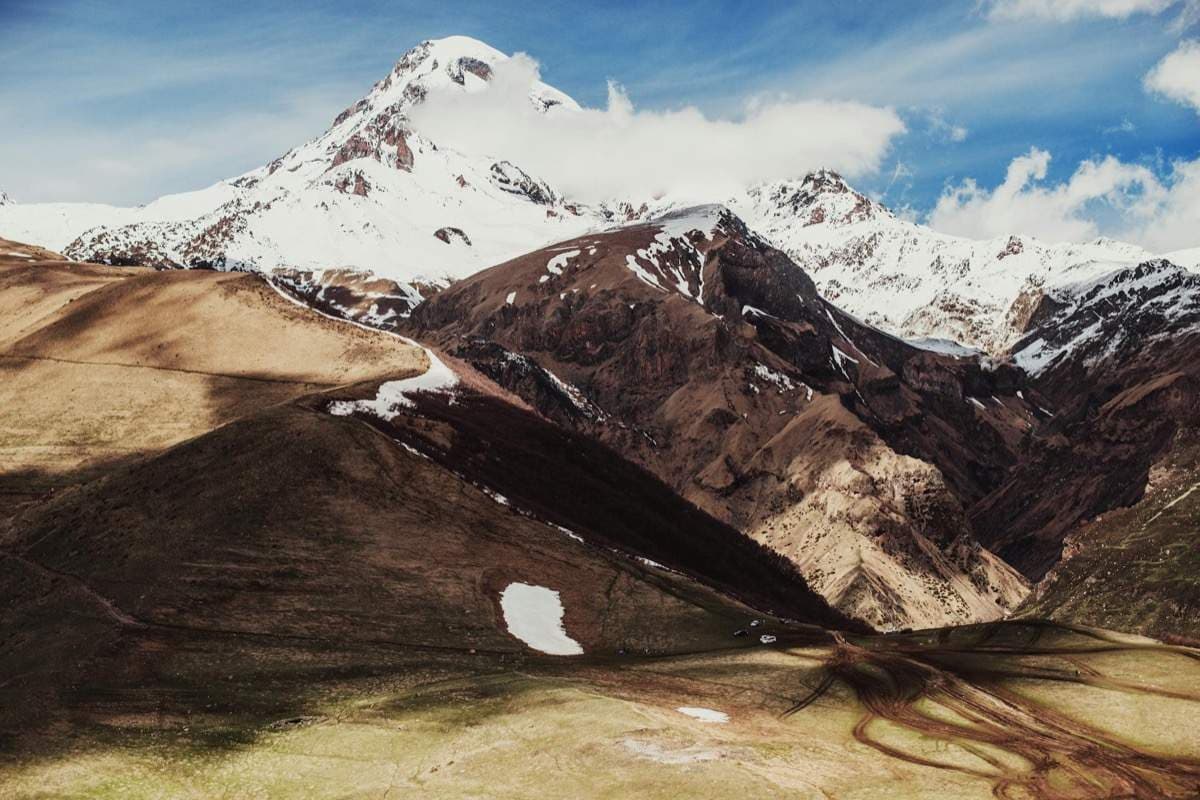
Georgia packs a ridiculous amount of geographic diversity into a country the size of Ireland. The snow-capped Greater Caucasus mountains in the north (peaks over 5,000m), a subtropical Black Sea coastline, semi-desert badlands near the Azerbaijani border, and the rolling green vineyards of Kakheti — all within a few hours of each other.
In a single week, you can hike to the Gergeti Trinity Church beneath Mount Kazbek, explore medieval tower villages in Svaneti, and wander through the cave monasteries of David Gareja. Few countries this small deliver so much range.
Turkey
Turkey is ten times the size of Georgia, and the landscape variety matches. Cappadocia's fairy chimneys. The turquoise Mediterranean coast. Pamukkale's travertine terraces. The volcanic peaks of Eastern Anatolia. The lush Black Sea highlands (which actually border Georgia and share similar terrain). Beaches, deserts, mountains, and megacities — Turkey has it all.
The trade-off is travel time. Getting between highlights can mean hours of driving or domestic flights. A week barely scratches the surface.
Verdict: Turkey wins on sheer scale and variety. Georgia wins on concentration — you see more in less time and less transit.
Food & Drink
Georgian Food
Georgian cuisine is one of the great undiscovered food traditions of the world. It's rich, flavorful, and built around communal eating.
The highlights: khinkali (giant soup dumplings), khachapuri (cheese bread in multiple regional styles — the Adjarian boat-shaped version with an egg is iconic), pkhali (walnut-paste vegetable spreads), mtsvadi (grilled meat over grapevine embers), and churchkhela (walnut strings dipped in grape juice). A Georgian supra — a formal feast with 15-20 dishes and a tamada leading structured toasts — is one of the world's great dining experiences.
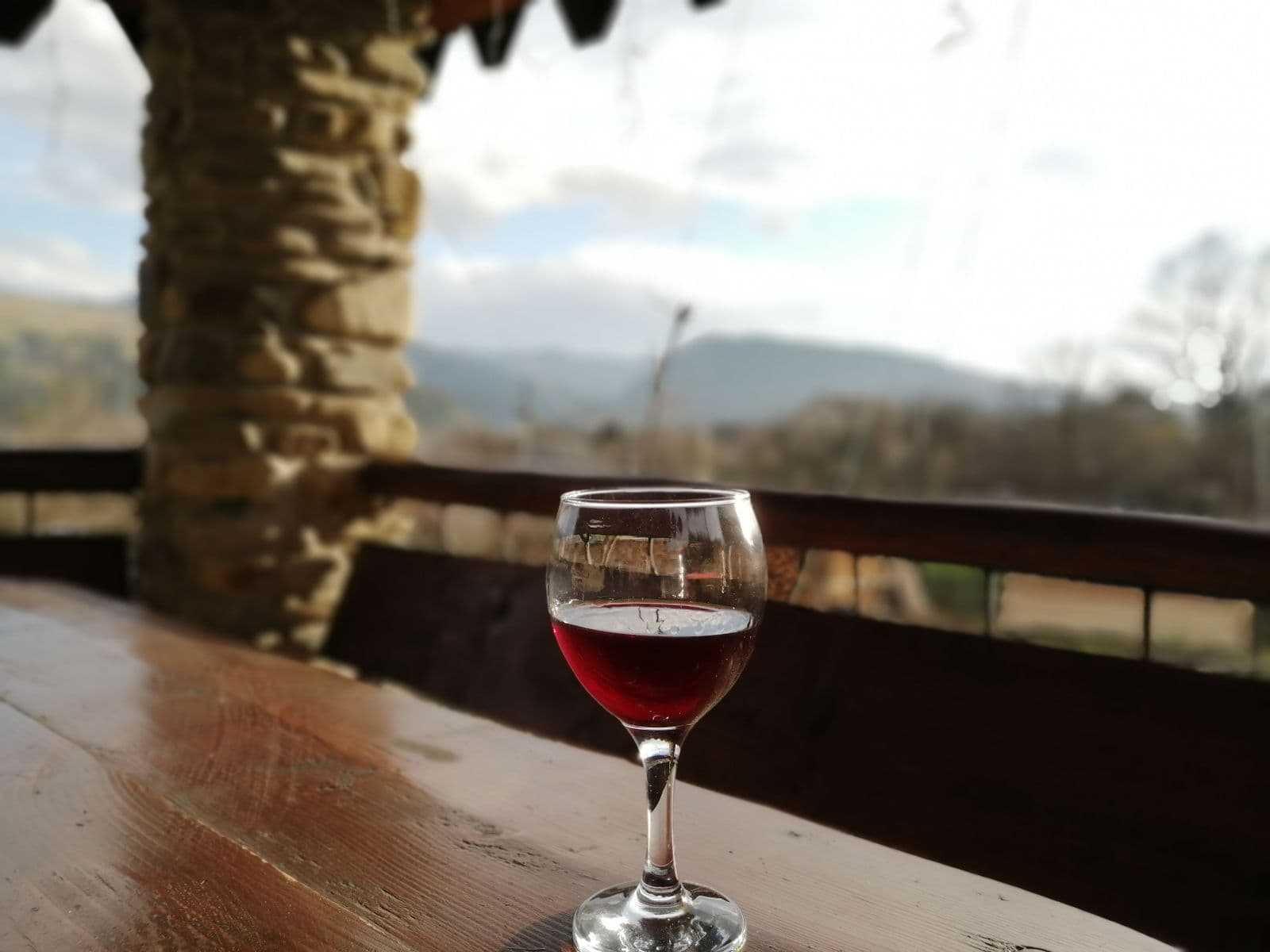
And then there's the wine. Georgia is the oldest wine-producing country on earth — 8,000 years of continuous winemaking. The traditional qvevri method (fermenting in clay vessels buried underground) is UNESCO-recognized, and Georgian amber wine has become the darling of the natural wine world. For a complete guide, see our Georgian food guide.
Turkish Food
Turkish cuisine is globally celebrated — and for good reason. Kebabs alone come in dozens of regional varieties (Adana, İskender, shish, döner). Add meze platters, pide (Turkish pizza), lahmacun (thin-crust meat flatbread), börek (layered pastry), and the sweets — baklava from Gaziantep, künefe, Turkish delight, and lokma. Regional variety is enormous: Black Sea cuisine, Southeastern Anatolian cuisine, and Aegean cuisine all feel like different food cultures.
Turkey's drink is çay (tea), served in tulip-shaped glasses all day long. Turkish coffee is iconic. The wine scene is growing (Cappadocia vineyards, Thrace region) but wine isn't central to Turkish dining culture the way it is in Georgia. Rakı (anise spirit) is the national alcoholic drink.
Verdict: Turkey has more global recognition and regional variety. Georgia is the hidden gem — less famous but equally extraordinary, and the wine tradition is unmatched. Both will ruin you for food back home.
Costs
Georgia is meaningfully cheaper than Turkey, which has seen prices rise steadily with its tourism boom.
| Category | Georgia | Turkey |
|---|---|---|
| Budget hotel/guesthouse | $15–35/night | $25–50/night |
| Mid-range hotel | $40–80/night | $60–120/night |
| Meal at local restaurant | $5–10 | $8–15 |
| Fine dining | $20–35/person | $30–60/person |
| Bottle of good wine | $5–15 | $10–25 |
| Taxi (city ride) | $2–5 | $3–8 |
| Intercity bus | $3–8 | $10–25 |
| Museum entry | $2–5 | $5–20 (major sites like Hagia Sophia: $25+) |
Georgia's advantage compounds over a week-long trip. A comfortable day in Georgia runs $80–130; the same level in Turkey costs $100–160. Budget travelers see an even bigger gap — Georgia is genuinely comfortable at $45–65/day, while Turkey's floor is closer to $60–80. For the complete breakdown, see our Georgia cost guide.
Verdict: Georgia is 20–30% cheaper across the board. Turkey offers more luxury options at the high end.
Safety
Georgia
Georgia is one of the safest countries in Europe for tourists. Violent crime against visitors is nearly nonexistent. Tbilisi feels safe to walk at any hour — it's regularly cited as one of Europe's safest capitals for nighttime strolling. There's a dedicated tourist police unit with English-speaking officers.
The main risks: aggressive driving (the real danger) and the Russian-occupied territories of South Ossetia and Abkhazia (off-limits but far from tourist routes). No terrorism concerns. Scams are essentially nonexistent. For the full picture, see our Georgia safety guide.
Turkey
Turkey is safe for tourists in the main travel corridor (Istanbul, Cappadocia, Mediterranean coast, Aegean). Millions visit without incident every year. That said, the safety picture is more nuanced than Georgia's:
- Street harassment is more common, particularly for women in tourist areas. Aggressive carpet sellers, restaurant touts, and taxi scams are a real annoyance in parts of Istanbul and popular coastal towns.
- Political instability surfaces occasionally — protests, the legacy of the 2016 coup attempt, and tensions in the southeast.
- Eastern Turkey (near the Syrian and Iraqi borders) has a more complex security situation.
- Terrorism risk is low but not zero — Turkey has experienced attacks in the past decade, though tourist areas have been well-protected.
Georgia's homicide rate is 1.1 per 100,000 — lower than France (1.3) and comparable to the UK (1.2). Turkey's is 2.6 per 100,000 — still low by global standards, but measurably higher. For petty crime and tourist scams, Georgia has a significant edge: the culture of stumari (guest as sacred) means visitors are actively protected, not targeted.
Verdict: Georgia is safer. Turkey is safe in major tourist areas but requires more awareness.
Culture & History
Georgia
Georgia's cultural identity is forged from survival. The country has been invaded by Persians, Arabs, Mongols, Ottomans, and Russians — and outlasted them all while keeping its unique alphabet (one of only 14 in the world), its language, its Orthodox Christian faith, and its traditions.
The cultural pillars: the Georgian Orthodox Church (dating to the 4th century), wine and the supra feast tradition, polyphonic singing (UNESCO-listed), and a fierce, sometimes stubborn independence. Must-see sites include Jvari Monastery (6th century), Svetitskhoveli Cathedral, the cave city of Uplistsikhe, and Tbilisi's layered old town — Persian balconies next to Art Nouveau facades next to Soviet blocks.
Georgia feels authentically itself. Tourism hasn't yet polished the edges.
Turkey
Turkey's historical footprint is staggering. This is the land of Troy, Ephesus, Constantinople, and the Ottoman Empire. Hagia Sophia alone spans 1,500 years of history — Roman cathedral, Ottoman mosque, museum, and mosque again. The Topkapi Palace, the Blue Mosque, the underground Basilica Cistern, and the rock churches of Cappadocia are all world-class.
Turkish culture sits at the crossroads of Europe and Asia, Islam and secularism, ancient and modern. The Grand Bazaar has been operating since 1461. The call to prayer echoes over cities where nightclubs stay open until dawn. It's a country of contradictions that somehow work.
Verdict: Turkey wins on historical scale and global significance — it's one of the deepest archaeological destinations on Earth. Georgia wins on cultural uniqueness, authenticity, and the feeling that you're discovering something the rest of the world hasn't found yet.
Ease of Travel
Turkey
Turkey's tourism infrastructure is world-class. Istanbul Airport is a global mega-hub. Domestic flights are cheap and frequent (Pegasus, Turkish Airlines). Intercity buses are comfortable and cover the entire country. English is widely spoken in tourist areas. Hotel booking platforms, guided tours, and car rentals all work seamlessly.
The downside: Turkey is big. Istanbul to Cappadocia is an hour by air or 10 hours by bus. Covering the Mediterranean coast, Cappadocia, and Istanbul in one trip requires real planning — or accepting that you'll miss things.
Georgia
Georgia is smaller and simpler. Tbilisi airport has direct flights from most European capitals plus Istanbul, Dubai, and Tel Aviv. From Tbilisi, every major destination is under five hours by car. You can see the highlights in 8 days without rushing.
The trade-off: outside Tbilisi, tourist infrastructure thins. Marshrutkas (minibuses) are the main intercity transport — cheap but uncomfortable. English is limited in rural areas. Guesthouses often aren't on booking platforms. For details, see our transport guide and visa guide.
Combining both countries is easy. Direct flights connect Tbilisi to Istanbul in 2.5 hours (from $60 one-way on Turkish Airlines or Pegasus). You can also travel overland: bus from Tbilisi to Batumi (5 hours), then cross the border at Sarpi into Turkey's Black Sea coast — a scenic route that most tourists miss.
Verdict: Turkey is easier logistically with better infrastructure. Georgia is easier to plan because it's compact — fewer decisions, less transit time.
Ready to Experience Georgia?
Join our 8-day small group tour through Georgia. From Tbilisi to Kazbegi to Kakheti wine country. Max 10 guests.
Nightlife & Social Scene
Georgia (Tbilisi)
Tbilisi has quietly become one of Europe's most exciting nightlife cities. Bassiani — a techno club in a Soviet-era swimming pool beneath a football stadium — is internationally recognized. Mtkvarze sits on the Mtkvari River. Beyond clubs, the wine bar scene is thriving (g.Vino, Vino Underground), the craft beer movement is growing, and restaurants stay open late.
The vibe is young, international, and creative — street art, gallery openings, independent cinema. Tbilisi attracts digital nomads, artists, and musicians from around the world.
Turkey (Istanbul)
Istanbul's nightlife is massive and varied. Rooftop bars in Beyoğlu overlooking the Bosphorus. The hipster café-and-bar scene in Kadıköy on the Asian side. Beach clubs in Bodrum and Antalya during summer. World-class restaurant culture.
Outside Istanbul and the coastal resorts, Turkey is more conservative. Nightlife in central Anatolia and the east is limited.
Verdict: Istanbul wins on scale — it's one of the world's great nightlife cities. Tbilisi wins on vibe, intimacy, and accessibility. You won't need a VIP list or a bottle service budget in Tbilisi.
Best Time to Visit
| Season | Georgia | Turkey |
|---|---|---|
| Spring (Apr–May) | ✅ Excellent — green, wildflowers, mild | ✅ Excellent — Istanbul and coast are perfect |
| Summer (Jun–Aug) | ✅ Great for mountains; Tbilisi is hot (35°C+) | ⚠️ Mediterranean coast packed; Istanbul 35°C+ |
| Autumn (Sep–Oct) | ✅ Best time — wine harvest, golden light, 20–25°C | ✅ Great — warm, fewer crowds, good prices |
| Winter (Nov–Mar) | ⚠️ Cold; ski season in Gudauri; mountain roads close | ⚠️ Istanbul mild but grey; east/central cold |
Both countries peak May–October, with September–October as the sweet spot. Turkey's Mediterranean and Aegean coasts extend the warm season longer. Georgia's mountain regions (Svaneti, Kazbegi) are best June–September. For the detailed month-by-month guide, see Best Time to Visit Georgia.
Verdict: Turkey has a longer comfortable season thanks to its southern coast. Georgia's peak is shorter but concentrated — when it's good, it's extraordinary.
Quick Comparison Table
| Category | Georgia | Turkey |
|---|---|---|
| Landscape variety | ⭐⭐⭐⭐ | ⭐⭐⭐⭐⭐ |
| Food | ⭐⭐⭐⭐⭐ | ⭐⭐⭐⭐⭐ |
| Wine | ⭐⭐⭐⭐⭐ | ⭐⭐⭐ |
| Historical depth | ⭐⭐⭐⭐ | ⭐⭐⭐⭐⭐ |
| Nightlife | ⭐⭐⭐⭐ | ⭐⭐⭐⭐⭐ |
| Budget-friendliness | ⭐⭐⭐⭐⭐ | ⭐⭐⭐⭐ |
| Ease of travel | ⭐⭐⭐⭐ | ⭐⭐⭐⭐⭐ |
| Tourist infrastructure | ⭐⭐⭐ | ⭐⭐⭐⭐⭐ |
| Fewer tourists | ⭐⭐⭐⭐⭐ | ⭐⭐ |
| Safety | ⭐⭐⭐⭐⭐ | ⭐⭐⭐⭐ |
| Beaches | ⭐⭐⭐ | ⭐⭐⭐⭐⭐ |
| Mountains | ⭐⭐⭐⭐⭐ | ⭐⭐⭐⭐ |
| Authenticity | ⭐⭐⭐⭐⭐ | ⭐⭐⭐ |
So Which Should You Visit?
Choose Georgia if you want:
- Something undiscovered — Georgia feels like Europe's best-kept secret. You'll visit places most travelers have never heard of.
- World-class wine — 8,000 years of winemaking, qvevri cellars, and the Kakheti wine region
- Compact travel — see mountains, wine country, ancient monasteries, and a buzzing capital in 8 days without rushing
- Fewer tourists — no cruise ship crowds, no overtouristed sites, no fighting for a photo without strangers in it
- Deep hospitality — the stumari tradition means you'll be treated like family, not a walking wallet
- A tighter budget — Georgia is genuinely affordable without sacrificing quality
Choose Turkey if you want:
- Scale and variety — from Istanbul's grand bazaars to Cappadocia's hot air balloons to the Mediterranean coast
- World-class city culture — Istanbul is one of the great cities of the world, full stop
- Beaches — Turkey's coastline is spectacular; Georgia's is limited
- Deep history — Byzantine, Ottoman, Roman, Hittite — Turkey is an archaeological wonderland
- Luxury options — Turkey has a developed high-end tourism sector with resorts, boutique hotels, and fine dining
- More time — Turkey rewards 2+ weeks; Georgia fits beautifully into 8–10 days
The Real Answer: Do Both
Honestly? The best trip might be both. Tbilisi to Istanbul is a 2.5-hour flight. Two weeks gives you 8 days in Georgia and 4–5 in Istanbul — enough for a full Georgia experience plus the highlights of one of the world's greatest cities. Or do it in reverse: start in Istanbul, fly to Tbilisi, and let Georgia be the quieter, more intimate second act.
If you've already done Turkey and want something new — Georgia is the obvious next step. Same border, completely different world.
Curious how Georgia compares to its other neighbor? Read our Georgia vs Armenia comparison. The Caucasus is one of the last great undiscovered travel regions — and the window won't stay open forever. Go now, while it's still authentic.
Start With Georgia
Our 8-day Grand Highlights tour covers the best of the country — from Tbilisi's Old Town and sulfur baths to the mountains of Kazbegi, the wine cellars of Kakheti, and the cave city of Vardzia. It's the perfect introduction to the Caucasus, and it pairs beautifully with a few days in Istanbul before or after.
Ready to Experience Georgia?
Join our 8-day small group tour through Georgia. From Tbilisi to Kazbegi to Kakheti wine country. Max 10 guests.
Yes. Georgia is roughly 20-30% cheaper than Turkey across accommodation, food, and transport. A comfortable day in Georgia costs $80-130; Turkey runs $100-160 for similar quality. Georgia's lower tourist volumes keep prices down.
Both are safe. Georgia has a slight edge — lower petty crime, less street harassment, and no terrorism concerns. Turkey is safe in tourist areas but has occasional political instability and more aggressive touts in popular spots like Istanbul's Sultanahmet.
Absolutely. Direct flights connect Tbilisi to Istanbul (2.5 hours, from $60). You can also cross overland via Batumi to the Turkish border at Sarpi — a scenic coastal route. Two weeks gives you a solid taste of both countries.
Both are world-class. Turkey has more variety and global recognition (kebabs, meze, baklava). Georgia is more of a hidden gem — khinkali, khachapuri, and the supra feast tradition are unforgettable. Georgia also wins on wine; Turkey wins on tea culture.
Absolutely. Despite sharing a border, they feel like different worlds. Georgia is more compact, less touristy, and has a distinct Caucasus mountain culture. The wine tradition, supra feasts, and alpine landscapes have no equivalent in Turkey.