
15 Georgian Foods You Must Try (and Where to Find Them)
Georgia — the country nestled between the Caucasus Mountains and the Black Sea, not the US state — has one of the most underrated cuisines on Earth. Walnuts, fresh herbs, pomegranate, cheese, and spices form the backbone of a food tradition that's been evolving for millennia.
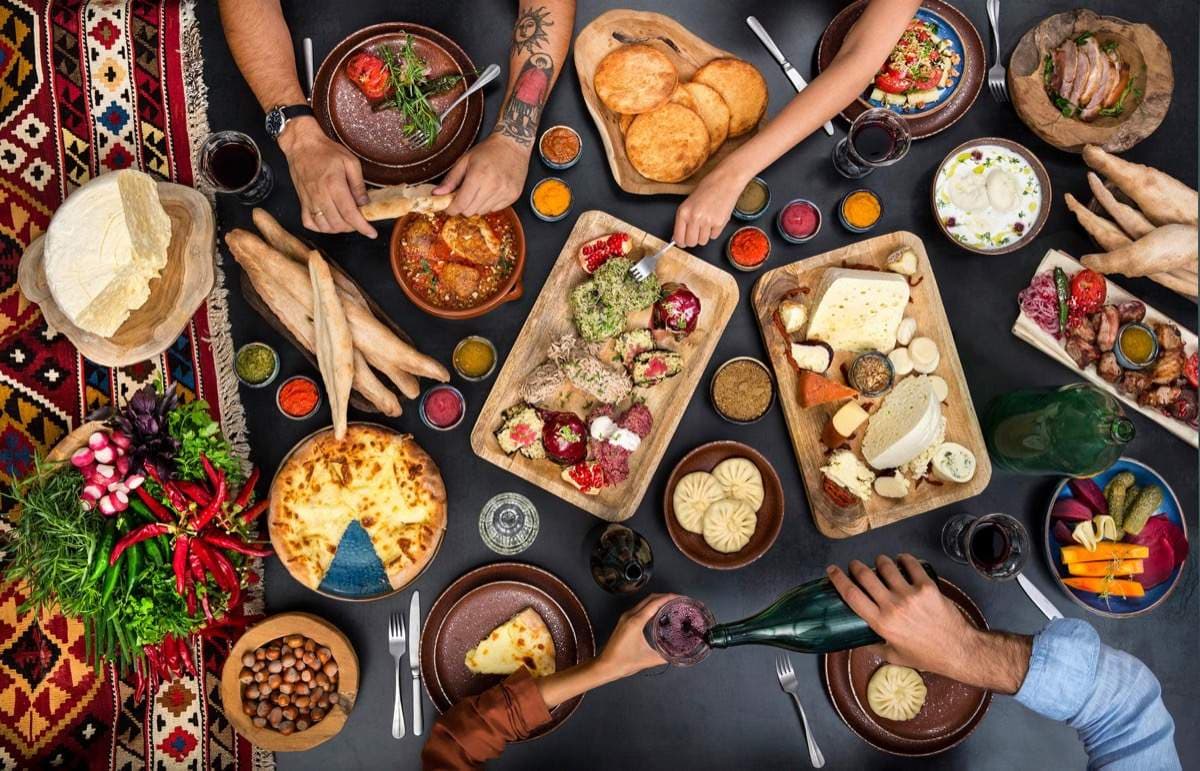
Georgian meals aren't just about eating. They're about the supra — the legendary Georgian feast where a tamada (toastmaster) leads hours of toasts, wine flows from clay vessels, and the table groans under dozens of dishes served all at once.
This guide covers 15 dishes every visitor to Georgia (the country 🇬🇪) needs to try, with pronunciation help, regional context, and insider tips on where to find the best versions.
Georgian script looks intimidating but the language is phonetic. We've included approximate pronunciations for every dish — practice in the taxi from the airport.
1. Khinkali — ხინკალი
Pronunciation: KHIN-ka-lee
What it is: Georgia's iconic soup dumplings — twisted parcels of dough filled with spiced meat (usually pork and beef), herbs, and a pocket of hot broth trapped inside.
Region: Originally from the mountain regions of Tusheti and Pshavi, now everywhere.
How to eat them properly: This is non-negotiable (and if you want to make them at home, see our khinkali recipe). Pick up a khinkali by the twisted top knob (the "belly button"). Flip it upside down, bite a small hole in the side, and slurp out the broth first. Then eat the dumpling. Never use a fork and knife — Georgians will notice. The twisted top is traditionally left on the plate uneaten; it serves as a counter for how many you've had.
A respectable first order is 5 khinkali. Locals routinely eat 10-15. The dough top on your plate is your scoreboard — leave them visible and wear your count with pride.
Where to find the best: Pasanauri, a small town on the Georgian Military Highway, claims to be the birthplace. In Tbilisi, try Zakhar Zakharich or Pasanauri restaurant on Pushkin Street.
2. Khachapuri (Adjarian) — აჭარული ხაჭაპური
Pronunciation: ha-cha-POO-ree (ah-CHA-roo-lee)
What it is: The most photogenic version — a boat-shaped bread filled with molten cheese, topped with a raw egg and a pat of butter. You stir the egg into the hot cheese and tear off the bread edges to scoop it up.
Region: Adjara (Batumi and the Black Sea coast).
Insider tip: Eat it immediately. Adjarian khachapuri waits for no one — the cheese hardens within minutes. This is not a share plate. Order one per person.
3. Khachapuri (Imeretian) — იმერული ხაჭაპური
Pronunciation: ee-meh-ROO-lee ha-cha-POO-ree
What it is: The everyday khachapuri — a round, flat bread stuffed with fresh Imeretian cheese (similar to mozzarella mixed with feta). Simpler than Adjarian, and arguably what most Georgians eat most often.
Region: Imereti (western Georgia, around Kutaisi).
Insider tip: This is breakfast food. Grab one from any street bakery (tone) for about 3-5 GEL. If the cheese is stretchy and slightly tangy, you've found a good one.
4. Khachapuri (Megruli) — მეგრული ხაჭაპური
Pronunciation: meh-GROO-lee ha-cha-POO-ree
What it is: Like Imeretian khachapuri but with an extra layer of melted cheese on top. It's the "double cheese" upgrade — golden, bubbling, and utterly indulgent.
Region: Samegrelo (western Georgia).
Insider tip: Samegrelo is Georgia's spiciest region. If you see Megruli khachapuri in its home territory, expect more assertive, salty cheese. Pair it with a glass of cold lemonade — Georgian-style, made with tarragon (tarkhuna).
5. Mtsvadi — მწვადი
Pronunciation: MTS-va-dee
What it is: Georgian barbecue — chunks of pork (traditionally), threaded onto skewers and grilled over grapevine embers. The grapevine smoke gives it a distinctive flavor you won't find anywhere else.
Region: Everywhere, but particularly Kakheti (wine country).
Insider tip: Mtsvadi cooked over grape-vine cuttings (not charcoal) is the real deal. In Kakheti, look for roadside spots where you can see the vine embers. Best paired with tkemali (sour plum sauce) and a glass of Saperavi.
If you visit during the rtveli (grape harvest) in September-October, you'll find mtsvadi at every vineyard celebration. It's peak Georgian food season.
6. Churchkhela — ჩურჩხელა
Pronunciation: church-KHEH-la
What it is: Walnuts (or hazelnuts) threaded on a string, dipped repeatedly in thickened grape juice (tatara), then hung to dry. Often called "Georgian Snickers." They hang from market stalls like colorful candles.
Region: Kakheti is the epicenter, but you'll find them all over Georgia.
Insider tip: The dark purple ones are made with Saperavi grape juice. Freshly made churchkhela (soft and slightly chewy) is infinitely better than the dried-out tourist versions. Buy from markets, not airport shops. A good churchkhela should bend slightly without cracking.
7. Pkhali — ფხალი
Pronunciation: PKHA-lee
What it is: A family of cold vegetable dishes — spinach, beet, cabbage, or green beans — finely chopped and mixed with a walnut paste seasoned with garlic, coriander, fenugreek, and vinegar. Usually shaped into balls and topped with pomegranate seeds.
Region: All of Georgia — a standard supra starter.
Insider tip: The walnut paste (baje) is the secret weapon of Georgian cuisine. Pkhali is vegan, rich in flavor, and one of the best dishes for plant-based travelers. Try the spinach version first.
8. Lobio — ლობიო
Pronunciation: LOH-bee-oh
What it is: A thick, hearty stew of red kidney beans cooked with onions, coriander, fenugreek (utskho-suneli), and chili. Served bubbling in a clay pot with mchadi (cornbread) and pickled vegetables.
Region: All of Georgia, but Racha claims the best version.
Insider tip: Lobio in a clay pot (lobio qvabshi) is what you want. The pot retains heat and concentrates flavors. It's cheap, filling, and available at virtually every Georgian restaurant. Perfect cold-weather fuel for mountain trips.
9. Chakapuli — ჩაქაფული
Pronunciation: cha-ka-POO-lee
What it is: A light, fragrant stew of young lamb (or veal) cooked with tarragon, sour plums (tkemali), white wine, and green herbs. It's bright, tangy, and unlike anything in the rest of the cuisine — spring in a bowl.
Region: Eastern Georgia. Traditionally made for Orthodox Easter when fresh tarragon is abundant.
Insider tip: Chakapuli is seasonal — best in spring (April-May) when the herbs are fresh. If you visit in spring, this should be at the top of your list. Some restaurants serve it year-round, but the spring version is transformative.
10. Satsivi — საცივი
Pronunciation: sa-TSEE-vee
What it is: Cold turkey or chicken in a thick, creamy walnut sauce spiced with cinnamon, cloves, fenugreek, and garlic. Served at room temperature. The name literally means "cold dish."
Region: All of Georgia — the star of the New Year's supra table.
Insider tip: Satsivi is technically a winter/holiday dish, but good restaurants serve it year-round. The walnut sauce should be smooth, pale, and almost velvety. If it's grainy, move on.
11. Shkmeruli — შქმერული
Pronunciation: shkh-meh-ROO-lee
What it is: Whole chicken (or pieces) pan-roasted and then simmered in a garlic-milk (or garlic-cream) sauce. The garlic is not subtle — this dish uses head-quantities, not clove-quantities.
Region: Named after the village of Shkmeri in Racha.
Insider tip: Shkmeruli went viral on Japanese social media a few years ago and briefly appeared in McDonald's Japan. The original is better. Best eaten with shotis puri (Georgian bread) to mop up the garlicky cream sauce.
12. Kubdari — კუბდარი
Pronunciation: koob-DA-ree
What it is: A meat-stuffed bread from Svaneti — the high mountain region. Unlike khachapuri's cheese filling, kubdari is packed with spiced minced meat (pork and beef), cumin, and caraway. Dense, rich, and designed for people who climb mountains.
Region: Svaneti (Mestia, Ushguli).
Insider tip: You haven't had real kubdari until you've eaten it in Svaneti. The Mestia versions are noticeably better — the spice mix (Svanetian salt) is unique to the region. If you're trekking to Ushguli, kubdari is your trail fuel.
Svanetian salt (svanuri marili) — a blend of salt, garlic, fenugreek, coriander, caraway, and chili — is Georgia's most famous spice mix. Buy some at any market to take home.
13. Chashushuli — ჩაშუშული
Pronunciation: cha-shoo-SHOO-lee
What it is: A spicy beef stew slow-cooked with tomatoes, onions, hot peppers, and fresh herbs. It's Georgia's answer to the question "what happens when you braise beef with an aggressive amount of tomatoes and chili?"
Region: Popular across Georgia, especially in Kakheti.
Insider tip: Chashushuli ranges from mildly spiced to genuinely hot depending on the cook. If you want heat, ask for it "tskharze" (spicy). It pairs perfectly with fresh bread and a dry red wine.
14. Badrijani — ბადრიჯანი
Pronunciation: ba-dree-JA-nee
What it is: Fried eggplant slices rolled around a walnut-garlic paste, typically topped with pomegranate seeds. Served cold as an appetizer.
Region: All of Georgia — a standard supra dish.
Insider tip: Good badrijani depends on the eggplant being fried just right — soft but not oily — and the walnut filling being generously seasoned. This is one of the first dishes to appear on a supra table, so pace yourself.
15. The Supporting Cast: Elarji, Mchadi & Tklapi
Elarji — ელარჯი
Pronunciation: eh-LAR-jee
A stretchy, molten mix of cornmeal and Sulguni cheese from Samegrelo. Imagine the stretchiest mozzarella stick, but as a side dish. Eat it with bazhe (walnut sauce).
Mchadi — მჭადი
Pronunciation: MCHA-dee
Georgian cornbread — dense, slightly sweet, baked or fried. The essential companion to lobio. Simple, cheap, and comforting. You'll find it at every traditional restaurant.
Tklapi — ტყლაპი
Pronunciation: TKLA-pee
Thin sheets of dried fruit leather — usually sour plum or grape. Georgians use it as a souring agent in cooking (dissolve it in stews) or eat it as a tangy snack. Look for it hanging in sheets at markets.
A Quick Word on Georgian Wine
You cannot discuss Georgian food without discussing Georgian wine. Georgia has been making wine for over 8,000 years — they're not just a wine country, they may be the original wine country.
What Makes Georgian Wine Different
Qvevri (ქვევრი): Large clay vessels buried underground where grapes ferment and age. This ancient method is UNESCO-recognized and produces wines with distinct character you won't find elsewhere.
Saperavi (საფერავი): Georgia's flagship red grape. Deep, dark, tannic, and full-bodied. If you drink one Georgian wine, make it a Saperavi from Kakheti. It pairs with literally everything on this list.
Amber wine: White grapes fermented with their skins and seeds in qvevri, producing an amber/orange-colored wine with tannic structure like a red. Georgia essentially invented "orange wine" thousands of years before it became trendy in Brooklyn. Try Rkatsiteli or Mtsvane varieties.
At a supra, wine is drunk during toasts — not sipped casually. The tamada proposes a toast, everyone drinks. Expect your glass to be refilled constantly. Pace yourself or you won't make it to the khinkali.
Where to Drink
- In Tbilisi: For the best traditional Georgian food alongside your wine, Vejineli is our #1 pick — locals and visitors consistently rate it as Tbilisi's best restaurant. Wine bars like Vino Underground and g.Vino in the Old Town serve natural Georgian wines by the glass
- In Kakheti: Visit family wineries in Sighnaghi or Telavi for qvevri tastings straight from the ground
- Everywhere: Even the cheapest restaurant will have decent house wine, often homemade
How to Navigate a Georgian Supra
A supra isn't a meal — it's an event. Here's what to expect:
- Dishes arrive all at once. Don't wait for courses. Everything hits the table together — cold starters, hot mains, bread, cheese, salads. Graze.
- The tamada leads. Follow their toasts. When they drink, you drink.
- Bread is sacred. Don't throw it away or put it upside down.
- Say "gaumarjos" (გაუმარჯოს) — it means "cheers" / "to victory." You'll say it dozens of times.
- Pace yourself. A proper supra lasts 3-5 hours. Marathon, not sprint.
Taste Georgia for Yourself
Reading about Georgian food is one thing. Sitting at a wooden table in a Kakhetian vineyard, tearing fresh shotis puri while someone's grandmother ladles chakapuli from a clay pot — that's another thing entirely.
Our 8-day tour includes a cooking class, supra feast, and 3 winery visits. Taste Georgia with us →
Ready to Experience Georgia?
Join our 8-day small group tour through Georgia. From Tbilisi to Kazbegi to Kakheti wine country. Max 10 guests.