

A Guide to Georgian Wine: Regions, Grapes & Where to Taste
Georgia didn't just make wine before everyone else. Georgia made wine before civilization — before the wheel, before writing, before the Egyptian pyramids. Archaeological evidence from the village of Gadachrili Gora shows winemaking in Georgia dating back to roughly 6000 BC. That's 8,000 years of unbroken tradition.
This isn't just a historical curiosity. Georgian wine is having a genuine moment in the global wine world. The natural wine movement has embraced Georgia as something close to a spiritual homeland. Amber wine — Georgia's signature style — has gone from obscure oddity to appearing on wine lists at the world's best restaurants. And a new generation of Georgian winemakers is producing bottles that compete with anything from France or Italy.
If you're visiting Georgia and you care even slightly about wine, this guide will help you understand what makes Georgian wine special, where to taste it, and what to look for.
Why Georgian Wine Matters
Three things set Georgian wine apart from everywhere else on earth:
1. The Oldest Wine Country
Georgia has roughly 525 indigenous grape varieties — more than almost any other country. Of those, about 45 are in active commercial production today. Most you've never heard of, because Georgian winemaking was largely hidden from the Western world during the Soviet era.
When the USSR collapsed, Georgia's wine industry was in rough shape — decades of Soviet policy had prioritized quantity over quality, ripping out diverse vineyards and replacing them with high-yield varieties for mass production. The recovery since the 1990s has been remarkable.
2. The Qvevri Method
This is the big one. Qvevri (pronounced "kveh-vree") are large egg-shaped clay vessels, lined with beeswax, buried underground up to their necks. Grapes — often including skins, stems, and seeds — are crushed and poured into the qvevri, where they ferment and age naturally.
The buried vessel maintains a constant cool temperature. The egg shape creates natural convection currents that circulate the wine. No temperature-controlled steel tanks, no oak barrels, no added yeasts or chemicals. Just clay, grapes, and time.
UNESCO inscribed the qvevri winemaking method on its Intangible Cultural Heritage list in 2013. It's not a museum piece — thousands of Georgian families still make wine this way, and many of the country's most acclaimed producers use qvevri exclusively.
Qvevri range in size from 100 liters to over 3,000 liters. A large qvevri can weigh over a ton when full. Once buried, they stay in place for generations — some active qvevri are hundreds of years old.
3. Amber Wine
When white grapes are fermented in qvevri with extended skin contact (sometimes for six months), the result is amber wine — also called orange wine or skin-contact white wine. The color ranges from golden to deep amber-orange.
Amber wine tastes nothing like conventional white wine. It has tannin structure like a red, dried fruit and nut flavors, and a complex, oxidative character that can be polarizing. People tend to love it or find it strange. If you're open-minded, amber wine can be a revelation.
Georgia didn't invent the current "orange wine" trend — but the entire concept is rooted in Georgian tradition. When natural winemakers in Italy and Slovenia started experimenting with skin-contact whites in the 2000s, they were essentially rediscovering what Georgian families had been doing for millennia.
The Four Wine Regions
Georgia has dozens of micro-regions and appellations, but four main wine regions matter for visitors.
Kakheti
The big one. Kakheti produces roughly 70% of all Georgian wine. It's in eastern Georgia, about 1.5-2 hours from Tbilisi, and it's the region most visitors encounter. For a deeper dive into visiting this region, see our complete Kakheti wine region guide.
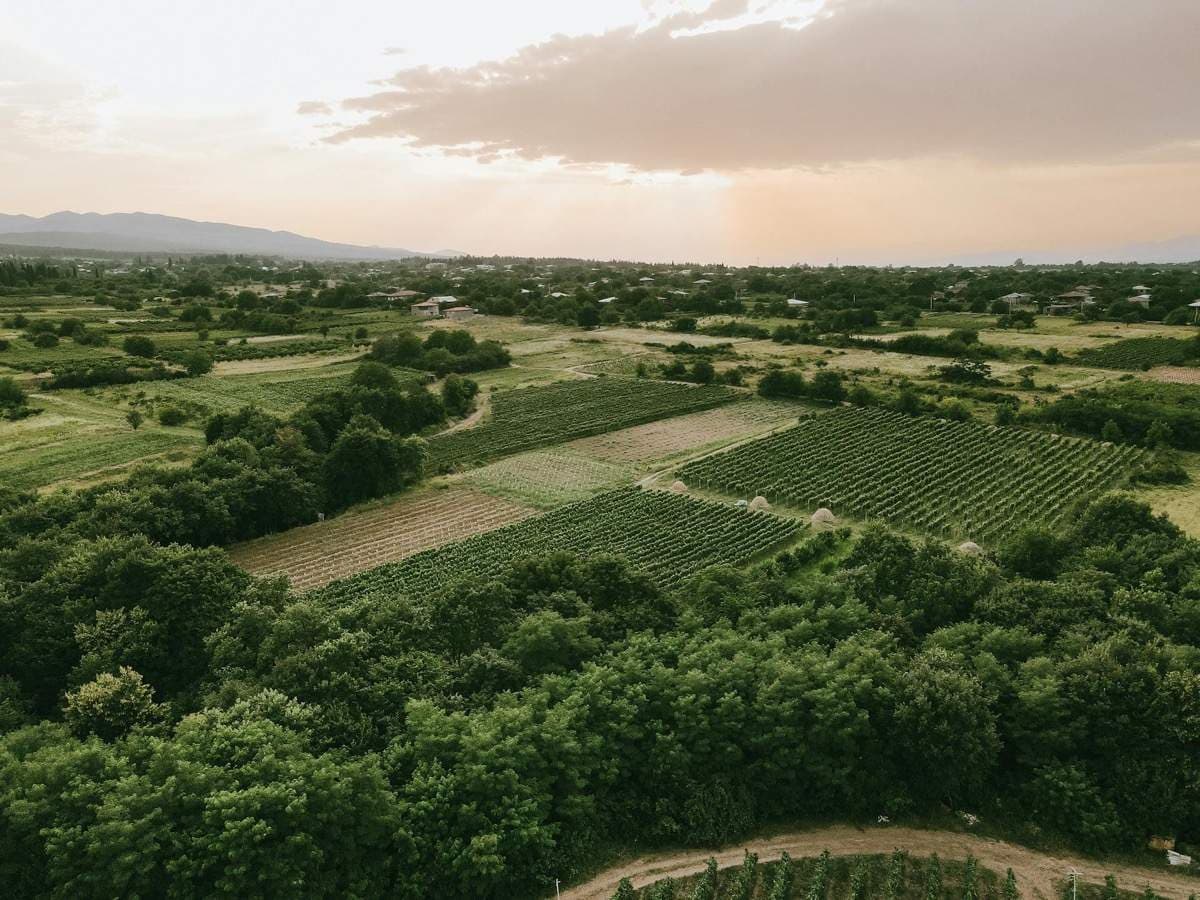
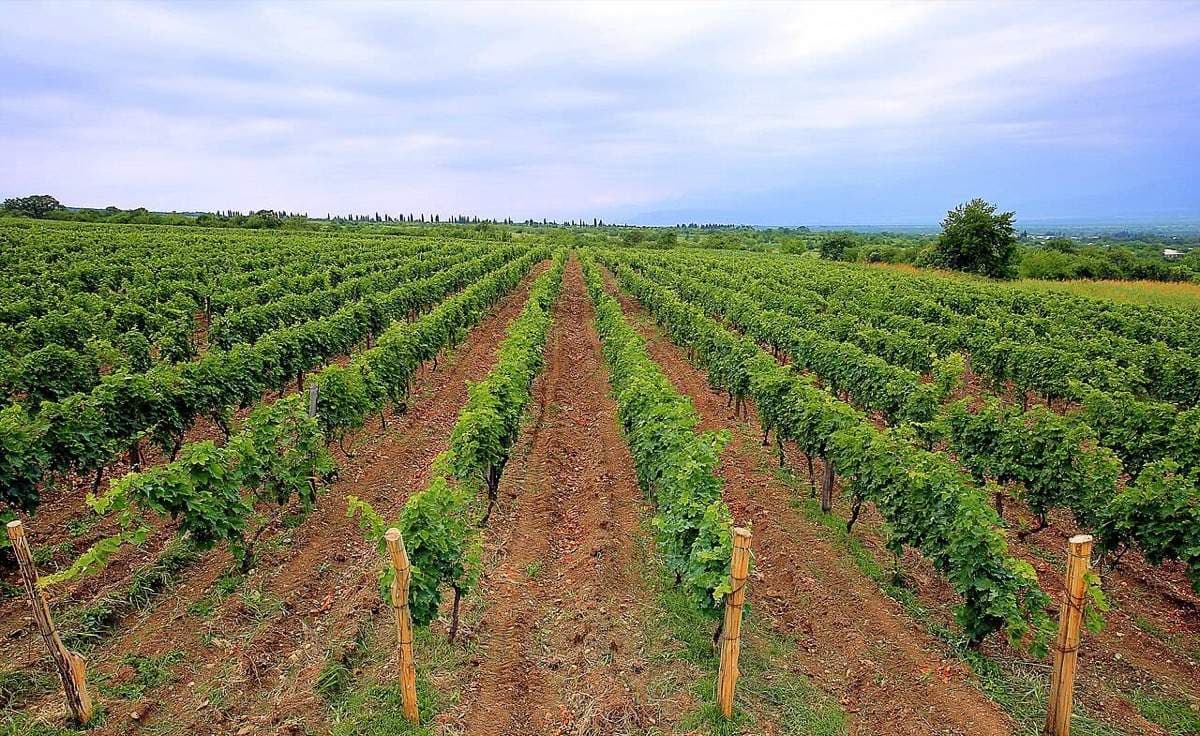
The Alazani Valley is the heart of Kakheti — a broad, fertile valley flanked by the Greater Caucasus mountains to the north and the smaller Gombori range to the south. The combination of warm days, cool mountain nights, and well-drained soils creates ideal grape-growing conditions.
Key appellations within Kakheti:
- Tsinandali — famous for dry white wines (Rkatsiteli-based)
- Mukuzani — powerful, oak-aged Saperavi reds
- Kindzmarauli — naturally semi-sweet Saperavi, enormously popular in Georgia and the former USSR
- Napareuli — elegant Saperavi reds and Rkatsiteli whites
- Kvareli — versatile, producing both dry and semi-sweet styles
Kakheti is where you'll find the highest concentration of wineries open to visitors, from large commercial operations like Teliani Valley and Schuchmann to tiny family cellars making 500 bottles a year.
Kartli
Central Georgia, surrounding the ancient capital of Mtskheta. Kartli is drier and more continental than Kakheti. The wines tend to be leaner and more mineral-driven.
Key grapes here include Chinuri (a crisp, refreshing white — think Georgian Chablis) and Tavkveri (a light, aromatic red sometimes compared to Beaujolais). Kartli also produces some of the best sparkling wines in Georgia using the traditional method.
Kartli doesn't get as many tourist visits as Kakheti, but the wines are distinctive and worth seeking out. Château Mukhrani, a beautifully restored 19th-century estate, is the most visitor-friendly winery in the region.
Imereti
Western Georgia, centered around the city of Kutaisi. The climate is warmer and more humid than the east, and the winemaking style differs significantly.
Imeretian winemakers traditionally use less skin contact than Kakheti producers — typically 1-3 months rather than the 6+ months common in eastern Georgia. The resulting wines are lighter, fresher, and more approachable. If you find Kakhetian amber wine too intense, Imeretian wines might be your entry point.
Key grapes: Tsitska and Tsolikouri (fresh, floral whites) and Otskhanuri Sapere (a complex red gaining international recognition).
Racha-Lechkhumi
A small, mountainous region in north-central Georgia, sometimes called "Georgian Switzerland." This is the home of Khvanchkara — a naturally semi-sweet red made from Aleksandrouli and Mujuretuli grapes that was allegedly Stalin's favorite wine.
Khvanchkara is unique. The fermentation naturally stops before all the sugar converts to alcohol because autumn temperatures in the mountain valleys drop low enough to halt yeast activity. The result is a genuinely semi-sweet red wine with no added sugar — something very rare in the wine world.
Racha-Lechkhumi produces tiny quantities and most of it is consumed domestically. If you can find a bottle, try it.
Key Grape Varieties
Red Grapes
| Grape | Profile | Where to Find |
|---|---|---|
| Saperavi | Georgia's flagship red. Deep, dark, tannic, with black fruit and earthy notes. Ages beautifully. | Everywhere, but best from Kakheti (Mukuzani, Napareuli) |
| Tavkveri | Light, aromatic, cherry-scented. Georgia's answer to Gamay. | Kartli |
| Aleksandrouli | Aromatic, medium-bodied, used in Khvanchkara blends. | Racha-Lechkhumi |
| Otskhanuri Sapere | Complex, elegant, gaining international attention. | Imereti |
White Grapes
| Grape | Profile | Where to Find |
|---|---|---|
| Rkatsiteli | The workhorse. Can be made dry, amber, or everything between. Versatile and food-friendly. | Kakheti (dominant grape) |
| Kisi | Aromatic, peachy, makes gorgeous amber wines with floral notes. | Kakheti |
| Mtsvane | "Green" in Georgian. Fresh, aromatic, often blended with Rkatsiteli. | Kakheti |
| Chinuri | Crisp, mineral, with green apple notes. Great as sparkling. | Kartli |
| Tsitska | Floral, citrusy, often blended with Tsolikouri. | Imereti |
| Tsolikouri | Rich, textured, excellent for both still and amber wines. | Imereti |
Start with Saperavi if you're a red wine drinker — it's Georgia's most important grape and you'll find it everywhere from supermarkets to fine dining. For whites, try a Kisi amber wine to understand what makes Georgian wine truly different.
The Natural Wine Connection
Georgia has become a pilgrimage destination for the global natural wine movement, and it's easy to understand why. Traditional Georgian winemaking is, by definition, "natural" — no added yeasts, no temperature control, no sulfites (or very minimal), no fining or filtering. The qvevri does the work.
This alignment between ancient tradition and modern trend has brought international attention, investment, and a new generation of Georgian winemakers who bridge both worlds. Producers like Pheasant's Tears, Iago's Wine, Lapati Wines, and Archil Guniava have become darlings of the natural wine scene.
The result is a fascinating split in Georgian wine today: large commercial producers making clean, conventional wines for export markets, and small artisanal producers making traditional qvevri wines that command high prices at natural wine bars from Brooklyn to Tokyo.
Both styles have merit. Don't be a snob about either.
Where to Taste in Tbilisi
Tbilisi has an excellent and growing wine bar scene. These are our favorites:
Wine Bars
- Vino Underground — the original natural wine bar in Tbilisi, located in a basement in the Old Town. Small, intimate, curated selection from small Georgian producers. The staff are knowledgeable and passionate.
- g.Vino — a more upscale wine restaurant with an enormous Georgian wine list and excellent food pairings. Good for a special dinner.
- Wine Gallery — casual, friendly, with a good range of both conventional and natural Georgian wines by the glass.
- Ghvinis Moedani (Wine Square) — a cozy spot near the sulfur baths with a rotating selection of small-producer wines.
Wine Shops
- 8000 Vintages — the best wine shop in Tbilisi for Georgian wine. Knowledgeable staff, excellent selection across all price ranges, and they'll ship internationally.
Most wine bars in Tbilisi offer tasting flights — typically 3-5 wines for 25-50 GEL ($9-18). This is the best way to explore different regions, grapes, and styles without committing to full bottles.
Where to Taste in Kakheti
Kakheti is where wine tourism really comes alive. Options range from large commercial operations to intimate family cellars.
Large Wineries (Professional tours, English-speaking guides)
- Schuchmann Wines — German-Georgian operation with a beautiful chateau, restaurant, and hotel. Professional tastings and tours.
- Teliani Valley — one of Georgia's largest producers. Sleek, modern facility with a good tour program.
- Château Khareba — famous for its wine tunnel carved into a mountainside. Dramatic setting, decent wines.
- Twins Wine House — a more traditional operation in Napareuli with excellent qvevri wines.
Small Family Cellars (Authentic, personal, sometimes rustic)
- Pheasant's Tears (Sighnaghi) — perhaps Georgia's most internationally famous natural winery. The tasting room in Sighnaghi is a must-visit.
- Nika Bakhia — a tiny producer in Kvareli making exceptional qvevri wines. Call ahead.
- Our Home Wine — a family operation near Telavi offering tastings in their actual home, with homemade food.
The family cellars are where the magic happens. You'll sit at a wooden table in someone's garden, taste wines straight from the qvevri, eat homemade Georgian food and bread, and hear stories about four generations of winemaking. These experiences can't be replicated anywhere else.
Wine Etiquette in Georgia
Wine in Georgia is embedded in a rich system of ritual and etiquette, centered around the supra — the traditional Georgian feast.
Key things to know:
- The tamada — every supra has a toastmaster (tamada) who leads the toasts. When the tamada makes a toast, everyone drinks. You don't sip casually between toasts — you wait for the next one.
- Toast structure — toasts follow a traditional order: to God, to Georgia, to the dead, to the living, to family, to the host, to friends, to love. They can be eloquent, emotional, and long.
- Drink the whole glass — when a toast is made, you're expected to finish your glass (or horn). This is why Georgian glasses are small. Pace yourself.
- Don't toast with beer — tradition says toasting with beer brings bad luck. Use wine or chacha (grape brandy).
- Chacha — this is Georgian grappa, made from grape pomace. It ranges from rough homemade firewater (45-65% ABV) to refined commercial products. You will be offered chacha. Be careful.
Georgian hospitality + wine toasting culture = you will drink more than you planned. Eat the bread. Drink water between toasts. Don't try to keep up with Georgians who've been training for this their entire lives.
Buying Wine to Bring Home
Georgian wine is cheap locally — a good bottle costs 15-40 GEL ($5-15), and even premium bottles rarely exceed 80-100 GEL ($30-37). Back home, the same bottles (if you can find them) cost 2-4x more.
Tips for buying:
- Supermarkets — decent selection of commercial wines. Good for everyday Saperavi and Rkatsiteli.
- 8000 Vintages (Tbilisi) — best selection, including small producers you won't find elsewhere
- Directly from wineries — often the cheapest option, and you can get bottles not available in shops
- Customs limits — check your home country's allowance. Most allow 1-2 liters duty-free.
- Pack carefully — wrap bottles in clothes, use wine shipping sleeves if you have them, and put them in checked luggage (never carry-on)
Three Family Wineries in Kakheti
Our 8-day Grand Highlights tour includes three winery visits in Kakheti — a mix of a professional operation with guided tastings and smaller family cellars where you'll taste wine directly from the qvevri, meet the winemakers, and sit down to a home-cooked meal paired with their wines. It's the best way to experience Georgian wine culture without the guesswork of organizing it yourself.
Still not convinced Georgia belongs on your wine travel list? Read why we think it's the most underrated wine destination in the world.
Want to explore Kakheti's vineyards on your own? Rent a car from Tbilisi →
Ready to Experience Georgia?
Join our 8-day small group tour through Georgia. From Tbilisi to Kazbegi to Kakheti wine country. Max 10 guests.