
Why Georgia Is the Most Underrated Wine Destination in the World
Here's a sentence that shouldn't be controversial but somehow still surprises people: Georgia is the birthplace of wine.
Not France. Not Italy. Not Spain. Georgia — a small country in the Caucasus mountains, roughly the size of Ireland, population 3.7 million — has been making wine for 8,000 years. That's before writing. Before the wheel. Before the Egyptian pyramids. Archaeological evidence from Gadachrili Gora, a village 50 kilometers south of Tbilisi, shows that Neolithic Georgians were fermenting grapes in clay vessels around 6000 BCE.
So why does Georgia barely register on most wine travelers' radars? Why do millions of people fly to Bordeaux, Tuscany, Mendoza, and Napa Valley each year — and almost nobody flies to Kakheti?
The answer is complicated and it's changing fast. Here's why Georgia is not just an interesting wine destination, but the most underrated wine destination on earth — and why now is the time to go.
The Case for Georgia as the World's Best Wine Destination
Before we talk about why Georgia is underrated, let's establish what it's actually rating against. Georgia competes with the best wine destinations on earth on five dimensions:
History. Georgia has been making wine longer than anywhere else. Period. The evidence isn't ambiguous — archaeologists have found grape pips, tartaric acid residues, and intact qvevri (clay vessels) from the Neolithic period at multiple sites across the country. This isn't a claim about being "among the oldest." It's the oldest, by at least 2,000 years.
Uniqueness. The qvevri method — fermenting and aging wine in beeswax-lined clay vessels buried underground — is not a historical curiosity. It's a living tradition practiced by thousands of families across Georgia and now recognized by UNESCO as Intangible Cultural Heritage. The resulting wines — especially amber wines — taste like nothing else in the world. Tannins, dried fruit, nuts, oxidative notes, extraordinary texture. You'll love them or find them strange. Either way, you won't be bored.
Variety. Georgia has roughly 525 indigenous grape varieties. Of those, about 45 are in active commercial production. Most wine-producing countries work with a handful of international grapes (Chardonnay, Cabernet Sauvignon, etc.) and perhaps a dozen indigenous ones. Georgia's biodiversity is off the charts — thanks to the country's position at the intersection of Europe and Asia, its dramatic topography, and thousands of years of isolation from Western wine trends.
Value. This is where it gets absurd. A good bottle of Georgian wine costs 15–40 GEL locally. That's $5–15 USD. A premium bottle — small production, hand-harvested, qvevri-aged, the kind of thing a sommelier in Brooklyn would charge $80 for — costs 50–100 GEL ($18–37). Tasting flights at Tbilisi wine bars run 25–50 GEL ($9–18) for 3–5 wines. A full-day wine tour through Kakheti with tastings at three wineries, lunch, and transport runs about $80–120 per person.
Authenticity. In Bordeaux or Napa, wine tourism is a polished, commercial industry. In Georgia, especially Kakheti, you can sit at a wooden table in a family's garden, taste wine drawn directly from a qvevri buried in the ground, eat homemade khachapuri and mtsvadi, and talk to the winemaker — who is probably the grandmother of the family — through a translator. No tasting room, no gift shop, no "wine club membership." Just wine that a family has been making the same way for generations.
Georgia has more indigenous grape varieties than any country in the world except possibly Italy. The difference? Almost nobody outside Georgia can name a single one. That's how underrated we're talking about.
The Comparison: Georgia vs. the World's Famous Wine Destinations
Let's be clear about what you actually get when you compare Georgia to the heavyweights:
| Category | Georgia (Kakheti) | Bordeaux | Napa Valley | Tuscany |
|---|---|---|---|---|
| Wine history | 8,000 years | ~2,000 years (Roman era) | ~150 years | ~3,000 years (Etruscan) |
| Tasting fee (per winery) | $3–15 (often free) | $20–100+ | $30–75+ | $15–50 |
| Bottle price (good quality) | $5–15 | $25–50 | $35–60 | $15–30 |
| Day tour cost (per person) | $80–120 | $200–400 | $250–500 | $150–300 |
| Crowds | Low to moderate | High (June–Sept) | High (year-round) | High (May–Oct) |
| English at wineries | Mixed (guides fix this) | Excellent | Excellent | Good to excellent |
| Unique indigenous grapes | 525 varieties, 45+ commercial | 6 main red, 6 main white | Mostly international | ~15 key Italian varieties |
Georgia wins on history, wins on price, wins on uniqueness, wins on crowds. Where it loses — infrastructure and language — a guided tour completely solves.
A week of wine tasting in Kakheti costs roughly what a single day costs in Napa. Not because Napa is "better" — it's because Napa's labor costs, real estate values, and market positioning are on a completely different planet.
Why Georgia Is Still Underrated
If Georgia is so good, why isn't it famous? Three reasons:
1. The Soviet Era Destroyed Quality (and Reputation)
When the Soviet Union annexed Georgia in 1921, it took control of the wine industry and imposed a simple directive: quantity over quality. Ancient vineyards were ripped out and replaced with high-yield varieties. Qvevri winemaking was sidelined in favor of industrial tank production. Georgia became the USSR's wine factory — producing millions of liters of cheap, sweet, forgettable bulk wine.
The USSR's collapse in 1991 was devastating for Georgia politically and economically, but it was also the beginning of the wine industry's recovery. A new generation of winemakers — many of whom had grown up watching their grandparents make qvevri wine — began reviving the old methods. International attention (and investment) followed. By the 2010s, Georgian natural wines were appearing at Michelin-starred restaurants in Paris, Tokyo, and New York.
But reputations take decades to rebuild. Most wine drinkers still associate Georgia (the country, if they think of it at all) with cheap post-Soviet plonk. This is wildly inaccurate in 2026, but the perception persists.
2. Russia's Wine Embargo Was a Blessing in Disguise
In 2006, Russia — then Georgia's largest export market — banned Georgian wine imports, citing "quality concerns" (this was almost certainly political). The ban wiped out roughly 80% of Georgia's wine export market overnight.
The industry had two choices: collapse or diversify. It chose diversification. Georgian winemakers began targeting European, Asian, and North American markets. This forced quality improvements, professionalization, and a pivot toward premium positioning. Russia lifted the ban in 2013, but by then Georgia had developed new markets and a higher standard.
The export numbers tell the story: in 2005, over 90% of Georgian wine exports went to Russia. By 2023, Russia was still the largest single market but had dropped to roughly 55%, with Poland, Ukraine, China, Kazakhstan, and the EU growing fast. Georgian wine is now sold in 60+ countries.
3. It's Hard to Get There (and That's Part of the Appeal)
Tbilisi International Airport (TBS) has direct flights from maybe 20–25 cities globally. If you're coming from the US, you'll connect through Istanbul, Doha, Warsaw, or a handful of European hubs. It's not a weekend trip from anywhere except the Middle East and Eastern Europe.
But here's the thing: the same geographic isolation that kept Georgia's wine culture intact for 8,000 years has also kept it from being overrun. Bordeaux gets 6 million wine tourists per year. Kakheti gets... a tiny fraction of that. The inaccessibility is the preservation. When you visit, you're not fighting crowds at a famous château. You're one of a handful of visitors at a family cellar that might see 200 tourists all year.
The Natural Wine Revolution Has Put Georgia on the Map
If you've followed the global natural wine movement at all, you've heard of Georgia. The country has become something close to a spiritual homeland for the movement — and for good reason.
Traditional Georgian winemaking is, by definition, natural: no added yeasts, no temperature control, no sulfites (or very minimal), no fining, no filtering. The qvevri buried in the ground maintains a constant cool temperature. The egg shape of the vessel creates natural convection currents. Nothing is added. Nothing is taken away. It's exactly what natural winemakers in France, Italy, and the US have been trying to rediscover for the last two decades.
Producers like Pheasant's Tears, Iago's Wine, Lapati Wines, and Archil Guniava have become international cult favorites. Their bottles appear on wine lists at Noma in Copenhagen, Eleven Madison Park in New York, and Septime in Paris — often at prices that would make a Tbilisi wine drinker faint.
The natural wine movement has given Georgia something it didn't have 20 years ago: cachet. The coolest wine bars in the world serve Georgian amber wine. The most influential sommeliers talk about Saperavi and Rkatsiteli. Georgia is no longer an obscure footnote. It's becoming a destination.
What a Wine Trip to Georgia Actually Looks Like
If you're reading this and starting to think about going, here's what a realistic wine-focused trip looks like.
You'll fly into Tbilisi (TBS). The city is worth two full days on its own — not just for sightseeing, but because Tbilisi has one of the world's best wine bar scenes for a city its size. Start at Vino Underground (the original natural wine bar, tucked in an Old Town basement), move to g.Vino for food pairings, and finish wherever the night takes you. For bottles to take home, 8000 Vintages is the best wine shop in the country.
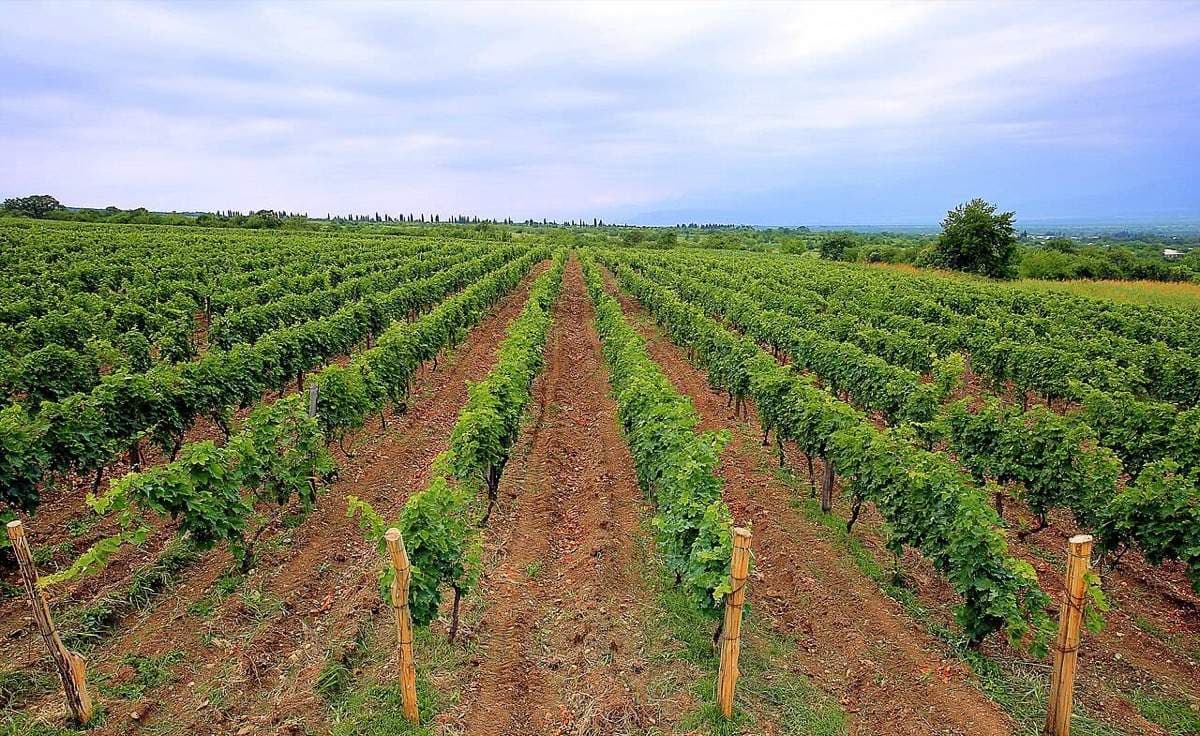
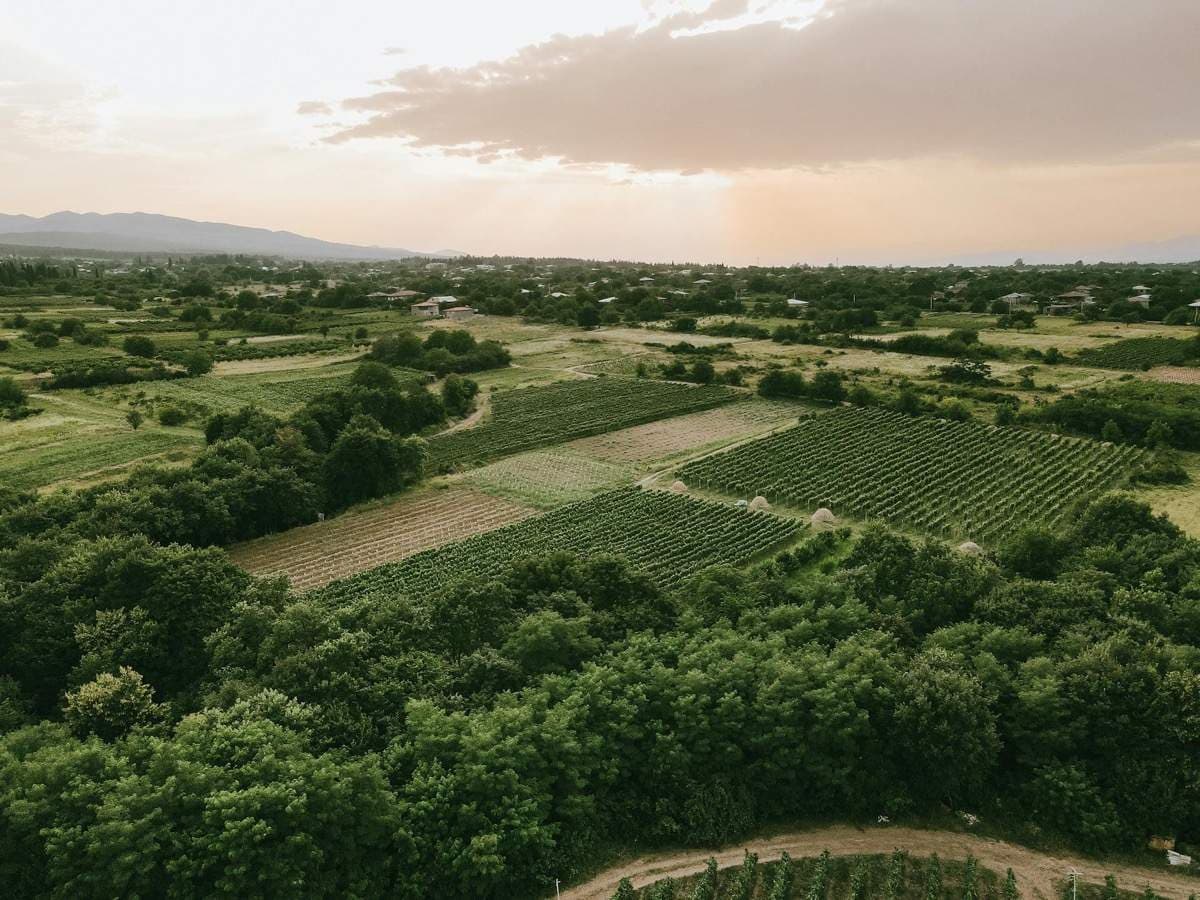
Then you'll head to Kakheti, the heart of Georgian wine country, about 1.5–2 hours east of Tbilisi. The Kakheti wine region produces roughly 70% of all Georgian wine. The Alazani Valley — broad, fertile, flanked by the Caucasus mountains — is one of the most beautiful wine landscapes in the world.
Over three days in Kakheti, you can visit a mix of:
- Large professional wineries like Schuchmann or Teliani Valley — elegant tasting rooms, English-speaking guides, restaurant-quality food, panoramic views over the valley
- Small family cellars like Nika Bakhia or Our Home Wine — no tasting room, no website, just a family, their qvevri, and food you'll remember for years
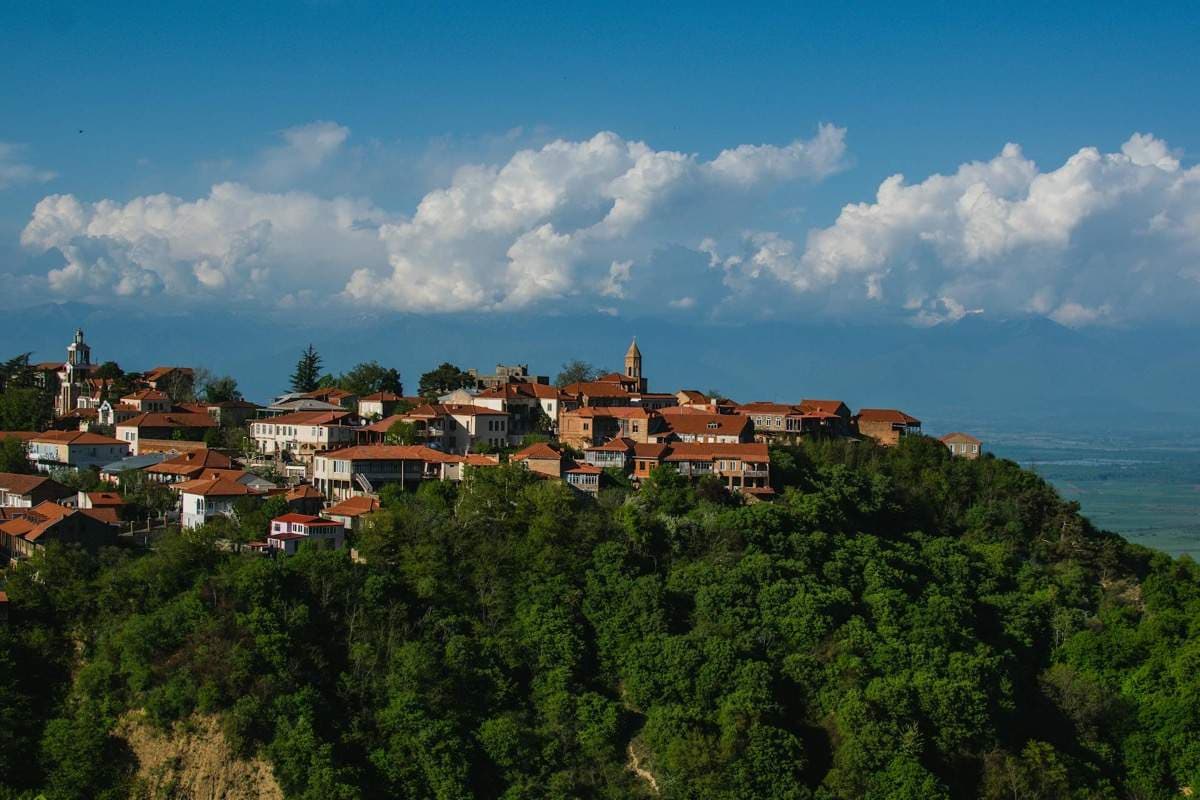
- The town of Sighnaghi — a restored hilltop town with fortress walls, panoramic views of the Alazani Valley, and an emerging food and wine scene
If you have more time, add Kartli (home to Château Mukhrani and distinctive Chinuri whites) or Imereti (around Kutaisi, with lighter, more approachable wine styles and less skin contact).
September and October are the best months for a wine trip to Georgia. It's Rtveli — the annual grape harvest — when the entire Kakheti region becomes one long celebration. Wineries welcome guests to help pick grapes, qvevri are filled, harvest feasts erupt, and fresh churchkhela (walnut-grape candy) hangs from every porch. See our guide to visiting Georgia in autumn for the full picture.
How to Actually Do It: Independent vs. Guided
You have two options for a wine trip to Georgia.
Option A: Go independently. Rent a car (or hire a driver), research wineries, make appointments, navigate language barriers, figure out where to eat, and don't drink too much because you're driving back through rural Georgia in the dark. This is completely doable and many people do it. Budget: roughly $60–90 per day for transport, tastings, and meals in Kakheti.
Option B: Join a guided tour. A guide handles driving, translation, winery appointments, and meal reservations. You show up, taste wine, eat food, learn things, and someone else worries about the logistics. A professional wine guide in Georgia is not just a driver — they're a translator, a cultural bridge, and often the difference between a polite tasting at a large winery and an extraordinary afternoon in a family cellar where nobody speaks English.
Our 8-day Grand Highlights tour includes three winery visits in Kakheti — a mix of professional operations and family cellars where you'll taste wine from the qvevri, meet the people who made it, and eat homemade food. It also covers Tbilisi, Kazbegi, Mtskheta, Vardzia, and Borjomi. The wine is a major component, not an afterthought.
For a deeper dive into the guided vs. DIY decision, see our comparison of guided tours and independent travel in Georgia.
Wine Etiquette in Georgia
A few things to know before you go. Wine in Georgia is not just a beverage — it's embedded in a system of ritual, social obligation, and hospitality that can be overwhelming if you're not prepared.
The Suprα. The Georgian supra is a traditional feast led by a tamada (toastmaster). Toasts follow a set order — to God, to Georgia, to the dead, to the living, to family, to the host, to friends, to love — and can be eloquent, emotional, and long. When the tamada says a toast, everyone drinks. You don't sip casually between toasts.
Pace yourself. Glasses are small (thankfully) but you're expected to finish yours on each toast. Eat the bread. Drink water between toasts. If you're offered chacha (Georgian grappa, 45–65% ABV), treat it with respect — or politely decline if you need to. No one will be offended.
Don't toast with beer. Tradition says toasting with beer brings bad luck. Use wine or chacha.
Don't try to keep up with Georgians. They've been training for this since approximately age 14. You haven't.
The Bottom Line
Georgia is not going to be the world's best wine destination forever. The secret is getting out. The natural wine movement has built awareness. Direct flights are increasing. More wineries are professionalizing. Quality is rising every year. Prices are still low — but they won't stay this low forever.
Right now, in 2026, Georgia occupies a sweet spot: the wine culture is 8,000 years old, the quality has never been higher, international recognition is genuine and growing, and the crowds — and prices — haven't arrived yet.
France has 10 million wine tourists a year. Italy has 15 million. Georgia has a tiny fraction of that. For now.
If you care about wine and you want to visit the place where it all began — before it becomes the next big thing — this is the moment.
See our 8-day Georgia wine tour →
Ready to Experience Georgia?
Join our 8-day small group tour through Georgia. From Tbilisi to Kazbegi to Kakheti wine country. Max 10 guests.
Yes. Archaeological evidence from sites in Georgia — specifically Gadachrili Gora and Shulaveris Gora — shows winemaking dating back to approximately 6000 BCE, making Georgia the oldest known wine-producing country in the world. This is 2,000–3,000 years older than wine production in Iran, Armenia, or any other region.
Three things: (1) The qvevri method — fermentation and aging in large clay vessels buried underground, producing wines with unique texture and complexity. (2) Amber wine — white grapes fermented with skins, stems, and seeds for months, yielding a tannic, oxidative style unlike anything in Europe. (3) 525 indigenous grape varieties, most found nowhere else on earth.
Exceptionally good. Kakheti wine region is 1.5–2 hours from Tbilisi and home to over 200 wineries open to visitors — from large chateau-style estates to tiny family cellars where you taste wine from the qvevri and eat homemade food. Prices are a fraction of what you'd pay in France, Italy, or Napa.
A good bottle of Georgian wine costs 15–40 GEL ($5–15) locally. Premium bottles rarely exceed 80–100 GEL ($30–37). Tasting flights at wine bars cost 25–50 GEL ($9–18) for 3–5 wines. A full day of wine tasting in Kakheti, including transport, can cost under $100.
Both work, but a guided wine tour solves several problems: wineries in Kakheti are spread across a large valley with no public transport; many family cellars require appointments and don't have English-speaking staff; and drinking and driving is obviously unwise. A guided tour handles logistics, translation, and safe transport.