
Georgia Food Tour Experience: What to Expect from a Culinary Journey in the Caucasus
If Georgia had a national sport, it wouldn't be rugby or football. It would be eating.
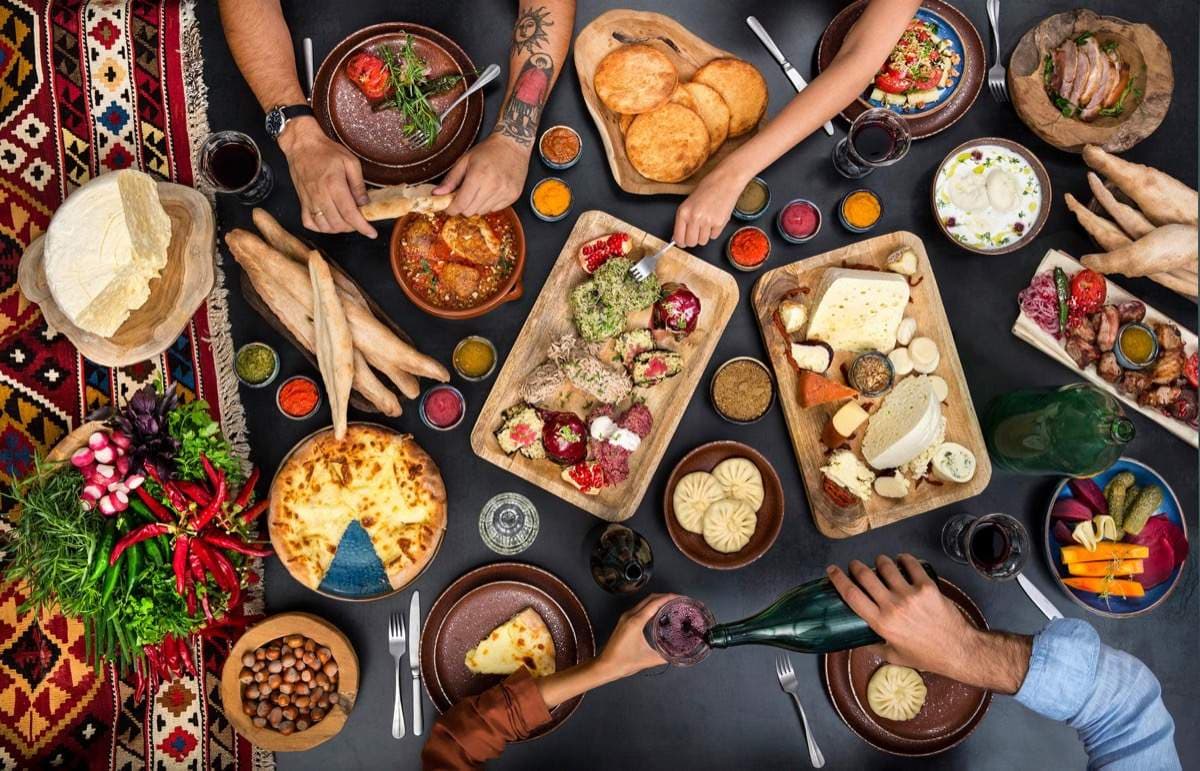
Georgian food is the kind of cuisine that changes how you think about meals. It's not just what you eat — it's who you eat with, where you eat, how long the meal lasts, and how many times your host insists you try just one more dish. A Georgian lunch can last three hours and include 15 courses. Not because anyone is trying to impress you. Because this is simply how Georgians eat.
If you're considering a food-focused trip to Georgia — whether that's a dedicated food tour, a culinary day trip, or just building your itinerary around restaurants and markets — here's exactly what to expect.
Food is central to our 8-day Grand Highlights tour. Every day includes at least one meal that tells a story about Georgia — from Tbilisi market tastings to family guesthouse feasts to a cooking class where you learn to make khinkali from a local grandmother. See the full itinerary →.
The Georgian Food Philosophy — Why It's Different
Before we get to specific dishes and tours, you need to understand one thing: Georgian food is not restaurant food. It's home food, elevated to an art form and served to strangers like they're family.
Three principles define Georgian food culture:
1. The guest is sacred. The Georgian word for guest — stumari (სტუმარი) — shares a root with the word for "sacred." When you sit at a Georgian table, you're not a customer. You're a gift. Your host will cook more than you can eat, refill your glass before it's empty, and consider it an insult if you don't ask for seconds.
2. Food is regional. Every region of Georgia has its own signature dishes. Kakheti has different food from Svaneti, which has different food from Adjara. A proper Georgian food experience means eating your way across the map.
3. Everything is made from scratch. Georgian grandmothers don't buy bread from a bakery — they bake it in a tone (clay oven). They don't buy cheese from a shop — they make sulguni from their own cow's milk. They don't buy wine from a store — they pour it from the qvevri in the yard.
The Dishes You Must Try
Any food-focused trip to Georgia should include these essential dishes. Here's what they are, where to find them, and what to expect:
Khinkali — The Georgian Dumpling
What it is: Large soup dumplings filled with spiced meat (usually pork and beef), herbs, and broth. Mushroom and cheese versions exist too.
How to eat them: Pick one up by the dough knot on top. Bite a small hole in the side. Slurp the broth out. Eat the filling and the surrounding dough. Leave the knot (it's considered good form to count your knots on a plate at the end — it's how Georgians track how many they've eaten).
Where to find them: Everywhere. But the best khinkali are at Vejineli in Tbilisi (our #1 pick), Machakhela, Zuka in Kazbegi, and any family guesthouse in the mountains. Budget: 1-2 GEL ($0.40-0.75) per khinkali. Eat 5-8 per person.
Khachapuri — The Cheese Bread
What it is: Cheese-filled bread in multiple regional styles. The most famous is Adjarian khachapuri — shaped like a boat, filled with melted cheese, butter, and a raw egg on top that you stir in while it's still hot.
Other styles:
- Imeretian — round, flat, cheese-filled (the everyday version)
- Megrelian — like Imeretian but with extra cheese on top
- Achma — layered lasagna-style version from Adjara
Where to find them: Tiflis Veranda in Tbilisi for Adjarian. Barbarestan for historical recipes. Any guesthouse for Imeretian. Budget: 8-15 GEL ($3-6).
Pkhali — The Walnut Spreads
What it is: Vegetable pastes (spinach, beet, cabbage, bean) mixed with ground walnuts, garlic, and herbs. Served cold as appetizers, usually in a trio or quartet.
Why it matters: Pkhali is the oldest dish on this list. Walnut-and-vegetable pastes have been a staple of Georgian cuisine for thousands of years, long before meat became a regular part of the diet. It's the original Georgian comfort food.
Where to find them: On every table in Georgia. If a restaurant doesn't serve pkhali, it's not a Georgian restaurant.
Chakapuli — The Spring Lamb
What it is: Lamb or veal stewed with tarragon, tkemali (sour plum sauce), white wine, and fresh herbs. It's a spring dish, traditionally made when the first tarragon and tkemali appear.
Why it matters: Chakapuli tastes like nowhere else on Earth. The combination of sour plum and tarragon is uniquely Georgian — you won't find this flavor profile in any other cuisine.
Where to find it: Seasonal (spring). Shavi Lomi in Tbilisi does an excellent version.
Churchkhela — The Georgian Snickers
What it is: Walnuts (or sometimes hazelnuts) threaded onto a string, dipped in thickened grape juice, and hung to dry. The result is a candle-shaped candy that's chewy, sweet, and slightly nutty.
Where to find them: Everywhere — at markets, roadside stalls, wineries, and guesthouses. Budget: 2-5 GEL ($1-2). They keep for months and make perfect travel snacks and gifts.
What a Georgia Food Tour Actually Looks Like
If you book a food-focused experience in Georgia, here's what a typical day might include:
Morning: The Market
Start at Dezerter Bazaar in Tbilisi — the city's central market. Your guide will take you through the stalls: mountains of spices, towers of churchkhela, wheels of sulguni cheese, barrels of pickled vegetables, and fresh herbs stacked like bouquets.
You'll taste as you go — a wedge of cheese here, a spoonful of tkemali there, a piece of churchkhela for the road. Markets are the best introduction to Georgian food because they show you the ingredients before they become dishes.
Midday: The Cooking Class
A Georgian cooking class is less about recipes and more about technique. You'll learn to fold khinkali by hand (the pleating takes practice), stretch khachapuri dough, and mix pkhali from scratch. The best classes are in a family kitchen, not a culinary school.
By the end, you'll eat everything you've made — and a Georgian cooking class produces significantly more food than you expect.
Afternoon: The Winery Lunch
In Kakheti, lunch at a family winery is a food-and-wine pairing experience. The winemaker's wife or mother cooks a meal — khinkali, lobio (bean stew), fresh bread, cheese, pickles — and pairs it with wines from the cellar. Each glass is poured from a different qvevri, and each wine tells a story about the vintage, the weather, and the soil.
Evening: The Supra
The supra is a traditional Georgian feast — 15-20 dishes on the table, a tamada (toastmaster) leading the toasts, and wine flowing from clay horns and glass carafes. It lasts 3-5 hours minimum. You will overeat. You will be offered more food when you say you're full. You will leave rolling.
And you will remember it for the rest of your life.
The Regional Food Map
If you're building a food-focused itinerary, here's what each region is known for:
| Region | Signature Dishes | Don't Miss |
|---|---|---|
| Tbilisi | Khinkali, khachapuri, pkhali, modern Georgian fusion | Dezerter Bazaar, Fabrika food hall, wine bars |
| Kakheti | Lobio (bean stew), mtsvadi (grilled meat), churchkhela | Family guesthouse meals, qvevri wine pairings |
| Kazbegi / Mountains | Kubdari (meat bread), mountain khinkali, fresh dairy | Guesthouse cooking, homemade beer |
| Svaneti | Kubdari, tashmijabi (cheese-potato mash), svanuri marili (salt blend) | Family supra, Svaneti salt for souvenirs |
| Adjara / Batumi | Adjarian khachapuri, achma, Black Sea fish | Batumi fish restaurants, Adjara-style cheese bread |
| Imereti | Imeretian khachapuri, chakapuli, elarji (cheese porridge) | Kutaisi market, home-cooked meals |
Food Tour Options — How to Do It
Option 1: Tbilisi Food Walking Tour ($30-60 per person)
A 3-4 hour guided walk through Tbilisi's food scene. You'll visit the market, sample dishes at 4-6 restaurants or food stalls, and learn about Georgian food history.
Best for: First-timers who want a structured introduction. What to expect: 6-8 tastings, a guide who knows food history, and a good overview of Georgian cuisine. Limitation: You'll eat in restaurants, not homes. It's curated, not intimate.
Option 2: DIY Market + Restaurant Exploration ($15-30 per person)
Explore Dezerter Bazaar on your own, then pick restaurants from a list of recommendations. Tbilisi has enough good Georgian restaurants that you can eat brilliantly without a guide.
Best for: Independent travelers who trust their own taste. What to expect: Freedom to go where you want, but you'll miss the context and connections a local provides. Tip: Ask your hotel or Airbnb host for restaurant recommendations — they know the places tourists don't find on Google.
Option 3: Cooking Class + Market Visit ($40-80 per person)
A half-day experience that combines a market visit with hands-on cooking. You'll buy ingredients at the market, then cook 3-4 dishes in a family kitchen or cooking school.
Best for: People who want to learn, not just eat. What to expect: Khinkali folding, khachapuri stretching, pkhali mixing. You'll eat what you cook (plus whatever else the host adds).
Option 4: Food Woven into a Guided Tour (Included in tour price)
This is what we do on our Grand Highlights tour. Every meal is intentional — not "here's a restaurant on the itinerary" but "here's where my family eats." You'll cook with a grandmother in Kazbegi, feast at a winery in Kakheti, and discover Tbilisi's underground food scene with a guide who grew up eating these dishes.
Best for: Travelers who want food as culture, not just cuisine. What to expect: Meals that tell stories. Every dish has a history, every table has a host, and every feast is an invitation.
Dietary Restrictions — Can You Eat in Georgia?
Vegetarians: Georgia is surprisingly vegetarian-friendly. Pkhali, lobio, khachapuri (cheese bread), badrijani nigvzit (eggplant with walnut), and spinach-based dishes are all vegetarian. Khinkali has mushroom versions. Tell your guide or host and they'll accommodate you enthusiastically.
Vegans: More challenging but doable. Lobio (bean stew), pkhali (some varieties), bread, and fresh vegetables are vegan. Georgian cuisine uses a lot of cheese, butter, and dairy, so you'll need to be specific about what you can't eat.
Gluten-free: Difficult. Khachapuri and khinkali are wheat-based. But Georgian cuisine includes many naturally gluten-free dishes: mtsvadi (grilled meat), chakapuli, pkhali, and fresh salads. Communicate clearly and you'll find options.
Nut allergies: Problematic. Walnuts are everywhere in Georgian cuisine — in pkhali, in sauces, in desserts. Inform your guide or host in advance.
Always communicate dietary restrictions before the meal, not during. Georgian hosts take food personally — telling them mid-meal that you can't eat something can feel like a rejection of their hospitality. A heads-up before sitting down gives them time to prepare alternatives.
The Bottom Line
Georgian food is not just good — it's transformative. Travelers who come for the sights and the mountains often leave saying the food was the highlight of their entire trip. And they're not alone.
A food-focused trip to Georgia is one of the most rewarding culinary experiences you can have — because the food is inseparable from the people who make it, the traditions that shape it, and the hospitality that surrounds it.
On our 8-day Grand Highlights tour, every meal is part of the story. You'll taste dishes that have been made the same way for centuries, cook with families who treat you like one of their own, and understand why Georgians consider a shared table to be the most sacred thing in the world.
Ready to Experience Georgia?
Join our 8-day small group tour through Georgia. From Tbilisi to Kazbegi to Kakheti wine country. Max 10 guests.
See the full itinerary, read reviews from past guests, and check available departure dates. Taste Georgia with us →