
Georgia Tour with Cooking Class: Supra, Wine & Family Meals in the Caucasus (2026)
There are cooking classes, and then there are cooking classes.
In most destinations, a cooking class means a bright kitchen, an apron with a logo, a chef who's taught the same recipe 500 times, and a certificate at the end. It's fine. You learn something. You take a photo. You move on.
A Georgian cooking class is different.
You're in someone's actual kitchen. The grandmother is teaching you. The wine comes from a clay vessel buried in the yard. The meal you cook is followed by a supra — a Georgian feast with toasts that last longer than most dinner parties. And at the end, there's no certificate. There's a hug, a bottle of wine pressed into your hands, and a promise to come back.
This is what a cooking class looks like when it's part of a Georgia tour — not a tourist activity, but an invitation into a way of life.
The cooking class on our 8-day Grand Highlights tour takes place in a family home in Kakheti wine country. You'll cook with a Georgian grandmother, taste wine from their qvevri, and sit down to a supra feast. See the full itinerary →.
The Georgian Kitchen — Why Cooking Here Is Different
Georgian food is not restaurant food. It's home food, elevated to an art form and served to strangers like they're family.
Three things define the Georgian cooking experience:
The guest is sacred. The Georgian word for guest — stumari (სტუმარი) — shares a root with the word for "sacred." When you're invited into a Georgian home to cook, you're not a customer. You're an honored guest. Your host will cook more than you can eat, refill your glass before it's empty, and consider it a personal failure if you leave hungry.
The grandmother is the authority. In Georgia, cooking knowledge passes from grandmother to mother to daughter. The best cooks aren't trained chefs — they're grandmothers who've been making khinkali every Sunday for 40 years. When you take a cooking class in Georgia, you're learning from the source.
Everything is made from scratch. Georgian grandmothers don't buy bread from a bakery — they bake it in a tone (clay oven). They don't buy cheese from a shop — they make sulguni from their own cow's milk. They don't buy wine from a store — they pour it from the qvevri in the yard.
What You'll Cook
Khinkali — The Georgian Dumpling
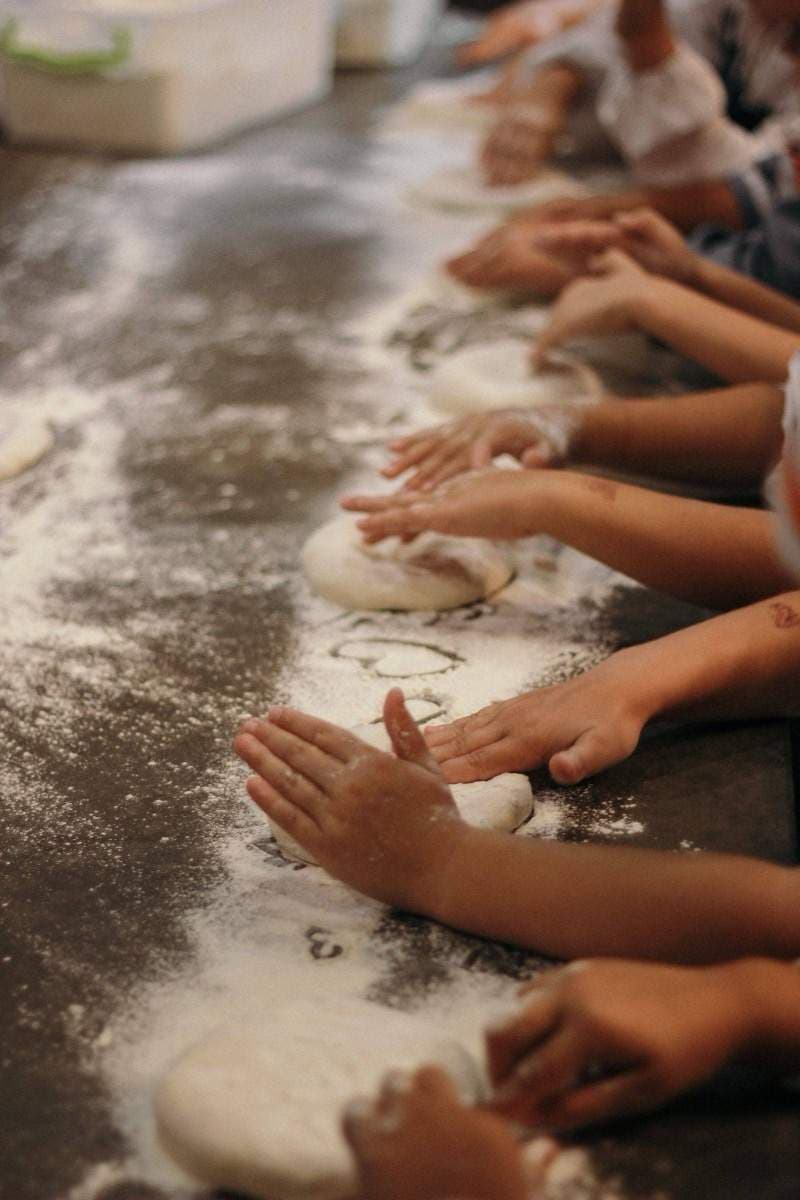
What it is: Large soup dumplings filled with spiced meat (pork and beef), herbs, and broth. The dough is rolled thin, filled, pleated into a top knot, and boiled.
The technique: The dough must be thin enough to be translucent but strong enough to hold the broth. The filling is seasoned with coriander, black pepper, and fresh herbs (cilantro, parsley, basil). The pleating — 18-20 folds — is what separates a good khinkali from a great one.
How to eat them: Pick one up by the top knot. Bite a small hole in the side. Slurp the broth out. Eat the filling and dough. Leave the knot on your plate — Georgians count their knots to track how many they've eaten.
Pro tip: Don't use a fork. Using a fork for khinkali is like using a fork for soup — it misses the point.
Khachapuri — The Cheese Bread
What it is: Cheese-filled bread in multiple regional styles. You'll typically learn two:
- Adjarian khachapuri — shaped like a boat, filled with melted sulguni cheese, topped with butter and a raw egg. You stir the egg and butter into the hot cheese and tear off pieces of bread to dip.
- Imeretian khachapuri — round, flat, cheese-filled. The everyday version that Georgian families make for dinner.
The technique: The dough is yeast-based and needs to rest. The cheese filling is simple — just sulguni (a semi-soft Georgian cheese) and sometimes imeruli (a fresher, tangier cheese). The shaping is the skill: Adjarian khachapuri requires folding the dough into a boat shape without tearing.
Pkhali — The Vegetable-Walnut Paste
What it is: A cold appetizer made from chopped vegetables (spinach, beetroot, cabbage, or green beans) mixed with a walnut-garlic-coriander paste. Served with mchadi (cornbread) or as a side dish.
The technique: The walnut paste is the key — ground walnuts, garlic, coriander, blue fenugreek (utskho suneli), and vinegar. The vegetables are blanched, squeezed dry, and mixed in. The result is a rich, nutty, tangy paste that's uniquely Georgian.
Why it matters: Pkhali is the dish that most surprises first-time visitors to Georgia. It's vegetarian, it's ancient, and it's nothing like anything in Western cuisine.
The Supra — The Feast That Follows
After you cook, you eat. And in Georgia, eating is not a quick affair.
A supra (სუფრა) is a Georgian feast — a multi-course meal that can last 3-6 hours, accompanied by wine, chacha (grape brandy), and toasts (tamada — the toastmaster — leads the toasts, which are poetic, philosophical, and deeply moving).
A typical supra menu:
- Pkhali — the appetizer you just made
- Khachapuri — the bread you just baked
- Khinkali — the dumplings you just pleated
- Mtsvadi — grilled meat skewers (prepared by the host while you cook)
- Lobio — bean stew with herbs and spices
- Salads — fresh tomato, cucumber, and herb salads
- Cheese and bread — always more cheese, always more bread
- Churchkhela — walnut candy for dessert (grape must and walnuts, shaped like a candle)
And wine. Always wine. Poured from the qvevri, served in kantsi (drinking horns) or regular glasses, depending on the family's tradition.
The toasts are the heart of the supra. The tamada (toastmaster) leads a series of toasts — to peace, to family, to ancestors, to guests, to Georgia. Each toast is a mini-speech, and guests are expected to respond. If you're the guest of honor, you'll be toasted at least three times.
The supra is not a performance. It's how Georgians celebrate, mourn, welcome, and say goodbye. When you're invited to a supra, you're being included in the most important social tradition in Georgian culture.
Where the Cooking Class Happens
The cooking class on our tour takes place in Kakheti — Georgia's wine region, 2 hours east of Tbilisi.
Kakheti is where Georgian wine was born (6,000 BC, according to archaeological evidence). It's where the qvevri tradition is still alive — not in museums, but in family yards. And it's where the food is at its most authentic, because Kakheti is not a tourist destination in the way Tbilisi is. It's a farming region, and the food reflects that: fresh, seasonal, made from ingredients grown within walking distance.
The family who hosts the cooking class has been making wine and food in Kakheti for generations. Their qvevri are buried in the yard. Their vegetables come from the garden. Their cheese is from a neighbor's cow. And their kitchen is where you'll spend the afternoon learning to cook.
This is not a cooking school. It's a home.
Why This Matters on a Tour
A cooking class on a Georgia tour isn't just an activity. It's the moment when Georgia stops being a destination and starts being a place you understand.
Before the cooking class, you've seen the sights — the churches, the mountains, the wine cellars. You've learned the history. You've tasted the food.
But cooking with a Georgian family is when the culture becomes real. You learn that Georgian food is about hospitality, not technique. That the grandmother doesn't measure anything — she knows by feel. That the wine isn't a product — it's a family member. That the supra isn't a meal — it's a philosophy.
And you learn that the best way to understand a country is to cook in someone's kitchen.
What Our Guests Say
"The cooking class was the highlight of the entire trip. Not the mountains, not the wine cellars — cooking khinkali with Nino's grandmother in her kitchen in Kakheti. She didn't speak English, but she didn't need to. She showed us, we copied, we laughed, we ate. And then the supra. I've never experienced anything like it."
— Sarah M., London
"I've done cooking classes in Italy, Thailand, and Morocco. None of them come close to Georgia. In those places, you're in a classroom. In Georgia, you're in someone's home. The difference is everything."
— David K., New York
"My daughter is vegetarian and I was worried about the food on the tour. The cooking class solved everything — pkhali is vegetarian, khachapuri is vegetarian, and the grandmother made us a separate batch of vegetable khinkali. She was so proud when we ate them."
— Rachel and Emma, Tel Aviv
How to Book
The cooking class is included in our 8-day Grand Highlights of Georgia tour. It takes place on Day 4 in Kakheti, as part of a broader itinerary that covers Tbilisi, Mtskheta, Kazbegi, Vardzia, and Borjomi.
Group size: Maximum 12 travelers Price: From $1,895 per person (all-inclusive — accommodation, meals, transport, guide, wine tastings, cooking class) Next departures: See our tour page → for upcoming dates.
Ready to Experience Georgia?
Join our 8-day small group tour through Georgia. From Tbilisi to Kazbegi to Kakheti wine country. Max 10 guests.
Not looking for a guided tour? Rent a car from Tbilisi → and explore Georgia's food scene on your own.
Related Posts
No. The cooking class is designed for complete beginners. The grandmother (or host) will guide you through every step. Most guests are surprised by how intuitive Georgian cooking is — it's about technique, not precision.
Typically khinkali (Georgian soup dumplings), khachapuri (cheese bread), and pkhali (vegetable-walnut pastes). Some classes also include churchkhela (walnut candy) or lobio (bean stew). You'll eat everything you make.
Yes — the cooking class is one day within our 8-day Grand Highlights tour. It takes place in Kakheti wine country at a local family's home. It's not a standalone class but an integrated cultural experience.
Some operators in Tbilisi offer standalone cooking classes. However, the experience we include — cooking in a family home in Kakheti, with wine from their qvevri and a supra feast afterward — is only available as part of a multi-day tour.