

Driving in Georgia: Complete Guide to Roads, Rules & Self-Drive Tips (2026)
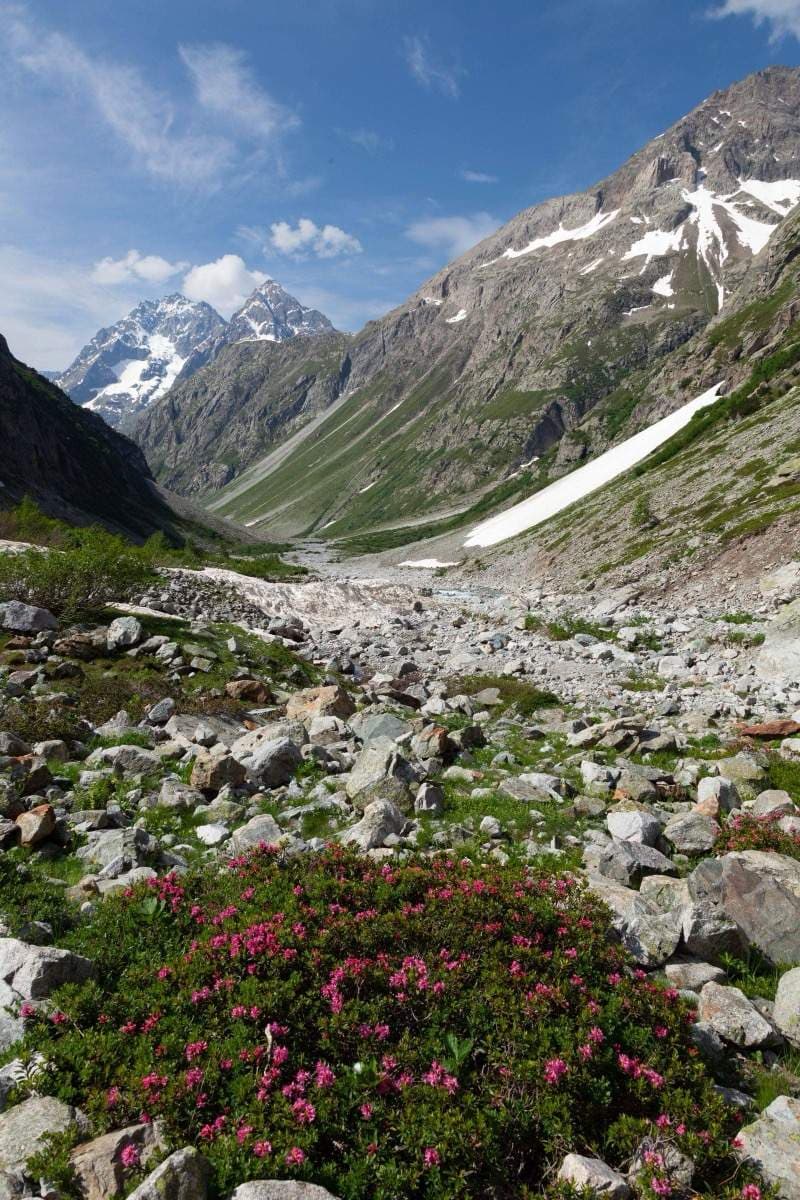
Driving in Georgia is one of the best ways to experience the country. The scenery changes every hour — from the subtropical Black Sea coast to alpine passes at 2,400 meters, from ancient cave monasteries to vineyards that predate Rome. The roads are mostly paved, distances are manageable, and renting a car is straightforward.
But there are catches. Mountain roads demand respect. Driving culture is assertive. And some rules — like carrying your original license — are easy to miss until a police checkpoint reminds you.
Here's everything you need to know before you get behind the wheel in Georgia.
We maintain our own fleet of sedans, SUVs, and 4x4s in Tbilisi, Kutaisi, and Batumi — all with unlimited mileage and optional no-deposit coverage. Browse our rental fleet →.
International Driving Permit: Do You Need One?
Which licenses are accepted
Most foreign driving licenses are accepted in Georgia without an International Driving Permit (IDP):
- US licenses — accepted
- UK licenses — accepted
- EU licenses — accepted
- Canadian licenses — accepted
- Australian licenses — accepted
- Israeli licenses — accepted
- GCC licenses — accepted
Your license must be in Latin script (or accompanied by a notarized translation). If your license is in Arabic, Chinese, Cyrillic, or another non-Latin script, you'll need an IDP or a notarized Georgian translation.
When an IDP is recommended
Even when not strictly required, an IDP is worth getting if:
- Your license doesn't have a photo
- Your license is in a non-Latin script
- You're renting from an international chain (they sometimes require it even when Georgian law doesn't)
- You want an extra layer of documentation at police checkpoints
An IDP costs $15–25 in most countries and is valid for one year. Apply through your national automobile association before traveling.
What to carry at all times
Georgian law requires you to carry these documents while driving:
- Original driving license (not a photocopy)
- Vehicle registration (provided by the rental company)
- Insurance documents (also from the rental company)
- Passport or ID (for identity verification)
Keep these in the glove compartment. Police officers will ask for them at checkpoints.
Is It Safe to Drive in Georgia?
The short answer: yes, with caveats.
Georgia is not a dangerous country to drive in, but it's not like driving in Western Europe either. Here's an honest breakdown:
What's safe
- Main highways — well-paved, well-marked, and regularly maintained
- Daytime driving — visibility is good, and most roads are fine in daylight
- Tourist routes — Tbilisi to Kazbegi, Tbilisi to Kakheti, Tbilisi to Batumi are all straightforward
- Police presence — visible on main roads, which deters reckless driving
What requires caution
- Mountain roads — narrow, winding, often without guardrails
- Night driving — many roads have no lighting, livestock can wander onto the road, and potholes are harder to see
- Overtaking culture — locals will pass on blind curves. Stay right, stay calm, don't speed up
- Winter conditions — snow and ice close higher passes. The Georgian Military Highway can close temporarily during heavy snow
Avoid driving at night in the mountains. Plan your arrivals before dark, especially on routes to Kazbegi, Svaneti, and remote villages. If you're running late, pull over at a guesthouse rather than pushing on in the dark.
Driving culture in Georgia
Georgian driving is spirited. Understanding the local style will make your experience much smoother:
- Horn use is communication, not aggression. A short beep means "I'm here" on a blind curve. It's normal and expected.
- Overtaking is aggressive. Locals will pass you on mountain roads. Stay right, maintain your speed, and let them go.
- Speed limits are enforced. 60 km/h in cities, 90 km/h on open roads, 110 km/h on highways. Fines are real and collected on the spot or via mail.
- Seatbelts are mandatory for all passengers.
- Phone use is hands-free only.
- Alcohol limit is zero tolerance. Don't risk it. Georgian wine is strong — designate a driver.
Road Conditions by Region
Main highways (good condition)
| Route | Distance | Surface | Notes |
|---|---|---|---|
| Tbilisi → Batumi (via Khashuri) | 360 km | Modern highway | Fast, well-maintained, 4.5–5 hours |
| Tbilisi → Kazbegi (Military Highway) | 150 km | Paved highway | Winding mountain road, 3–3.5 hours |
| Tbilisi → Kakheti / Sighnaghi | 110 km | Good highway | Easy drive, 2 hours |
| Tbilisi → Borjomi | 160 km | Paved | Some mountain sections, 2.5–3 hours |
| Tbilisi → Mtskheta | 20 km | Urban highway | 30 minutes |
Secondary roads (variable condition)
| Route | Surface | Notes |
|---|---|---|
| Kazbegi → Gergeti Trinity Church | Dirt track | 4WD only, steep and rough |
| Kazbegi → Truso Valley | Gravel | River crossings in places, 4WD recommended |
| Mestia → Ushguli | Mountain road | 45 km, 2–3 hours, absolutely requires 4WD |
| Tusheti (Omalo pass) | Mountain pass | Legendary and terrifying. 4WD mandatory. Open June–September only |
| Rural village roads | Mixed | Often narrow, no shoulders, occasional potholes |
Seasonal considerations
- May–October: All main routes open. Mountain passes clear. Best driving season.
- November–April: Snow and ice on mountain roads. Snow chains required. Some passes close temporarily.
- Spring (March–April): Rain can make dirt roads muddy and impassable. Check conditions before heading off-road.
- Summer (July–August): Dry and hot. Dust on unpaved roads. Tourist traffic increases.
Check road conditions before mountain trips. Ask your rental company, check local Facebook groups, or call the Georgian Road Department (+995 32 2 40 40 40). Weather can change fast in the mountains.
The Georgian Military Highway: Driver's Guide
The Georgian Military Highway (Tbilisi → Kazbegi) is the country's most iconic drive. Here's what you need to know:
The route
The road climbs from Tbilisi (380m) through the Zhinvali Reservoir, past Ananuri Fortress, up to Gudauri ski resort (2,200m), over the Cross Pass (2,395m), and down into the dramatic Terek River valley with Mount Kazbek (5,054m) dominating the horizon.
Stops worth making
- Zhinvali Reservoir and Ananuri Fortress (70 km) — 30–45 minutes. A medieval fortress complex on turquoise water.
- Gudauri and the Friendship Monument (120 km) — 15 minutes. Soviet-era mosaic overlooking the Devil's Valley.
- Cross Pass (2,395m) — 10 minutes. The highest point. Step out, feel the altitude, take the photo.
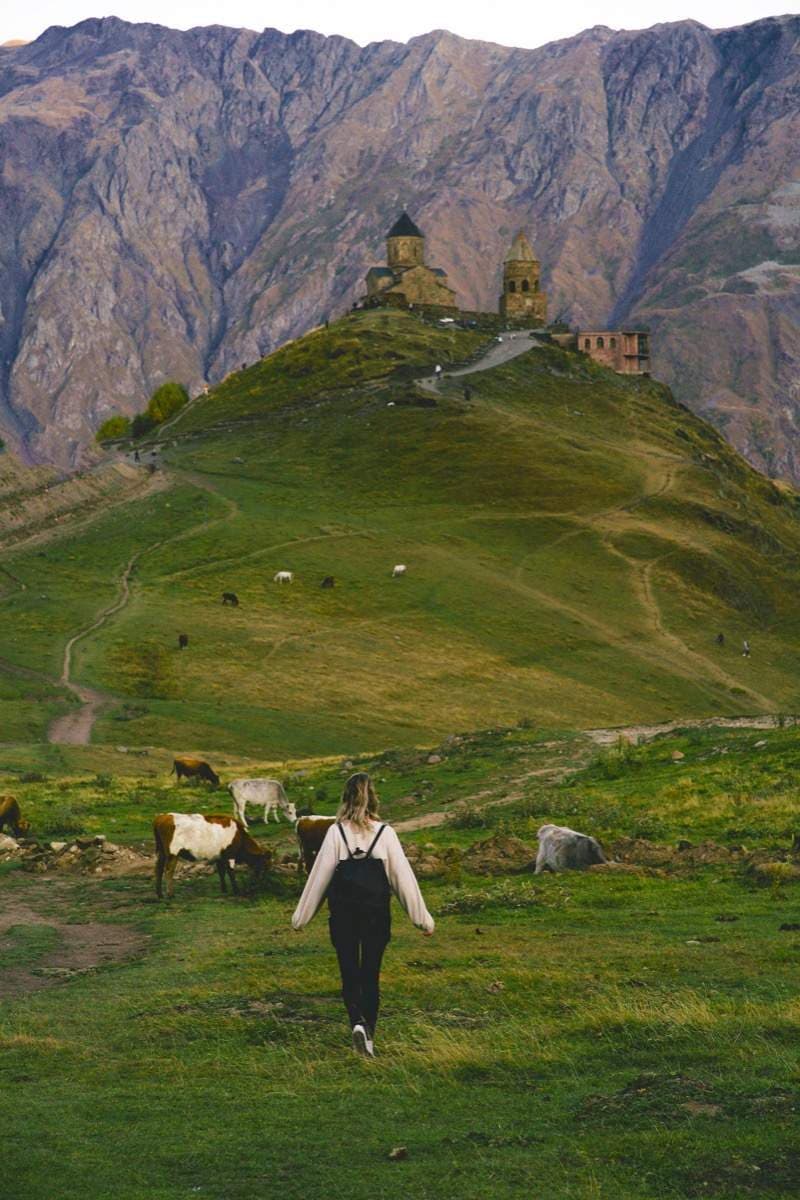
- Stepantsminda (Kazbegi) — the destination. Stay overnight and hike or 4WD up to Gergeti Trinity Church at sunrise.
Driving tips for the Military Highway
- Keep right. Trucks move slowly uphill. Let faster vehicles pass.
- Use your horn on blind curves. Georgians do. It's expected and it's safe.
- Don't rush. The scenery is the point. A 3-hour drive can easily become 5 with stops.
- Fill up in Gudauri. The last reliable gas station before Kazbegi.
- Watch for livestock. Cows and sheep wander onto the road, especially near villages.
- Winter driving: Carry chains. The highway usually stays open but can close during heavy snow. Check conditions before departure.
Mountain Driving: What You Need to Know
Mountain driving in Georgia is a different skill set from highway driving. Here's how to prepare:
Vehicle requirements
- Sedan: Fine for main highways in summer (Tbilisi–Kazbegi, Tbilisi–Kakheti, Tbilisi–Batumi)
- Compact SUV: Better for secondary roads and light gravel (Truso Valley, some Svaneti roads)
- 4x4 SUV: Essential for Ushguli, Tusheti, Gergeti Trinity Church road, and any winter mountain driving
Do NOT attempt the road to Ushguli or the Tusheti pass in a regular car. People try this every year. People get stuck every year. Local 4x4 drivers will charge you $100+ to pull you out. Rent the right vehicle from the start.
Mountain driving techniques
- Use engine braking on descents. Don't ride the brakes — they'll overheat. Shift to a lower gear.
- Stay in your lane. Overtaking on mountain roads is dangerous. Wait for a straight section.
- Honk before blind curves. A short beep alerts oncoming traffic.
- Watch for rockfalls. After heavy rain, rocks can tumble onto the road. Scan the road ahead.
- Pull over for faster vehicles. If someone is tailgating, find a safe spot to let them pass.
- Don't drive in fog. Mountain fog can reduce visibility to near zero. Wait it out.
Essential mountain driving kit
- Snow chains (winter)
- Spare tire and jack (verify before leaving)
- Water and snacks
- Warm clothing (temperatures drop fast at altitude)
- Phone charger and offline maps
- Flashlight
Parking in Tbilisi and Other Cities
Tbilisi parking
- Paid zone: City center, weekdays 9 AM–6 PM
- Rate: 0.50–1.00 GEL per hour (~$0.20–0.40 USD)
- Payment: Tbilisi Parking app or SMS (send your license plate number to 9393)
- Free: Sundays, public holidays, and outside the paid zone
- Tips: Park near your hotel and walk. The center is compact. Avoid parking on sidewalks — you'll get ticketed or towed.
Other cities
| City | Parking | Notes |
|---|---|---|
| Kazbegi (Stepantsminda) | Free | Small unpaved lots. Can fill up on weekends. |
| Sighnaghi | Free | Limited spaces near the old town. Arrive early. |
| Batumi | Free to paid | Beachfront boulevard has paid zones. Side streets are free. |
| Mtskheta | Free | Small lots near monuments. Can get crowded. |
| Kutaisi | Free | Ample parking throughout the city. |
General parking tips
- Don't block driveways or narrow streets. Georgian streets are tight, and blocking traffic will get you in trouble.
- Look for marked lots. Unmarked parking on grass or sidewalks is illegal.
- Use hotel parking. Most hotels and guesthouses offer free parking — ask when booking.
- Trailheads: Small unpaved lots. Can fill up on weekends. Arrive early.
Police Checkpoints and Traffic Rules
What to expect at checkpoints
Police checkpoints (called "posti") are common on main highways, especially outside Tbilisi. Here's what happens:
- Routine stop: The officer waves you over, asks for your documents, checks them, and waves you on. Takes 30 seconds.
- Speed check: Some checkpoints have radar. If you were speeding, you'll be pulled over and fined.
- Document check: Officers verify your license, registration, and insurance. Everything must be original — photocopies are not accepted.
How to handle a checkpoint
- Stay calm and polite. Georgian police are professional and courteous in most cases.
- Roll down your window. Have your documents ready in the glove compartment.
- Hand over documents when asked. License, registration, insurance, passport.
- Don't offer money. Bribery is illegal and can get you in serious trouble. Fines are issued through official channels.
- Ask for a receipt if fined. All fines should come with an official receipt.
Speed limits and fines
| Zone | Speed Limit | Typical Fine |
|---|---|---|
| City / urban | 60 km/h | 50–100 GEL |
| Open road | 90 km/h | 50–100 GEL |
| Highway | 110 km/h | 50–200 GEL |
| School zone | 30 km/h | 100–200 GEL |
Fines can be paid at banks, post offices, or online via the Georgian government portal. Some fines must be paid on the spot.
Other traffic rules
- Seatbelts: Mandatory for all passengers.
- Child seats: Required for children under 12.
- Phone use: Hands-free only.
- Alcohol: Zero tolerance. Fines start at 500 GEL and can include license suspension.
- Headlights: Must be on at all times outside urban areas.
- Right of way: Vehicles approaching from the right have priority at unmarked intersections.
Fuel, Toll Roads, and Costs
Fuel
- Gas stations: Frequent on main highways (Wissol, Socar, Lukoil, Rompetrol). Less common in remote areas.
- Fuel types: Regular (92 octane), Premium (95), Diesel. Most rental cars take 95.
- Price:
2.70–3.00 GEL/liter ($1.00–1.10 USD). - Tip: Fill up before heading into mountain areas. The last reliable station before Kazbegi is in Gudauri.
Toll roads
Georgia has no toll roads. All highways, including the Tbilisi–Batumi expressway, are free to use. This is one of the advantages of driving in Georgia.
Daily driving costs
| Item | Budget (sedan) | Mid-Range (SUV) | Premium (4x4) |
|---|---|---|---|
| Fuel (150 km/day) | $12–15 | $18–22 | $25–30 |
| Parking | $2–5 | $2–5 | $2–5 |
| Total per day | $14–20 | $20–27 | $27–35 |
Add car rental costs on top of this. See our car rental guide for pricing by city and vehicle type.
Renting a Car in Tbilisi: What to Know
If you're planning to drive in Georgia, here are the key things to confirm before booking:
- Insurance: Does the price include CDW (collision damage waiver)? What's the excess? Can you reduce it with full coverage?
- Deposit: Most companies require a credit card hold of $300–1,000. Some offer no-deposit options at a premium. Read our no-deposit guide →
- Mileage: Unlimited is standard with local companies. International chains may cap at 200–300 km/day.
- Vehicle inspection: Photograph the car thoroughly before driving off. Note every scratch, dent, and scuff on the rental agreement.
- Spare tire and jack: Verify they're in the trunk. On mountain roads, you'll want them.
- Border crossing: Most rental contracts forbid crossing into Russia, Azerbaijan, or sometimes even Armenia. If you plan a cross-border trip, declare it upfront.
Ready to explore Georgia on your own terms? We offer no-deposit rentals with unlimited mileage across our fleet in Tbilisi, Kutaisi, and Batumi. Browse our rental fleet →.
Related Posts
Most national driving licenses are accepted in Georgia without an IDP, including US, UK, EU, Canadian, Australian, and Israeli licenses. Your license must be in Latin script or accompanied by a notarized translation. An IDP is recommended but not strictly required for most nationalities. Always carry your original license — photocopies are not accepted at police checkpoints.
Yes, Georgia is generally safe for self-driving. Main highways are paved and well-maintained. Mountain roads can be narrow and winding, and driving culture is assertive — locals overtake on blind curves. Drive defensively, avoid night driving in the mountains, and you'll be fine. In winter (November–April), snow chains or 4WD are essential for mountain routes.
Main highways (Tbilisi–Batumi, Tbilisi–Kazbegi, Tbilisi–Kakheti) are in good condition and fully paved. Secondary roads vary — some are freshly paved, others have potholes. Mountain roads to Svaneti, Tusheti, and remote villages are often unpaved, narrow, and require a 4x4. Winter brings snow and ice to higher passes.
Police checkpoints (posti) are common on main highways, especially outside Tbilisi. Officers may stop you for a routine document check. Always carry your original driving license, vehicle registration, and insurance documents. Be polite, roll down your window, and hand over documents when asked. Speeding fines are enforced — typically 50–200 GEL depending on the violation.
Parking in central Tbilisi is paid on weekdays (9 AM–6 PM) via the Tbilisi Parking app or SMS. Rates are affordable at around 0.50–1.00 GEL per hour. Parking is free on Sundays and outside the paid zone. In tourist towns like Kazbegi, Sighnaghi, and Batumi, parking is usually free but can fill up during peak season.