
Solo Travel in Georgia: Safety, Itineraries & Tips for First-Timers (2026)
Georgia — the country in the Caucasus, not the US state — has quietly become one of the world's best destinations for solo travelers. It's not just that it's safe and affordable (it's both). It's that the culture actively works against loneliness.
The Georgian concept of stumari — guest — means a visitor is considered sent by God. This isn't marketing copy. It's why a stranger in a mountain village will pull you off the road, sit you at their table, and pour you homemade wine on a random Wednesday. When you travel solo in Georgia, you are never really solo. The country won't let you be.
This guide is for first-timers: a neighborhood-by-neighborhood safety breakdown, four ready-to-use itineraries (3, 5, 7, and 14 days), specific tips for meeting other travelers, and honest advice on when it makes sense to go fully independent versus joining a small group tour.
Is Georgia Safe for Solo Travelers? The Honest Answer
Let's start with the question everyone Googles before booking a flight.
Yes, Georgia is very safe for solo travelers. The violent crime rate against tourists is nearly zero. Tbilisi is routinely cited as one of Europe's safest capitals for walking alone at night. There's a dedicated tourist police unit with English-speaking officers in major cities.
Some numbers for context:
- Georgia's homicide rate is 1.1 per 100,000 — lower than the US (6.3), France (1.3), and similar to the UK (1.2). Source: UNODC.
- The Global Peace Index ranks Georgia around 80th out of 163 countries — comparable to Romania and Albania, and safer than Turkey, Thailand, or Brazil.
- Over 7 million international visitors arrived in Georgia in 2023. Tourism is a national priority, and the government invests heavily in tourist safety.
The biggest safety risk in Georgia isn't crime — it's driving. Georgian driving culture is aggressive, and mountain roads demand respect. If you're uncomfortable with assertive driving, hire a local driver ($50-80/day) or join a guided tour where transport is handled. For the full safety breakdown, see our comprehensive Georgia safety guide.
Safety by Neighborhood and Region
Not all of Georgia feels the same. Here's a solo-specific safety map:
| Area | Solo Safety | Notes |
|---|---|---|
| Tbilisi — Old Town | Excellent | Well-lit, busy until late, tourist police present. Safe at any hour. |
| Tbilisi — Sololaki | Excellent | Quiet residential streets, well-lit main roads. Safe at night. |
| Tbilisi — Vera | Excellent | Local neighborhood, very safe. Some darker side streets late at night. |
| Tbilisi — Marjanishvili | Good | Generally safe. Fabrika area is busy. A few rougher blocks to the west. |
| Tbilisi — Avlabari | Good | Safe but hilly and quieter at night. Well-lit around Sameba Cathedral. |
| Tbilisi — Vake | Excellent | Upscale residential. Very safe but far from tourist areas. |
| Kazbegi / Stepantsminda | Excellent | Small mountain town. Everyone knows everyone. Zero crime concern. |
| Sighnaghi / Kakheti | Excellent | Tiny wine town. Extremely safe. Quiet after 10 PM. |
| Mestia / Svaneti | Excellent | Remote mountain town. Safe but isolated. Tell someone your hiking route. |
| Batumi | Good | Beach city, generally safe. Standard coastal city awareness at night. |
Scams and Petty Crime
Georgia doesn't have the pickpocket culture of Barcelona or Rome. Bag-snatching and tourist scams are uncommon. The closest thing to a "scam" is taxi overcharging at the airport — solved by using the Bolt app instead of accepting rides from drivers who approach you.
Basic common sense applies: don't leave your phone on a restaurant table and walk away, don't flash expensive jewelry in marshrutkas, and park in guarded lots when driving. But you won't encounter the friendship bracelet trick, fake petitions, or rigged card games common in Western Europe.
Solo-Friendly Neighborhoods: Where to Base Yourself
Your neighborhood choice in Georgia shapes your entire solo experience. Stay in the right area and you'll stumble into wine bars, hidden bakeries, and spontaneous conversations. Stay in the wrong one and you'll spend half your trip in taxis.
Tbilisi: Old Town (Kala)
Best for: First-time solo travelers who want everything walkable.
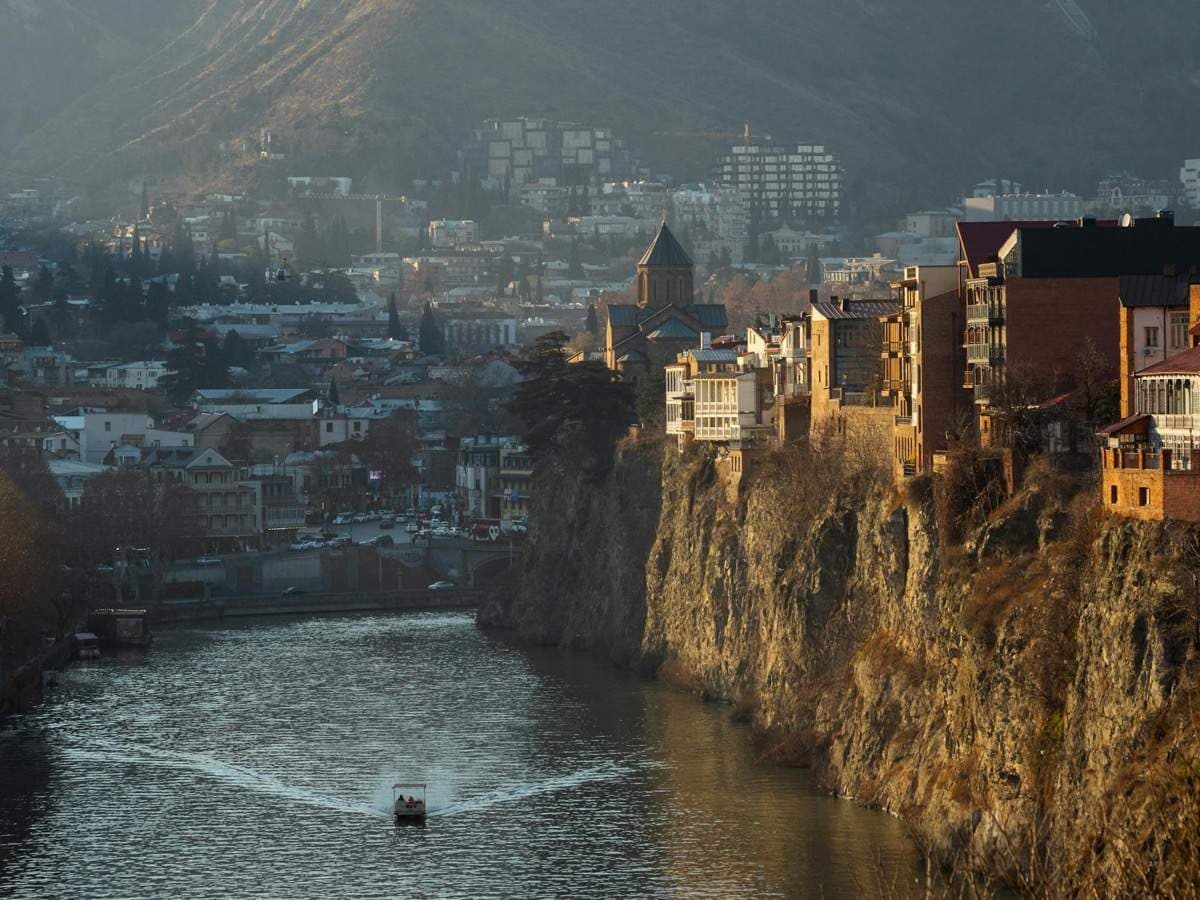
Old Town is the tourist heart of Tbilisi, and for good reason. Narrow cobblestone streets, leaning wooden balconies, sulfur baths, Narikala Fortress looming above. Every restaurant, wine bar, and hostel is within walking distance.
For solo travelers, Old Town's biggest advantage is the social density. You can join a free walking tour at 10 AM, grab lunch at a khinkali spot, spend the afternoon at the sulfur baths, and end up at a wine bar talking to strangers by 8 PM — all without taking a single taxi.
Where to stay: Hostels from $8-15/night (Envoy Hostel is excellent). Boutique hotels from $40-80. See our full Tbilisi neighborhood guide for specific picks.
Tbilisi: Sololaki
Best for: Solo travelers who want boutique vibes without tourist crowds.
Sololaki is Old Town's cooler, quieter cousin. More boutique hotels than hostels, more wine bars than clubs, more crumbling-chic than restored-shiny. It's a 5-10 minute walk to Old Town but feels distinctly different.
The solo advantage here is quality over quantity. The restaurants are fewer but better. The wine bars are less touristy. The streets are quieter at night but still well-lit and safe.
Tbilisi: Marjanishvili / Fabrika
Best for: Solo travelers who prioritize meeting people above all else.
Fabrika — a converted Soviet sewing factory that's now a hostel, coworking space, bar, and restaurant complex — is the single best place in Georgia to meet other travelers. The courtyard is a social magnet. Even if you don't stay at the hostel, come for a drink. You will meet people.
The broader Marjanishvili neighborhood is artsy, slightly rougher around the edges, and improving fast. It's a 15-minute walk to Old Town.
Tbilisi: Vera
Best for: Solo travelers who want to live like a local.
Vera is where young Tbilisians actually live. Leafy, residential, full of small cafes and wine bars. No tourist attractions — the attraction is the neighborhood itself. Perfect for solo travelers who value "living in" a city over "sightseeing in" one.
Kazbegi / Stepantsminda
Best for: Solo travelers who want mountains without logistics.
Stepantsminda (commonly called Kazbegi) is a small mountain town at the foot of Mount Kazbek. It's the easiest solo day trip or overnight from Tbilisi — marshrutkas leave from Didube station every couple of hours (15 GEL, ~3 hours).
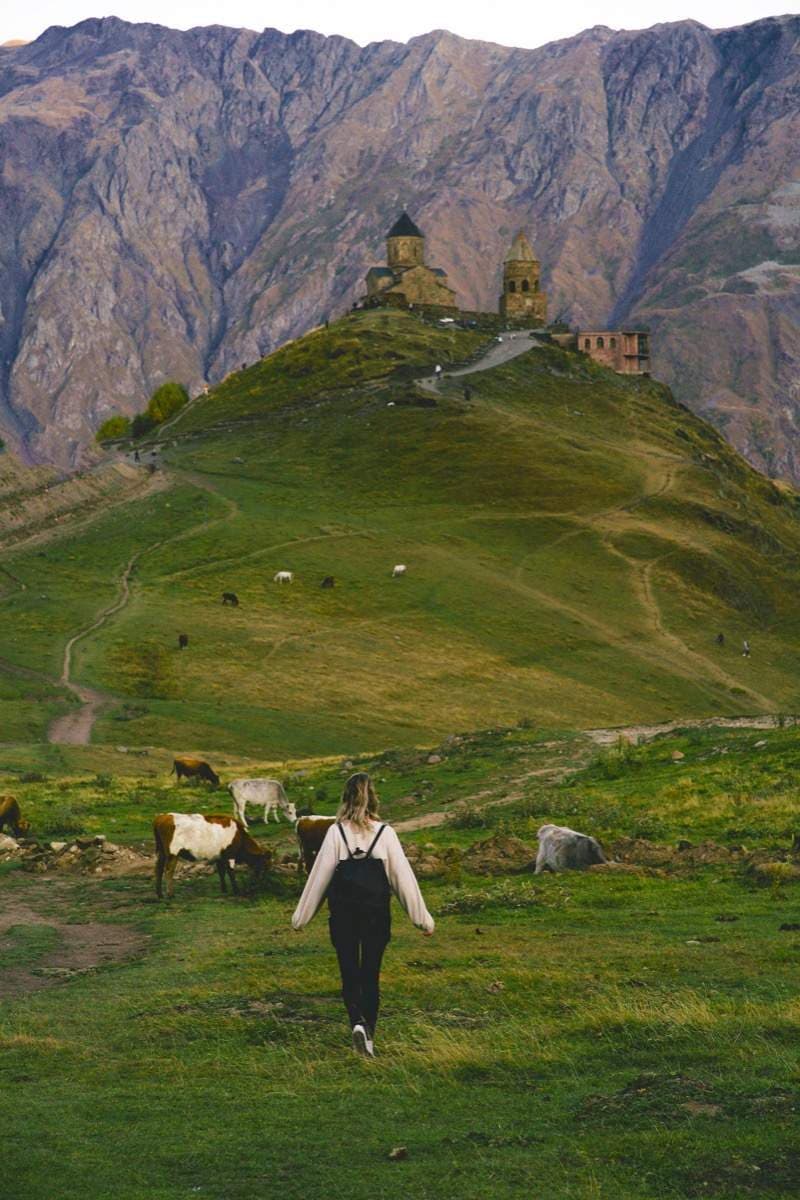
The solo advantage: guesthouses are inherently social. Dinner is served at one table — you, the other guests, and the host family. The hike to Gergeti Trinity Church is well-trafficked and straightforward. You won't be alone on the trail.
Sighnaghi / Kakheti
Best for: Solo travelers who want wine and walkability.
Sighnaghi is a tiny hilltop town in Georgia's wine region. It's walkable in 20 minutes, has stunning views over the Alazani Valley, and is surrounded by wineries. The solo challenge: wineries are spread across the valley and public transport between them is limited. Your options: join a day tour from Tbilisi, take a shared taxi, or rent a car.
The solo advantage: wine tastings are communal by nature. Strangers become friends over amber wine and chacha.
Mestia / Svaneti
Best for: Solo travelers who want a real adventure.
Mestia is a remote mountain town in the Svaneti region. Reach it by overnight train to Zugdidi + marshrutka, or by domestic flight ($35-60). The four-day trek from Mestia to Ushguli is one of the Caucasus' classic hikes — popular enough in summer (June-September) that you'll have company on the trail.
The solo challenge: language barriers increase significantly. Georgian is the only language in most villages. The solo advantage: guesthouse culture is at its most authentic here.
For the complete neighborhood and hotel breakdown, see Where to Stay in Tbilisi.
How to Meet People Traveling in Georgia
The number one concern solo travelers have isn't safety or cost — it's loneliness. Georgia solves this problem almost aggressively.
Hostels: The Social Infrastructure
Fabrika is the social epicenter of Tbilisi. A converted Soviet sewing factory with a hostel, coworking space, courtyard bars, and a rotating cast of travelers from everywhere. Even if you don't stay here, come for a drink. The courtyard alone is worth it.
Envoy Hostel in Old Town is smaller and more intimate, with rooftop views and organized pub crawls. Both attract a mix of ages, not just gap-year backpackers.
On your first day in Tbilisi, join a free walking tour (they run daily from Liberty Square at 10 AM and 3 PM). It's the single best way to orient yourself, learn the city's history, and meet other solo travelers — many of whom you'll run into again throughout your trip.
Guesthouse Communal Dinners
In Kazbegi, Mestia, Sighnaghi, and most rural towns, guesthouses are inherently social. Dinner is served at one table — you, the other guests, and the host family. You don't eat alone. You eat whatever the family eats, drink homemade wine, and swap stories with the German couple, the Israeli backpacker, and the French cyclist who all showed up that day.
This happens in villages with zero tourism infrastructure. It's not performance — it's how Georgians live.
Day Tours and Group Activities
Day tours from Tbilisi to Kazbegi, Kakheti, or Mtskheta run daily and cost 40-80 GEL ($15-30). You'll share a minivan with 6-10 other travelers. It's one of the easiest ways to meet people without any effort.
Free walking tours in Tbilisi run every morning and are a reliable day-one social connection. Wine tastings in Kakheti are communal by nature. Cooking classes bring small groups together around a shared experience.
The Supra
The Georgian supra is a feast led by a tamada (toastmaster) with structured toasts, rivers of wine, and more food than any table should hold. As a solo traveler, you are more likely to be swept into one, not less. A guesthouse host, a winery visit, a chance encounter at a market — any of these can turn into a supra invitation. Say yes.
Coworking Spaces
If you're working remotely, Tbilisi's coworking scene doubles as a social network. Impact Hub Tbilisi, Terminal, and Lokal all have community events, happy hours, and a mix of locals and internationals. Even if you're not working, a $5 day pass buys you coffee, fast WiFi, and people to talk to.
Tbilisi ranks among the top 30 cities globally for digital nomads, with an estimated 10,000+ remote workers based in the city at any given time. The combination of low costs, fast internet, and a one-year visa-free stay for most nationalities has built a large, social expat and traveler community.
Solo Itineraries: 3, 5, 7 & 14 Days
Not everyone has the same amount of time. Here are four ready-to-use itineraries, each designed specifically for solo travelers — with social opportunities built in and logistics kept manageable.
3-Day Solo Itinerary: Tbilisi + Day Trip
Best for: Long weekends, first taste of Georgia, travelers with limited time.
Day 1: Arrive in Tbilisi Land at TBS, take Bolt to your hotel (15-20 GEL, ~20 minutes). Drop bags and walk. Start at Meidan Square, wander through Abanotubani (the bath district), climb to Narikala Fortress for views. Evening: sulfur bath at Chreli Abano or Royal Bath House (40-80 GEL, 1 hour). Dinner at a nearby restaurant. You'll meet people at the baths — it's a shared experience.
Day 2: Tbilisi Deep Dive Morning: Dezerter Bazaar (the city's main market) for spices, churchkhela, and cheese. Walk to Rustaveli Avenue and the National Museum. Lunch at Machakhela for khinkali and khachapuri (20-30 GEL). Afternoon: cross the Bridge of Peace, explore the Fabrika district. Evening: wine bar crawl starting at Vino Underground. You'll meet people at every stop.
Day 3: Day Trip to Kazbegi or Mtskheta Take a day tour to Kazbegi (40-80 GEL) — you'll share a minivan with other travelers, stop at Ananuri Fortress, hike to Gergeti Trinity Church. Or take a marshrutka to Mtskheta (30 minutes, 3 GEL) and visit Svetitskhoveli Cathedral and Jvari Monastery independently. Evening: final dinner in Tbilisi.
Social factor: Medium. You'll meet people on day tours and at wine bars, but 3 days is short.
Solo difficulty: Easy. Everything is walkable or accessible by day tour.
5-Day Solo Itinerary: Tbilisi + Kazbegi + Kakheti
Best for: Long weekends with a bit more depth, travelers who want mountains and wine.
Days 1-2: Same as the 3-day itinerary above.
Day 3: Tbilisi → Kazbegi (overnight) Morning marshrutka from Didube to Stepantsminda (15 GEL, 3 hours). Check into a guesthouse. Afternoon: hike or 4x4 to Gergeti Trinity Church. Evening: guesthouse dinner at a communal table — you'll meet the other guests.
Day 4: Kazbegi → Tbilisi → Evening in the City Morning: sunrise view of Mount Kazbek. Midday marshrutka back to Tbilisi. Afternoon: free time — explore a neighborhood you missed, hit a coworking space, or just wander. Evening: wine bar or restaurant.
Day 5: Kakheti Day Trip Join a day tour to Kakheti (80-120 GEL) — visit Sighnaghi, 2-3 wineries, and a family cellar. Wine tastings are communal; you'll make friends. Evening: return to Tbilisi.
Social factor: High. Guesthouse dinners and wine tours are inherently social.
Solo difficulty: Easy. Marshrutkas and day tours handle the logistics.
7-Day Solo Itinerary: Full Highlights
Best for: First-time visitors who want the complete Georgia experience. This is the sweet spot.
Days 1-2: Tbilisi Same as above. Spend two full days absorbing the city — Old Town, markets, museums, wine bars, Fabrika, sulfur baths. Join a free walking tour on day one.
Day 3: Tbilisi → Mtskheta → Kazbegi (overnight) Morning: marshrutka or shared taxi to Mtskheta (30 minutes). Visit Svetitskhoveli Cathedral and Jvari Monastery (2 hours, free). Afternoon: continue to Kazbegi (2 more hours). Check into guesthouse. Evening: communal dinner.
Day 4: Kazbegi Morning: hike to Gergeti Trinity Church (1.5 hours up). Afternoon: explore Stepantsminda, visit the Ethnographic Museum, or just sit and watch the mountains. Evening: second guesthouse dinner — you'll know the other guests by now.
Day 5: Kazbegi → Tbilisi Morning marshrutka back to Tbilisi (3 hours). Afternoon: free time. Hit a neighborhood you missed. Evening: farewell dinner at a restaurant you've been wanting to try.
Day 6: Kakheti (overnight in Sighnaghi) Morning: marshrutka or shared taxi to Sighnaghi (2 hours). Check into a guesthouse. Afternoon: walk the fortress walls, visit Bodbe Monastery (20 minutes from town). Evening: dinner in Sighnaghi — small town, you'll meet people at the one or two restaurants.
Day 7: Kakheti → Tbilisi → Departure Morning: visit a winery near Sighnaghi (Pheasant's Tears or Twins Wine Cellar). Afternoon: return to Tbilisi (2 hours). Last-minute shopping at Dezerter Bazaar or Gallery 27. Evening: head to the airport.
Social factor: Very high. Multiple guesthouse dinners, day tours, and wine tastings.
Solo difficulty: Easy-Medium. Requires coordinating marshrutkas but nothing complex.
For the detailed 8-day version of this route with driving directions and specific restaurant picks, see our Ultimate Georgia Travel Itinerary.
14-Day Solo Itinerary: Deep Dive
Best for: Travelers with two weeks who want to go beyond the highlights.
Days 1-7: Follow the 7-day itinerary above.
Day 8: Tbilisi → Zugdidi → Mestia (overnight) Morning: train from Tbilisi to Zugdidi (4-5 hours, overnight train option available). Afternoon: marshrutka from Zugdidi to Mestia (3-4 hours, mountain road). Check into guesthouse. Evening: communal dinner in Mestia.
Day 9: Mestia Full day in Mestia. Visit the Svaneti Museum of History (excellent collection of icons and manuscripts). Walk to the medieval Svan towers — the symbol of the region. Afternoon: short hike to Koruldi Lakes (2 hours round trip, moderate). Evening: guesthouse dinner.
Day 10: Mestia → Ushguli (overnight) Hire a 4x4 or join a group for the drive to Ushguli (2 hours, rough road). Ushguli is Europe's highest permanently inhabited settlement. Check into a guesthouse. Afternoon: hike up to the Shikhra ridge for views of Mount Shkhara (Georgia's highest peak). Evening: the most remote guesthouse dinner of your trip.
Day 11: Ushguli → Mestia → Zugdidi Morning: short hike around Ushguli. Midday: 4x4 back to Mestia, then marshrutka to Zugdidi. Overnight in Zugdidi or push on to Tbilisi by evening train.
Day 12: Tbilisi Recovery day. You've been in the mountains for four days. Sleep in, explore a neighborhood you missed, hit a spa or bath house. Evening: nice dinner to celebrate.
Day 13: Vardzia Day Trip or Overnight Option A: Join a day tour to Vardzia from Tbilisi (long day, 10+ hours total). Option B: Take a marshrutka to Akhaltsikhe (3 hours), visit Rabati Castle, then taxi to Vardzia (30 minutes). Overnight near Vardzia in a guesthouse in Aspindza.
Day 14: Vardzia → Tbilisi → Departure Morning: explore Vardzia cave city (2-3 hours, 7 GEL). Afternoon: marshrutka back to Tbilisi via Akhaltsikhe (5-6 hours total). Evening: airport.
Social factor: Variable. Mestia and Ushguli are social at guesthouses but isolated otherwise. Vardzia is harder to reach solo — consider finding travel companions at your Tbilisi hostel.
Solo difficulty: Medium-Hard. Requires coordinating trains, marshrutkas, and 4x4s. Language barriers increase in Svaneti.
Solo itinerary hack: If 14 days feels like too much logistics, do the first 7 days independently, then join an 8-day small group tour for the second half. You get the best of both worlds — solo freedom in Tbilisi, then guided comfort for the remote regions.
Solo Female Travel in Georgia
Georgia is considered one of the safer destinations for solo female travelers — comparable to or better than most of southern Europe. Women regularly travel independently across the country without issues.
What Makes Georgia Good for Solo Women
Tbilisi is progressive and cosmopolitan. Women walk alone at night, go to bars, dress as they like. It feels comparable to other European capitals. The lack of street harassment is notable compared to many Mediterranean destinations.
The hospitality culture works in your favor. Georgian hosts treat female solo travelers like family, not customers. Guesthouse hosts will check on you, offer to walk you to dinner, and make sure you're comfortable. This is genuine, not performative.
The traveler community is supportive. Hostels, coworking spaces, and tour groups in Georgia have a strong female traveler presence. You'll meet other solo women within hours of arriving.
Nuances to Be Aware Of
Rural areas are more conservative. Outside Tbilisi, traditional gender roles are more pronounced. Unwanted attention (staring, persistent attempts at conversation) happens occasionally but rarely escalates. Firm politeness works. A clear "no, thank you" is respected.
Church dress code. Carry a lightweight scarf. Women are asked to cover their heads and shoulders at churches and monasteries. Most major churches have loaners at the entrance, but having your own is more comfortable and respectful.
Georgian men can be forward. In social settings, persistent offers to buy drinks or join them for dinner are common. This is generally cultural friendliness, not threatening behavior. But trust your instincts — if a situation feels off, leave.
Accommodation choice matters. Hostels in Tbilisi offer the most social safety net. In rural areas, guesthouses with female hosts or family-run properties are a good choice — you'll be treated like a daughter, not a customer.
Solo female travelers consistently report feeling safer in Tbilisi than in Paris, Rome, or Istanbul. The absence of catcalling and street harassment is the most commonly cited surprise. For the comprehensive safety guide — including LGBTQ+ considerations, driving risks, health, and emergency numbers — see our full Georgia safety guide.
Solo Travel Logistics: SIM, Apps, Money & Transport
Arriving alone means you need to sort a few things on day one. Here's the checklist.
SIM Card
Buy a Magti or Geocell SIM at the airport arrivals hall. Cost: ~10 GEL ($4) for a tourist SIM with 10GB of data. Takes five minutes with your passport. Coverage is solid on main routes and in cities, spotty in mountain valleys (Tusheti, parts of Svaneti, some Kazbegi gorges).
Essential Apps
- Bolt — for taxis. Cheaper and more reliable than hailing one on the street. Works in Tbilisi, Batumi, and Kutaisi.
- Google Maps — download the offline map for all of Georgia before leaving Tbilisi. Essential.
- Google Translate — download the Georgian language pack for offline use. The camera translation feature works on menus and signs.
- Booking.com / Hostelworld — for accommodation. Many rural guesthouses aren't listed online; call or just show up.
- WhatsApp — Georgians use it for everything. Tour confirmations, guesthouse bookings, restaurant reservations.
Money
Georgia uses the lari (GEL). ATMs are everywhere in cities. Cards are accepted at most Tbilisi restaurants and hotels. Carry cash for rural areas — guesthouses, marshrutkas, and small shops are cash-only.
Transport for Solo Travelers
Marshrutkas (minibuses) connect major towns cheaply (3-15 GEL) but run on loose schedules and fill up quickly. They depart from specific stations — Didube for Kazbegi, Ortachala for some southern routes. Ask your hostel for the current departure point and time.
Bolt taxis are affordable within cities (3-10 GEL in Tbilisi) and work for short intercity trips (Tbilisi to Mtskheta: ~15 GEL).
Shared taxis are the solo traveler's secret weapon for routes without marshrutka service. You pay for one seat in a car that leaves when it's full (usually 4 passengers). Common for Kazbegi, Sighnaghi, and Mestia routes. Ask at your hostel or at the relevant taxi stand.
Trains are limited but comfortable for specific routes: Tbilisi to Batumi (5 hours, scenic), Tbilisi to Zugdidi (for Svaneti access, overnight option available).
Download offline Google Maps for all of Georgia before leaving Tbilisi. Mobile data drops in the mountains — Tusheti, parts of Svaneti, and some Kazbegi valleys have zero signal. You do not want to be navigating an unfamiliar mountain road without a map.
For the complete transport guide, see Getting Around Georgia.
Solo Budget: What It Actually Costs
Traveling alone in Georgia costs more than splitting with a partner, but less than you'd think. The base prices are so low that the "solo tax" amounts to maybe $10-15/day extra.
The Solo Tax Explained
The biggest cost difference for solo travelers is accommodation and transport. A couple pays $20 for a double room; you pay $15-20 for a single or the same $20 for a double you're not sharing. A taxi to Kazbegi costs $60 whether there's one of you or four. These add up — but in Georgia, the base prices are so low that the solo surcharge barely stings.
Daily Budget Tiers
| Category | Budget Solo | Comfortable Solo | Guided Tour |
|---|---|---|---|
| Accommodation | $8-25 (hostel/guesthouse) | $40-70 (boutique hotel) | Included |
| Food & Drink | $14-23 | $36-59 | Included (most meals) |
| Transport | $3-6 (marshrutkas) | $15-25 (Bolt/private driver) | Included |
| Activities | $5-10 | $15-30 | Included |
| Daily Total | $45-65 | $80-130 | ~$144 |
Budget Solo ($45-65/day): Hostel dorm ($8-15) or budget guesthouse private room ($15-25). Street food breakfast ($2-3), market lunch ($3-5), sit-down dinner with wine ($9-15). Marshrutkas and metro ($3-6). Free hiking, free churches, one paid activity ($5-10). This is genuine comfort, not deprivation.
Comfortable Solo ($80-130/day): Boutique hotel or nice Airbnb ($40-70). Cafe breakfast ($6-10), good lunch ($11-19), restaurant dinner with wine ($19-30). Bolt taxis and occasional private driver ($15-25). Wine tastings, cooking class, guided day trips ($15-30).
Guided Tour (~$144/day): Our 8-day tour costs $1,150 per person — that's $144/day all-inclusive: boutique hotel, all breakfasts and five dinners, private transport for the entire trip, English-speaking guide, three winery visits, a cooking class, and all entrance fees. No single supplement. No negotiating with taxi drivers. No logistics.
Solo budget hack: Stay in hostels or guesthouses with kitchens. Hit a Carrefour or Goodwill supermarket for breakfast supplies and lunch ingredients. Save restaurant meals for dinner only. This brings comfortable solo travel down to $60-70/day while still eating out every evening.
For the complete cost breakdown with seasonal variations, see Georgia Travel Cost Guide.
When to Go Solo vs. Join a Small Group Tour
This isn't a sales pitch — genuinely, both approaches work well in Georgia. The right choice depends on your travel style, available time, and tolerance for logistics.
Go Fully Solo If:
- You have 10+ days (enough buffer for transport delays and spontaneous detours)
- You're an experienced independent traveler comfortable with language barriers
- You want maximum flexibility to change plans daily
- You actively enjoy the challenge of figuring things out alone
- You're on a tight budget and don't mind marshrutkas and hostel dorms
Join a Small Group Tour If:
- You have limited time (8 days or fewer) and want to maximize what you see
- You want built-in social connections from day one — no effort required
- You want access to experiences that are hard to arrange solo: authentic supra feasts, family winery visits, guided historical sites
- You'd rather spend money than time on logistics
- You're a first-time visitor who wants a local guide to decode the culture
The Hybrid Approach (Most Popular)
Do 3-4 days solo in Tbilisi — explore the city, join walking tours, hit wine bars, meet people at hostels. Then join an 8-day small group tour for the regions. You get the best of both worlds: solo freedom in the city, guided comfort in the mountains and wine country.
Or do the tour first and extend with solo days in Tbilisi afterward. Roughly a third of small group tour participants in Georgia are solo travelers who join specifically for the social element and logistics support. You won't be the only one traveling alone — and after eight days together, you won't feel like you ever were.
For a detailed comparison of operators, see Georgia Small Group Tours Compared.
Final Tips for Solo Travelers in Georgia
- Book your first night's accommodation in advance. After that, wing it — availability is rarely an issue outside August.
- Carry a photo of your passport on your phone. Keep the original in your hotel safe.
- Learn "gamarjoba" (hello) and "madloba" (thank you). Georgians genuinely light up when visitors try. Two words buy enormous goodwill.
- Get travel insurance. Non-negotiable. Medical evacuation from the mountains costs $10,000+. Basic coverage is $30-80 for an 8-day trip. See our safety guide for recommendations.
- Pack layers. Tbilisi can be 35°C while Kazbegi is 12°C the same day. See our packing guide.
- Check visa requirements early. Most nationalities get one year visa-free, but confirm before you book flights.
- Say yes to every invitation to eat or drink. This is how Georgia happens. Someone offers you a glass of wine, a plate of food, a seat at their table — say yes. You'll leave with the best stories of your trip.
- Never hike alone in the mountains without telling someone your route. Guesthouse hosts will happily track your itinerary and raise the alarm if you're late.
Traveling Solo But Don't Want to Explore Alone?
Our small group tours (max 10 travelers) are built for exactly this: solo travelers who want the freedom of independent travel with the social connections and logistics support of a group. No single supplements. A guaranteed supra feast. A local guide who makes sure you see the Georgia that independent travelers miss.
Ready to Experience Georgia?
Join our 8-day small group tour through Georgia. From Tbilisi to Kazbegi to Kakheti wine country. Max 10 guests.
Yes. Georgia has one of the lowest violent crime rates against tourists in Europe. Tbilisi is consistently ranked among Europe's safest capitals for walking alone at night. A dedicated tourist police unit with English-speaking officers operates in major cities. The biggest risk is driving, not crime.
For a first visit, 7 days hits the sweet spot: 3 days Tbilisi, 2 days Kazbegi, 2 days Kakheti. With 5 days you can do Tbilisi plus one region. With 14 days you can add Svaneti and Vardzia. Three days is enough for Tbilisi plus a day trip but feels rushed.
Yes. Solo female travelers consistently report feeling safer in Tbilisi than in Paris, Rome, or Istanbul. Street harassment is rare. Rural areas are more conservative — unwanted attention (staring, persistent conversation) happens occasionally but rarely escalates. Firm politeness works. Carry a scarf for church visits.
Hostels like Fabrika in Tbilisi are social hubs. Guesthouses in Kazbegi, Sighnaghi, and Mestia serve communal dinners where strangers become friends. Day tours from Tbilisi run daily with 6-10 travelers. Free walking tours, wine tastings, and coworking spaces are all reliable ways to meet people within hours of arriving.
Budget solo: $45-65/day (hostel, street food, marshrutkas). Comfortable solo: $80-130/day (boutique hotel, restaurants, Bolt taxis). A guided small group tour works out to ~$144/day all-inclusive with no single supplement.
Travel solo if you have 10+ days and enjoy logistical independence. Join a small group tour if you have limited time, want built-in social connections, and prefer not to plan transport and accommodation. A hybrid approach — solo days in Tbilisi plus a group tour for the regions — is increasingly popular.