

Georgia Digital Nomad Guide: Visas, Cost of Living & Best Neighborhoods in Tbilisi (2026)
Georgia — the Caucasus country, not the US state — has quietly become one of the world's best-kept secrets for remote workers. A full year of visa-free entry for 95+ countries. Rent that costs less than a Brooklyn studio's closet. Khachapuri for $2. Internet that's faster than most European capitals. And a city — Tbilisi — that feels like it was designed by a committee of poets, architects, and very enthusiastic urban planners.
If you're considering working remotely from Georgia in 2026, here's the honest, numbers-backed breakdown of what you need to know.
Why Georgia for Remote Work
Georgia checks the boxes that matter to digital nomads:
- 365 days visa-free for most Western nationalities — no paperwork, no embassy visits, no visa runs
- Low cost of living — you can live comfortably on $1,000-1,500/month in Tbilisi
- Safe — consistently ranked among the safest countries in the world for travelers
- Great food — some of the best cuisine you'll find anywhere, at prices that feel like a mistake
- Growing nomad community — an active scene of remote workers, founders, and creatives
- GMT+4 time zone — overlaps well with Europe (1-3 hours ahead), Middle East, and parts of Asia
- Territorial tax system — Georgia only taxes income earned within Georgia. Foreign-sourced income is not taxed
Georgia's territorial tax system means if you work remotely for a foreign company or clients, your income is generally not subject to Georgian income tax. Always consult a tax professional for your specific situation. For details on entry requirements, see our Georgia visa guide.
Visa & Legal Setup
The 365-Day Visa-Free Rule
This is Georgia's killer feature for digital nomads. Citizens of over 95 countries — including the US, EU, UK, Canada, Australia, Israel, Japan, and most of Latin America — can enter Georgia without a visa and stay for up to 365 days continuously.
No application. No fee. No proof of income required at the border. Just a valid passport and a boarding pass.
When you arrive, you get a stamp. That's it. You can legally stay for a full year.
The "Remotely from Georgia" Program
Georgia's government launched the Remotely from Georgia initiative to formalize and support remote workers who want to relocate. It's not a visa — it's a supplementary program that provides:
- Official documentation confirming your remote work status
- Access to a dedicated support channel for nomads
- Easier bank account opening and service registration
- A community network of fellow remote workers
Eligibility:
- Citizen of an eligible country (50+ nations on the list)
- Employed by a foreign company or self-employed with foreign clients
- Minimum monthly income of $2,000 (proof required)
- Valid travel insurance
The program is optional — you don't need it to enter or stay in Georgia. But it makes the administrative side smoother and gives you official standing if you need to open a bank account or sign a long-term lease.
Working Legally
There's a distinction worth understanding:
- Remote work for a foreign employer or clients: Fully legal on a tourist entry. Georgia does not prohibit this.
- Employment by a Georgian company: Requires a work permit and residence permit.
Most digital nomads fall into the first category. As long as your income comes from outside Georgia and you're not taking a job from a Georgian citizen, you're fine.
Travel Insurance (2026 Requirement)
As of 2026, travel insurance is mandatory for all visitors to Georgia. Your policy must cover at least $15,000 in medical expenses and include emergency medical evacuation. Keep a digital or printed copy — you may be asked to show it at passport control.
For long-term stays, consider an annual travel insurance policy from providers like SafetyWing or World Nomads. Monthly plans start around $42/month and cover you across multiple countries — useful if you plan to explore the region.
Cost of Living in Tbilisi
Here's what you'll actually spend per month as a digital nomad in Tbilisi. These are 2026 prices, based on real spending patterns from long-term residents.
Monthly Budget Breakdown
| Expense | Budget | Comfortable | Premium |
|---|---|---|---|
| Rent (1BR apartment) | $250-400 | $400-700 | $700-1,200 |
| Coworking space | $0-50 (cafes) | $80-150 | $150-250 |
| Groceries | $150-200 | $200-300 | $300-400 |
| Eating out | $100-150 | $200-350 | $400-600 |
| Transport | $15-30 | $30-60 | $60-100 |
| Mobile + internet | $15-20 | $20-30 | $30-50 |
| Entertainment | $50-100 | $100-200 | $200-400 |
| Total | $600-900 | $900-1,500 | $1,500-2,500 |
Rent
Tbilisi's rental market is one of the best bargains in the nomad world. A one-bedroom apartment in a central neighborhood (Vera, Sololaki, Old Town) runs $400-700/month. Outside the center, you can find decent places for $250-350.
Where to look:
- MyHome.ge — the main Georgian real estate portal (use Google Translate)
- Facebook groups — "Tbilisi Apartments" and "Expats in Tbilisi" are active
- Airbnb — good for the first month, then negotiate a monthly rate directly with the landlord
Most landlords prefer monthly cash payments in lari (GEL). Some accept bank transfers. A one-month deposit is standard.
Negotiate. Listed prices are starting points, not final offers. A 10-20% discount is common, especially for 3+ month leases. Winter (November-February) is the best time to find deals — many nomads leave and landlords drop prices.
Food
Georgian food is absurdly good and absurdly cheap. You can eat out every meal and still spend less than you would cooking at home in most Western countries.
- Khachapuri (cheese bread): 5-8 GEL ($2-3)
- Khinkali (dumplings), 5 pieces: 5-7 GEL ($2-3)
- Full restaurant meal with wine: 25-40 GEL ($9-15)
- Coffee at a good cafe: 5-8 GEL ($2-3)
- Grocery shopping for a week: 40-60 GEL ($15-22)
For a deeper dive into Georgian food and what to order, see our Georgian food guide.
Transport
Tbilisi is walkable in the center. For longer distances:
- Bolt (ride-hailing, like Uber): 5-15 GEL ($2-6) for most trips within the city
- Metro: 1 GEL ($0.37) per ride. Two lines cover most of the city
- Marshrutka (minibus): 1 GEL per ride. Goes everywhere, but routes are confusing
- Car rental: 100-180 GEL/day ($37-67) for weekend trips outside the city
For a full breakdown of transport options, see our getting around Georgia guide.
Best Neighborhoods for Digital Nomads in Tbilisi
Your neighborhood choice shapes your entire experience. Here's the breakdown for remote workers.
Vera — The Digital Nomad Favorite
The vibe: Leafy, residential, cafe-packed. Vera is where Tbilisi's remote workers, freelancers, and creatives actually live. The streets are lined with coffee shops, wine bars, and small restaurants. It's quiet enough to focus, central enough to walk to Old Town in 10 minutes.
Best for: Long-term stays, cafe workers, people who want a real neighborhood feel.
Coworking nearby: Several independent coworking spaces and a high density of work-friendly cafes.
Rent: $300-600/month for a one-bedroom apartment.
Pros:
- Best cafe culture in the city
- Quiet, green, residential
- Walking distance to Rustaveli Avenue and Old Town
- Great restaurants at every price point
- Strong expat and nomad community
Cons:
- Apartments in older buildings may need renovation
- Some streets are steep (good for fitness, less good for grocery runs)
Sololaki — Boutique & Central
The vibe: The slightly cooler, quieter cousin of Old Town. Sololaki has crumbling Art Nouveau architecture, boutique hotels, wine bars, and a growing number of creative spaces. It's the neighborhood for people who want character and convenience.
Best for: Nomads who want to be in the center without the tourist noise.
Rent: $400-700/month.
Pros:
- Walking distance to everything
- Beautiful architecture
- Excellent restaurants and wine bars
- Quieter than Old Town
Cons:
- Steep hills
- Fewer budget options
- Some buildings are in need of renovation
Marjanishvili / Fabrika — The Creative Hub
The vibe: Tbilisi's arts district, anchored by Fabrika — a converted Soviet sewing factory that's become the city's coolest social hub. Hostel, coworking space, bars, restaurants, and a courtyard full of young people from around the world.
Best for: Social nomads, startup founders, people who want to be around other remote workers.
Rent: $250-500/month.
Pros:
- Fabrika is a built-in community
- Multiple coworking spaces nearby
- Cheaper than Vera and Sololaki
- Active events scene (meetups, workshops, parties)
Cons:
- Still slightly rough around the edges
- West bank feels less "classic Tbilisi"
- Can be noisy near Fabrika on weekends
Old Town (Kala) — Tourist-Friendly
The vibe: The historic heart of Tbilisi. Cobblestone streets, sulfur baths, Narikala Fortress, and a density of restaurants and bars that's hard to match. Beautiful, atmospheric, and busy.
Best for: Short-term stays, first-timers, people who want to be in the middle of everything.
Rent: $400-800/month.
Pros:
- Everything is walkable
- Incredible atmosphere
- Endless dining options
- Tourist infrastructure is excellent
Cons:
- Can be noisy, especially on weekends
- More expensive
- Tourist-heavy — less "living in" the city
- Some streets are very steep
Avlabari — Budget & Authentic
The vibe: A historically Armenian neighborhood on a hill above Old Town. Avlabari has the Holy Trinity Cathedral (Sameba), panoramic views, and a quiet residential character. It's where locals live, not where tourists stay.
Best for: Budget-conscious nomads who don't mind a hill.
Rent: $200-400/month.
Pros:
- Most affordable central neighborhood
- Incredible views over Old Town
- Authentic local atmosphere
- Good local restaurants with zero tourist markup
Cons:
- The hill — going back up from Old Town is a workout
- Fewer cafes and coworking spaces
- Less English spoken
For a deeper neighborhood comparison with hotel picks, see our where to stay in Tbilisi guide.
Coworking Spaces & Work-Friendly Cafes
Coworking Spaces
Terminal (Vera) — Tbilisi's flagship coworking space. Fast fiber internet, comfortable desks, meeting rooms, a kitchen, and a community of freelancers and startup founders. Day passes around 30 GEL ($11), monthly memberships 300-500 GEL ($110-185).
Impact Hub Tbilisi (Sololaki) — Part of the global Impact Hub network. Focus on social entrepreneurship and innovation. Good for networking, events, and meeting like-minded people. Monthly membership around 350 GEL ($130).
Fabrika Coworking (Marjanishvili) — Located inside the Fabrika complex. More casual, more social. Good for people who want to work in a creative environment with a built-in community. Day passes and monthly options available.
Workstation (Vera) — Smaller, quieter, more focused. Good for people who need deep work time without the social energy of larger spaces.
Work-Friendly Cafes
Tbilisi's cafe culture is excellent for remote work. Most cafes have good WiFi, power outlets, and a relaxed attitude toward laptop workers.
- Cafe Littera (Writers' House, Vera) — Stunning courtyard, excellent coffee, literary atmosphere. One of the best work spots in the city.
- Stamba Cafe (Vera) — Inside the Stamba Hotel. Bold interiors, good coffee, spacious. Can get busy.
- Entrée (multiple locations) — Reliable chain with consistent quality, good WiFi, and laptop-friendly seating.
- Skra (Vera) — Specialty coffee roaster. Excellent espresso, quiet atmosphere, good for focused work.
- Mogza (Old Town) — Georgian-themed cafe with a cozy interior. Good for writing sessions.
Georgian cafe culture is laptop-friendly, but it's polite to buy something every 2-3 hours. A coffee and a pastry ($4-6 total) is enough to justify a morning of work. Most cafes have power outlets and WiFi speeds of 50-100 Mbps.
Internet & Infrastructure
Mobile Data
Georgia's mobile networks are fast, reliable, and cheap. You'll want a local SIM card within your first day.
Main providers:
- Magti — best coverage, especially outside Tbilisi. Most popular choice.
- Silknet — good urban coverage, competitive pricing.
- Cellfie (formerly Beeline) — budget option, decent in the city.
Plans:
- 30 GB for 30 days: ~25-35 GEL ($9-13)
- Unlimited data: ~40-50 GEL ($15-19)
Buy a SIM at the airport on arrival or at any provider store in the city. You'll need your passport.
Home Internet
Most apartments come with fiber optic internet already installed. Speeds of 100-500 Mbps are standard. Monthly cost: 40-60 GEL ($15-22). If your apartment doesn't have internet, Silknet and Magti can install it within a few days.
Power
Georgia's power grid is stable. Outages are rare in Tbilisi (maybe 2-3 per year, lasting a few hours). If you're working in the mountains or rural areas, occasional outages are more common — but most guesthouses have backup generators.
Time Zone
Georgia is GMT+4 year-round (no daylight saving time). This means:
- London: 4 hours ahead
- Berlin/Paris: 3 hours ahead
- New York: 12 hours ahead (morning in Georgia = evening before in NYC)
- Dubai: 1 hour ahead
- Tel Aviv: 2 hours ahead
- Moscow: 1 hour ahead
This time zone works well for remote workers serving European, Middle Eastern, or Asian clients. For US-based work, you'll need to adjust your schedule — early mornings in Georgia (6-10 AM) overlap with US East Coast afternoons.
Banking & Payments
Cards
Visa and Mastercard are accepted almost everywhere in Tbilisi — restaurants, supermarkets, hotels, and most shops. American Express is less common.
Opening a Bank Account
It's possible for foreigners to open a Georgian bank account with just a passport. TBC Bank and Bank of Georgia are the two largest banks, both with English-speaking staff and mobile apps. The process takes about 30 minutes at a branch.
Why open a local account?
- Paying rent in lari (some landlords don't accept foreign cards)
- Lower transaction fees for local transfers
- Easier to manage monthly expenses
Crypto
Georgia is relatively crypto-friendly. Bitcoin and other cryptocurrencies are not legal tender, but there are no restrictions on holding or trading them. Several crypto ATMs exist in Tbilisi. For larger transactions, local P2P platforms and exchanges operate without restrictions.
ATMs & Currency
The Georgian Lari (GEL) is the local currency. ATMs are abundant in Tbilisi and all major cities. Exchange offices (called "exchange" or "gacvla") offer competitive rates — often better than banks.
Current approximate rates (2026):
- 1 USD = 2.70-2.80 GEL
- 1 EUR = 2.90-3.00 GEL
- 1 GBP = 3.40-3.50 GEL
Community & Networking
Georgia's digital nomad community is active and growing. Here's where to connect:
- Facebook groups: "Digital Nomads Tbilisi," "Expats in Tbilisi," "Tbilisi Apartments"
- Fabrika: The courtyard is a natural meeting point. Events happen regularly.
- Impact Hub Tbilisi: Regular meetups, workshops, and networking events
- Terminal: Community events and social gatherings for members
- Meetup.com: Active tech and startup scene in Tbilisi
The community skews toward 25-45 year olds from the US, EU, and Israel — founders, freelancers, remote employees, and creatives. It's welcoming, informal, and genuinely helpful.
Weekend Life: What to Do When You're Not Working
One of the best things about basing yourself in Georgia is that the rest of the country is within easy reach. You can work Monday-Friday in Tbilisi and explore mountains, wine country, and ancient monasteries on the weekend.
Weekend trip ideas:
- Mtskheta (25 min): Georgia's ancient capital, two UNESCO sites
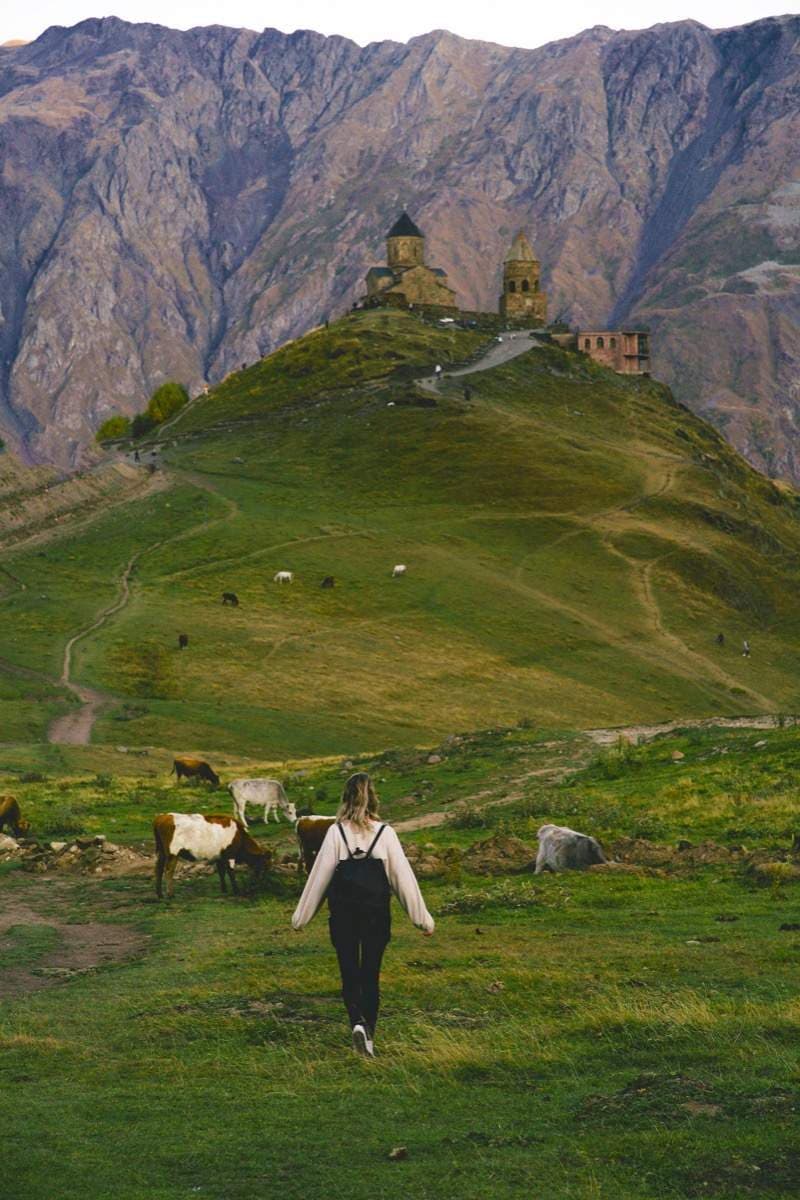
- Kazbegi (3 hours): Mountain scenery, Gergeti Trinity Church
- Kakheti wine region (1.5 hours): Wineries, Sighnaghi, qvevri tasting
- David Gareja (2.5 hours): Cave monastery in the desert
- Borjomi (2.5 hours): Forest park, mineral springs
For a full list of destinations with transport options, see our day trips from Tbilisi guide. And for the best things to do in the city itself, check our Tbilisi guide.
If you want to explore Georgia's highlights without planning every detail, our 8-day tour covers the best of the country — Kazbegi, Kakheti, Mtskheta, and more — with private transport, a local guide, and boutique accommodation. It's the perfect weekend break from your remote work routine. See the tour →
The Bottom Line
Georgia is one of the easiest, cheapest, and most rewarding places in the world to work remotely. The visa situation alone — 365 days, no paperwork — is unmatched by almost any other country. Add in the cost of living, the food, the safety, and the growing community, and it's hard to find a better base for a remote working lifestyle.
The only real question is how long you'll want to stay.
Exploring Georgia for a month or more? Our 8-day Grand Highlights tour is the perfect weekend break from your remote work — covering the country's best destinations with a local guide, private transport, and every detail handled. See the full itinerary →
Ready to Experience Georgia?
Join our 8-day small group tour through Georgia. From Tbilisi to Kazbegi to Kakheti wine country. Max 10 guests.
Yes. Citizens of 95+ countries can enter Georgia visa-free for up to 365 days. There is no law prohibiting remote work for a foreign employer while on a tourist entry. However, you cannot work for a Georgian company without a work permit.
A comfortable digital nomad lifestyle in Tbilisi costs $900-1,500/month including a one-bedroom apartment in a central neighborhood, coworking space, groceries, eating out regularly, and entertainment. Budget travelers can manage on $600-900/month.
Remotely from Georgia is a government initiative that allows remote workers from 50+ countries to legally reside and work in Georgia for up to one year. It provides a streamlined application process and official documentation for remote workers employed by foreign companies.
Yes. Tbilisi has widespread fiber optic internet with speeds of 100-500 Mbps in most apartments. Coworking spaces offer dedicated high-speed connections. Mobile data (4G/LTE) is reliable and inexpensive — around $10-15/month for 30+ GB.
Vera is the top choice for its cafe culture, central location, and residential feel. Marjanishvili (near Fabrika) is best for the creative community and coworking scene. Sololaki offers boutique living within walking distance of everything.