
Things to Do in Tbilisi: A Local's Guide to Georgia's Capital
Tbilisi doesn't look like anywhere else. Crumbling Art Nouveau balconies lean over ancient churches. Sulfur baths steam beside nightclubs carved into Soviet-era ruins. A glass bridge connects a medieval fortress to a futuristic concert hall. It's chaotic, beautiful, and completely its own thing.
Georgia's capital (that's Georgia the country 🇬🇪, between Russia and Turkey — not the US state) has been conquered, rebuilt, and reinvented for 1,500 years. The result is a city that defies easy categorization — equal parts ancient, Soviet, and aggressively modern.
This guide covers 25+ things to do, organized by category, with honest recommendations on what's worth your time and what's skippable. No filler, no paid placements — just what we'd tell a friend visiting for the first time.
Historical Tbilisi
1. Walk the Old Town (Kala)
The Old Town is compact enough to cover on foot in a few hours, but rich enough to spend days in. Start at Meidan Square (the old caravanserai crossroads), and wander the narrow streets outward. No map needed — getting lost is the point.
What you'll stumble into: carved wooden balconies, tiny churches tucked between apartment buildings, cats absolutely everywhere, wine cellars with doors open to the street, and grandmothers watching the world from their balconies.
The best Old Town walking time is early morning (before 9 AM) or golden hour (5-7 PM). Midday in summer is brutally hot — temperatures regularly hit 35-40°C. Duck into a wine bar and wait it out.
2. Narikala Fortress
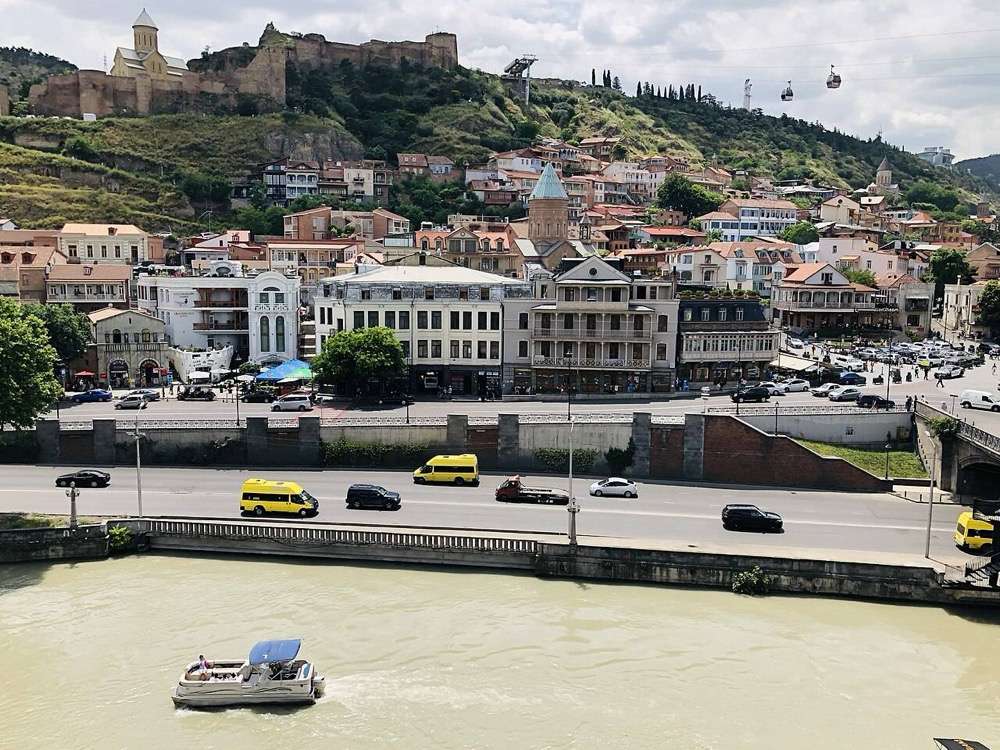
The defining landmark of Tbilisi's skyline — a 4th-century fortress perched on the ridge above Old Town. Take the cable car from Rike Park (1 GEL each way) for aerial views of the entire city, or hike up from the botanical garden side.
Inside the fortress walls, the restored St. Nicholas Church has vivid modern frescoes. But the real draw is the view — the whole city spreads out below you, with the Mtkvari River cutting through the center.
Time needed: 1-1.5 hours including cable car ride.
3. Abanotubani — The Sulfur Bath District
Tbilisi literally means "warm place" — named after the sulfur hot springs that still bubble up here. The brick-domed bathhouses have been operating for centuries. For the full breakdown on choosing a bathhouse, see our complete sulfur baths guide. Here's the quick version:
- Orbeliani Bathhouse (Chreli Abano): The blue-tiled facade is the most photographed bathhouse in the city. Tourist-friendly, well-maintained. Private rooms from 50-80 GEL/hour.
- Bathhouse No. 5: The locals' choice. Less fancy, more authentic. Private rooms from 30-60 GEL/hour. The scrub-down (kisi) by a masseuse here is a rite of passage — aggressive, thorough, and you'll emerge feeling reborn.
- Royal Bathhouse: Mid-range option, recently renovated. Good balance of atmosphere and comfort.
Book a private room — the communal baths exist but private rooms are the standard experience for visitors. Always add the kisi (scrub massage) for 20-30 GEL extra. The sulfur smell fades within an hour of leaving. Bring flip-flops.
4. Metekhi Church & the Statue of Vakhtang Gorgasali
Across the river from Old Town, this 13th-century church sits on a cliff edge. The equestrian statue of King Vakhtang Gorgasali — Tbilisi's legendary founder — stands at the overlook. The view back toward Narikala and Old Town is one of the city's best photo spots.
5. Sioni Cathedral & Anchiskhati Basilica
Sioni Cathedral (6th century, rebuilt many times) was the seat of the Georgian Orthodox patriarch for centuries. It's still an active church — dress modestly (headscarves for women, no shorts).
Anchiskhati Basilica (6th century) is the oldest surviving church in Tbilisi. Small, atmospheric, and easy to miss. It's on Shavteli Street, a short walk from the clock tower.
6. The Leaning Clock Tower (Rezo Gabriadze Theatre)
The whimsical puppet theater on Shavteli Street has a hand-built clock tower that leans at an intentional angle. Every hour, a small angel emerges. It's charming, slightly surreal, and very Tbilisi. If you can get tickets to a puppet show, do — Gabriadze was a national treasure.
Food & Drink
7. Eat at a Dukani (Traditional Restaurant)
Your first Georgian meal should be at a proper dukani — a traditional restaurant with clay pots, wooden tables, and a menu that hasn't changed in decades. Not sure what to order? See our guide to 15 must-try Georgian dishes. Start with:
- Budget (15-25 GEL/person): Machakhela (chain, but solid quality), Samikitno on Aghmashenebeli
- Mid-range (30-60 GEL/person): Shavi Lomi (creative Georgian), Café Littera (in the Writers' House — stunning courtyard)
- Splurge (80+ GEL/person): Barbarestan (recipes from a 19th-century cookbook), Culinarium Khasheria
8. Wine Bars: Vino Underground & g.Vino
Georgia has been making wine for 8,000 years, and Tbilisi's natural wine scene is among the best in the world.
Vino Underground (Tabidze Street, Old Town): The bar that launched Tbilisi's natural wine movement. Tiny, standing-room-only, with wines from small Georgian producers you'll never find outside the country. The staff genuinely knows wine — tell them what you like and let them pour.
g.Vino (Bambis Rigi Street): More polished, with a full food menu and an impressive wine list. Good for a sit-down evening. The terrace has Old Town views.
Ask for qvevri wines — made in buried clay vessels using the 8,000-year-old Georgian method. Try an amber (orange) wine made from Rkatsiteli grapes. It tastes like nothing you've had before — tannic and structured like a red, but made from white grapes.
9. Dezerter Bazaar (Dezertireba)
Tbilisi's central market near the train station. Mountains of spices (smell the blue fenugreek), churchkhela hanging from every stall, wheels of fresh cheese, dried fruits, and vendors who'll give you a taste of everything. This is where locals shop. Come hungry.
What to buy: Svanetian salt, dried herbs and spice mixes, churchkhela, tklapi (fruit leather), fresh Sulguni cheese.
Time needed: 1 hour minimum. More if you enjoy markets.
10. Georgian Breakfast: Nazuki & Tone Bread
Skip the hotel buffet at least once and eat Georgian breakfast: grab fresh shotis puri (long canoe-shaped bread) from a tone bakery — you'll see the baker reaching into a cylindrical clay oven. Pair with Imeretian cheese and tomatoes. Or find nazuki — a sweet, spiced bread from Surami, available at bakeries citywide.
11. Shaurma on Agmashenebeli
Aghmashenebeli Avenue is Tbilisi's café-lined boulevard, restored beautifully in recent years. Among the cafés and restaurants, the street food stands serve some of the best shaurma (shawarma) in the Caucasus. Late night, this is where Tbilisi eats.
Culture & Museums
12. Georgian National Museum
The main branch on Rustaveli Avenue covers Georgian history from Bronze Age gold artifacts to Soviet occupation. The Archaeological Treasury (basement level) is the highlight — Colchian gold jewelry that rivals anything in the British Museum.
The Soviet Occupation Museum (separate section, same building) is small but powerful. It documents Georgia's experience under Soviet rule with personal accounts, photographs, and artifacts.
Time needed: 2-3 hours for both sections.
13. MOMA Tbilisi (Museum of Modern Art)
A small but curated collection of Georgian modern and contemporary art. The building itself — a renovated Soviet-era space — is part of the experience. Good for understanding Georgia's art scene beyond the ancient stuff.
14. Fabrika
A converted Soviet sewing factory in Marjanishvili, now Tbilisi's creative hub. Hostel, co-working space, café, courtyard bar, vintage shops, and a rotating roster of pop-up events. Even if you're not staying here, the courtyard is worth an evening visit — cheap beer, local crowd, good energy.
Best time to visit: Evening, Thursday-Saturday for the liveliest atmosphere.
15. Open Air Museum of Ethnography
On a hillside above Vake Park, this outdoor museum recreates traditional Georgian homes from every region of the country. Svanetian towers, Kakhetian farmhouses, Adjarian wooden houses — all brought here and reassembled. Fascinating if you want to understand how different Georgia's regions are from each other.
Time needed: 1.5-2 hours.
Parks & Nature
16. Mtatsminda Park & the Funicular
Take the funicular railway from the city center up to Mtatsminda — the mountain that defines Tbilisi's western skyline. At the top: an amusement park (retro charm, not thrills), a TV tower, and the best panoramic views of the city.
The funicular itself is the experience — it climbs steeply through forest with increasingly dramatic city views. The restaurant at the top (Funicular) has good food and a terrace overlooking everything.
Cost: Funicular is 15 GEL round trip. Park entrance is free.
17. Rike Park & Bridge of Peace
Rike Park is the modern green space on the left bank of the Mtkvari River. The Bridge of Peace — a curving glass-and-steel pedestrian bridge designed by an Italian architect — connects it to Old Town and lights up at night with programmed LED displays.
Love it or hate it architecturally, the bridge is a good shortcut between Old Town and the left bank, and the park is pleasant for an evening walk.
18. Tbilisi Botanical Garden
Tucked behind Narikala Fortress, this hillside garden is a surprisingly peaceful escape from the city noise. Waterfalls, forested trails, and almost no tourists. Enter from Botanikuri Street or descend from Narikala.
Insider tip: The garden's waterfall is a 15-minute walk from the entrance. Combine it with a Narikala visit — enter the garden from the fortress side and walk downhill.
19. Turtle Lake (Kus Tba)
A small lake in the hills above Vake, reached by cable car or a short drive. Locals come here to swim in summer, jog the perimeter, or eat at the lakeside restaurants. Not a must-do, but a nice escape from the heat and a glimpse of Tbilisi's relaxed side.
Shopping
20. Dry Bridge Market (Mshrali Khidi)
Tbilisi's famous flea market, spread along both sides of the dry riverbed near the Dry Bridge. Soviet memorabilia, antique jewelry, old paintings, vinyl records, Georgian daggers, communist badges, handmade crafts — it's a treasure hunt.
Best days: Saturday and Sunday for the fullest selection. Weekday mornings are quieter but have fewer vendors.
Haggling: Expected and part of the fun. Start at 40-50% of the asking price and negotiate from there. The Soviet-era items and antiques are the most interesting finds.
21. Meidan Bazaar & Chardin Street
The shops along Chardin (Sharden) Street cater to tourists — enamel jewelry, felt hats, wine accessories, miniature qvevri. Prices are marked up. For better deals, head to the side streets off Meidan Square or the Dry Bridge Market.
Worth buying: Cloisonné enamel jewelry (a genuine Georgian craft tradition), Svanetian salt, natural wine, churchkhela.
Nightlife & Evening
22. Wine & Cocktail Bars
Beyond the wine bars mentioned above, Tbilisi's cocktail scene has exploded:
- Dive Bar (Marjanishvili area): Creative cocktails, local DJ sets, intimate space
- Amra (near Dry Bridge): Rooftop bar, good for warm evenings
- Lolita (Vera): Low-key, great music, slightly hipster
23. Live Music & Performance
Georgian polyphonic singing is a UNESCO Intangible Cultural Heritage. If you get a chance to hear it live — in a restaurant, church, or concert — take it. The harmonies are hauntingly beautiful and unlike any other vocal tradition.
Check Tbilisi Concert Hall and Rustaveli Theatre for performances. In restaurants, some traditional spots feature live folk music during dinner (touristy but still impressive).
24. Nightclubs
Tbilisi's electronic music scene rivals Berlin's in quality if not scale. Bassiani (in a converted Soviet swimming pool beneath a football stadium) is the flagship — regularly ranked among the world's best clubs. Expect techno, long queues, and a door policy. Mtkvarze and Khidi offer similar vibes on the riverfront.
Tbilisi's club scene runs Friday-Saturday, typically midnight to 8 AM+. Bassiani's door policy is selective — go with a local if possible. Phone cameras are taped over at entry to protect the vibe.
Day Trips from Tbilisi
If you have extra days, these are all within 1-3 hours of the city:
- Mtskheta (25 min): Georgia's ancient capital. Jvari Monastery and Svetitskhoveli Cathedral — both UNESCO World Heritage Sites. Easily combined with a half-day in Tbilisi.
- David Gareja (2.5 hours): A 6th-century cave monastery complex on the Azerbaijan border. Stunning desert landscape, frescoes carved into cliffsides. Full-day trip.
- Kazbegi / Georgian Military Highway (3 hours): The iconic mountain drive — read our complete guide.
- Sighnaghi & Kakheti (1.5 hours): Georgia's wine country. The hilltop town of Sighnaghi is called "the city of love." Combine with winery visits.
- Uplistsikhe (1.5 hours): An ancient cave town dating to the Iron Age. Eerie, atmospheric, and fascinating — carved directly into the rock.
Where to Stay in Tbilisi
GT Hotel — Old Town ⭐
Located in the heart of Tbilisi's Old Town, GT Hotel puts you within walking distance of everything on this list — Narikala, the sulfur baths, Meidan Square, wine bars, and restaurants are all minutes from your door. The hotel blends Georgian hospitality with modern comfort: clean, well-designed rooms, a terrace with Old Town views, and a staff that treats every guest like family.
It's also our tour base — guests on our Georgia tours spend their first two nights here before heading out to explore the rest of the country.
Ask the GT Hotel front desk for restaurant recommendations — the staff are locals who know which spots are genuinely good versus tourist traps. They can also arrange airport transfers, day trips, and Kazbegi drivers. See GT Hotel on Google →
Other Options by Budget
- Budget (40-80 GEL): Fabrika Hostel (social, great courtyard), Envoy Hostel (Old Town location, rooftop views)
- Mid-range (150-350 GEL): Rooms Hotel Tbilisi (design hotel in Vera), Stamba Hotel (converted Soviet-era printing house — stunning architecture)
- Luxury (500+ GEL): Biltmore Tbilisi, Radisson Collection
Best neighborhoods to stay:
- Old Town (Kala): Walk everywhere. Atmospheric but can be noisy at night.
- Vera: Quiet, leafy, 10-minute walk to center. Good restaurants.
- Marjanishvili: Local vibe, Fabrika, good food scene. 15-minute walk to Old Town.
Practical Tips
Getting around: Tbilisi's Old Town is walkable. For longer distances, use Bolt (like Uber) — see our full transport guide for details — rides across the city rarely exceed 8-10 GEL. The metro is cheap (1 GEL) and covers main areas. Buy a Metromoney card at any station.
Money: Georgian Lari (GEL). Cards accepted almost everywhere in the center, but carry cash for markets, marshrutkas, and small shops. ATMs are abundant.
Safety: Tbilisi is remarkably safe for a capital city. Walking alone at night in the center is generally fine. Petty crime exists (watch your phone in crowded areas) but violent crime against tourists is extremely rare.
Language: Georgian (its own unique alphabet). English is widely spoken by younger people in tourist areas. Russian is understood by the older generation. Learn "gamarjoba" (hello) and "madloba" (thank you) — locals appreciate the effort.
Best time to visit: April-June and September-October. See our month-by-month guide for details. July-August is hot (35°C+). Winter (December-February) is cold but atmospheric, with fewer tourists and a cozy café culture.
Experience Tbilisi with Us
Days 1-2 of our tour are spent in Tbilisi, based at GT Hotel in the heart of Old Town. See what's included →
For the best restaurants, cafes, bars and nightlife in Tbilisi — with prices, neighborhoods, and what to order — browse our Tbilisi City Guide →
Ready to Experience Georgia?
Join our 8-day small group tour through Georgia. From Tbilisi to Kazbegi to Kakheti wine country. Max 10 guests.